
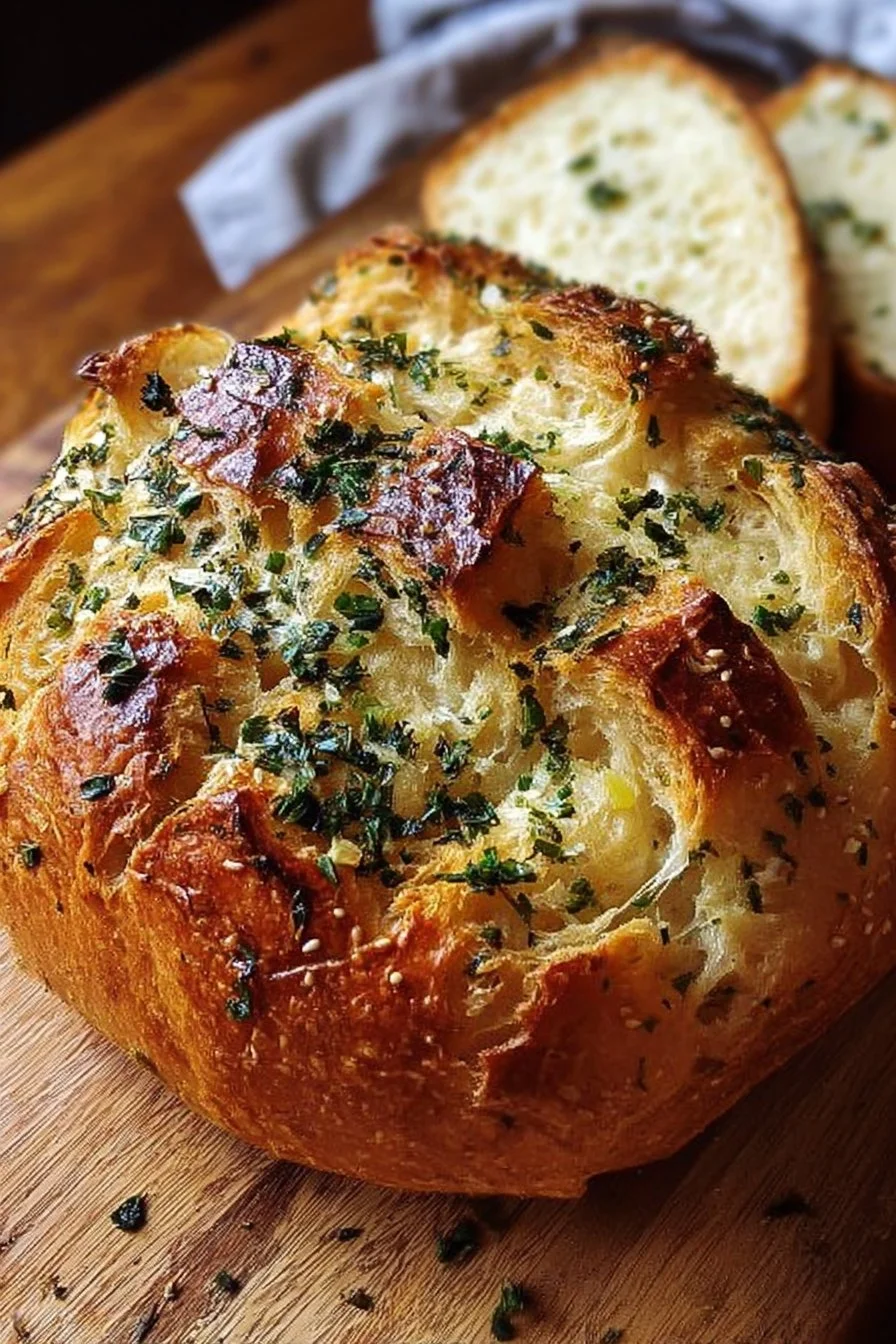
A warm, crusty boule scented with garlic and fresh herbs that you can pull together with just one bowl and a hot Dutch oven. This no-knead Garlic Herb Dutch Oven Bread develops deep flavor during a long overnight rise and needs almost no hands-on time—perfect when you want bakery-quality bread without the fuss. It makes a great accompaniment to soups, salads, or an herb-forward dinner; if you like pairing garlicky bread with rich mains, try it alongside a dish like garlicky spinach and mozzarella baked salmon for a coordinated flavor profile.
Why you’ll love this dish
This bread is an easy, impressive loaf that tastes like it took all day to make even though most of that time is passive. The long, cool-ish rise (12–18 hours) gives more complex, slightly tangy flavor and a superior crumb compared with quick-rise breads. Using a Dutch oven creates steam during the first part of baking so you get a blistered, crunchy crust and tender interior—no professional oven required.
“Hands-off overnight dough plus a hot Dutch oven = bakery-level crust in my kitchen.” — home cook review
Perfect occasions: weeknight dinners, weekend brunches, holiday sides, or anytime you need fresh bread for dipping into olive oil, hummus, or a skillet stew.
The cooking process explained
This recipe follows the classic no-knead formula: combine flour, salt, yeast, and flavorings; add water to form a shaggy, sticky dough; let it ferment slowly until bubbly; shape gently; proof once more; then bake in a preheated Dutch oven. The key performance moments are a long bulk fermentation (flavor and gluten development), a gentle shaping/rest to hold the structure, and baking covered then uncovered to build oven spring and a crisp crust.
What you’ll need
- 3 cups (about 360 g) all-purpose flour
- 2 teaspoons fine sea salt
- 1/2 teaspoon instant yeast (or active dry yeast; see notes)
- 1 1/2 cups (360 ml) lukewarm water (90–100°F / 32–38°C)
- 4 cloves garlic, minced (about 1–2 tablespoons)
- 2 tablespoons fresh herbs, finely chopped (rosemary, thyme, or a mix)
- 1 tablespoon olive oil (optional brush before scoring)
Notes and substitutions:
- Instant yeast vs active dry: if using active dry, proof it in the lukewarm water for 5–10 minutes until bubbly, then proceed. Instant yeast can be mixed dry into the flour.
- For whole-wheat boost, replace up to 1 cup of AP flour with whole-wheat; bread will be denser and may need +10–15 minutes baking.
- Use dried herbs if fresh aren’t available (1 tablespoon dried for 2 tablespoons fresh).
Step-by-step instructions
- In a large bowl, whisk together the flour, salt, and instant yeast. Add the minced garlic and chopped herbs; stir briefly to distribute.
- Pour in the lukewarm water and stir with a wooden spoon until a sticky, shaggy dough forms—no kneading required. Scrape down the sides so everything is mixed evenly.
- Cover the bowl tightly with plastic wrap or a damp kitchen towel. Let the dough rise at room temperature for 12–18 hours, until it’s bubbly on the surface and roughly doubled in volume. Ideal room temp is about 68–72°F (20–22°C).
- Generously flour a work surface. Turn the dough out onto the floured surface, sprinkle a little flour on top, and gently fold the edges into the center to form a round. Avoid aggressive handling so you keep the air pockets. Let the shaped dough rest, covered with a bowl or towel, for 45–60 minutes.
- Place a 4–6 quart Dutch oven (with lid) in the oven and preheat to 450°F (232°C) for 30 minutes. While it preheats, transfer the dough onto a piece of parchment paper, brush lightly with olive oil if using, and score the top with a sharp knife or lame.
- Carefully lift the dough on the parchment and lower it into the hot Dutch oven. Cover and bake for 30 minutes to trap steam and encourage oven spring.
- Remove the lid and bake uncovered for an additional 15–20 minutes, until the crust is deep golden-brown and the internal temperature reaches about 200–210°F (93–99°C).
- Transfer the bread to a rack and cool at least 30 minutes before slicing so the crumb sets.
Best ways to enjoy it
This fragrant loaf is a natural for dipping and tearing. Try slices with high-quality olive oil and flaky salt, compound butters (garlic-herb butter amplifies the flavors), or alongside soups like tomato bisque or a creamy mushroom stew. It’s also terrific as a base for bruschetta or garlic toast.
For a dinner pairing that keeps the garlic-and-herb theme strong, serve this bread with a main such as a brown sugar garlic glazed salmon—the sweet-savory fish and the savory, herby boule balance beautifully.
Storage and reheating tips
- Room temperature: Store whole loaf loosely wrapped in a clean kitchen towel or paper bag for up to 2 days to maintain crust texture. Avoid plastic wrap at room temp if you want to keep the crust crisp.
- Freezing: Slice the cooled loaf and freeze slices in an airtight bag for up to 3 months. Toast or reheat directly from frozen.
- Reheating: For a fresh-baked crust, sprinkle the loaf lightly with water and rewarm in a 350°F (175°C) oven for 8–10 minutes. To refresh slices, toast them or heat in a skillet with a little butter.
- Food safety: This bread contains no perishable fillings—no refrigeration needed—but always discard if you notice mold or off smells.
Helpful cooking tips
- Temperature matters: lukewarm water (90–100°F) wakes yeast without killing it. If your kitchen is warm (75°F+), aim for the lower end of the rise window to avoid overproofing.
- Gentle shaping preserves air: handle the dough minimally when transferring to parchment; those irregular holes are desirable.
- Scoring controls expansion: a single 1/4–1/2 inch slash across the top or a cross pattern keeps the loaf from bursting unpredictably.
- Use a thermometer: internal temp of 200–210°F signals a fully baked crumb. It helps prevent underbaked centers.
- Dutch oven size: a 4–6 quart cast-iron works best; if too large, the bread may spread—consider using a small preheated pan to contain it.
Flavor swaps
- Cheesy herb loaf: fold in 1 cup grated Parmesan or sharp cheddar at the mixing stage for a richer crumb.
- Spicy garlic-herb: add 1/2 teaspoon red pepper flakes with the herbs to give the bread a gentle heat.
- Olive and rosemary: fold 1/2 cup chopped pitted olives and extra chopped rosemary into the dough for a Mediterranean twist.
- Gluten-free note: this formula relies on gluten development during long fermentation; for gluten-free, use a tested blend and follow the manufacturer’s binders—baking times and texture will differ significantly.
Common questions
Q: Can I shorten the rise time if I’m in a hurry?
A: You can, but flavor and structure will be reduced. A minimum bulk fermentation of 4–6 hours at a warm room temp will give some rise, but the signature depth of flavor from a 12–18 hour ferment won’t develop. You can also speed things by proofing in a slightly warmer spot (78–82°F), but monitor closely to avoid overproofing.
Q: What if my dough seems too wet to handle?
A: No-knead doughs are intentionally sticky. Add only a tablespoon of flour at a time during shaping if it’s unmanageably sticky, but resist adding much—too much flour makes the loaf dense. Work with floured hands and a floured bench scraper.
Q: Can I use dried garlic or garlic powder instead of fresh?
A: Fresh minced garlic gives a brighter, sharper flavor. If using garlic powder, start with 1/2 to 1 teaspoon and mix into the dry ingredients; it will be less aromatic than fresh. Dried minced garlic can work (1 tablespoon), but hydrate it briefly in the water first for better flavor release.
Q: Why does my crust go soft after storing?
A: Steam trapped in airtight plastic softens crust. To keep crust crisp, store in a paper bag or loosely wrapped in a towel at room temperature. Re-crisp in a hot oven for a few minutes before serving.
Q: Is this recipe freezer-friendly?
A: Yes—fully cooled slices freeze well for up to 3 months. Toast or reheat from frozen. Whole loaves can also be frozen wrapped tightly in plastic and foil, then thawed and reheated.
If you’d like printable measurements, a shopping checklist, or a timed schedule to make this bread around a dinner service, tell me how many people you’re serving and what time you want it ready—I’ll lay out a simple timeline.
Print
Garlic Herb Dutch Oven Bread
- Total Time: 780 minutes
- Yield: 1 loaf
- Diet: Vegetarian
Description
A warm, crusty boule infused with garlic and fresh herbs, perfect for dipping and serving alongside meals.
Ingredients
- 3 cups (about 360 g) all-purpose flour
- 2 teaspoons fine sea salt
- 1/2 teaspoon instant yeast (or active dry yeast)
- 1 1/2 cups (360 ml) lukewarm water (90–100°F / 32–38°C)
- 4 cloves garlic, minced (about 1–2 tablespoons)
- 2 tablespoons fresh herbs, finely chopped (rosemary, thyme, or a mix)
- 1 tablespoon olive oil (optional brush before scoring)
Instructions
- In a large bowl, whisk together the flour, salt, and instant yeast. Add the minced garlic and chopped herbs; stir briefly to distribute.
- Pour in the lukewarm water and stir with a wooden spoon until a sticky, shaggy dough forms—no kneading required.
- Cover the bowl tightly with plastic wrap or a damp kitchen towel. Let the dough rise at room temperature for 12–18 hours, until bubbly and roughly doubled in volume.
- Generously flour a work surface and turn the dough out onto it. Gently fold the edges into the center to form a round, then cover and let it rest for 45–60 minutes.
- Preheat the Dutch oven in the oven at 450°F (232°C) for 30 minutes. Transfer the dough onto parchment paper, brush with olive oil if using, and score the top.
- Carefully lift the dough into the hot Dutch oven. Cover and bake for 30 minutes.
- Remove the lid and bake uncovered for an additional 15–20 minutes, until the crust is deep golden-brown and the internal temperature reaches 200–210°F (93–99°C).
- Cool the bread on a rack for at least 30 minutes before slicing.
Notes
Use dried herbs if fresh aren’t available; for a cheesier loaf, fold in 1 cup of cheese during mixing. Store at room temperature loosely wrapped to maintain crust texture.
- Prep Time: 15 minutes
- Cook Time: 60 minutes
- Category: Bread
- Method: Baking
- Cuisine: Baking