
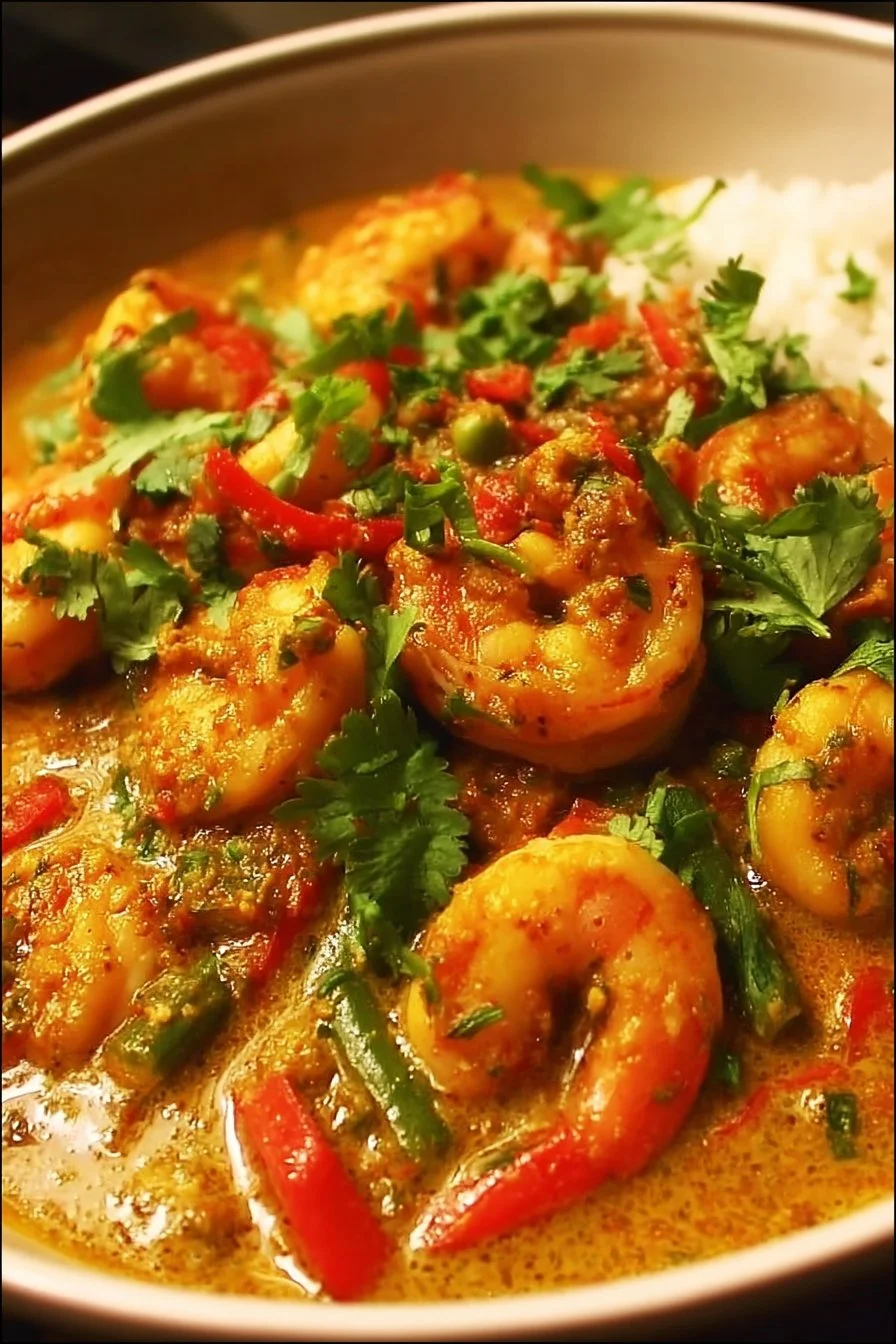
The first time I made this Thai coconut shrimp curry it felt like a weekday miracle: quick, bright, and deeply satisfying without hours of fuss. It’s a one-skillet dish of seared shrimp folded into a creamy, aromatic coconut–red curry sauce, finished with lime and Thai basil. If you enjoy bold seafood in silky sauces, you might also like this Cajun shrimp and salmon garlic cream sauce for another weeknight favorite.
Why you’ll love this dish
This curry balances sweet, salty, spicy, and herbal in a single skillet. The seared shrimp add texture and gentle smokiness, while the coconut milk makes a luxurious sauce that clings to rice or noodles. It’s fast enough for weeknights, impressive enough for guests, and flexible for different heat levels.
“Perfect weeknight curry — creamy, bright, and finished in under 30 minutes. The basil and lime make it sing.” — home cook review
Reasons to try it:
- Speed: shrimp cook in minutes; total active time around 20–30 minutes.
- Flavor depth: ginger, shallot, and red curry paste layer complexity.
- Versatility: serve over rice, noodles, or use as a taco filling.
- Diet-friendly swaps: easy to make gluten-free or pescatarian.
How this recipe comes together
This is a simple sauté-and-simmer formula:
- Briefly marinate shrimp to add an umami note.
- Sear shrimp quickly so they stay tender; remove them to avoid overcooking.
- Sauté vegetables and aromatics, deglaze with broth.
- Build the sauce with red curry paste and coconut milk, simmer to thicken.
- Finish with fish sauce, lime, basil, and return shrimp just long enough to warm through.
The structure keeps shrimp plump and the sauce glossy without breaking the coconut milk.
What you’ll need
- 1 lb shrimp, peeled and deveined (medium-large)
- 1 tsp low-sodium soy sauce (for shrimp marinade)
- ½ tsp red pepper flakes
- ½ tsp turmeric
- 1 tsp garlic powder
- ¼ tsp white pepper (for shrimp)
- 1 tbsp vegetable oil
- 1 tbsp unsalted butter
- 1 bell pepper, thinly sliced (any color)
- 4 garlic cloves, grated or finely minced
- 1 tbsp freshly grated ginger
- 1 shallot, finely chopped
- ½ cup chicken or vegetable broth (to deglaze)
- 3 tbsp Thai red curry paste
- 2 tsp brown sugar
- ½ tsp ground cumin
- ½ tsp ground coriander
- ¼ tsp white pepper (additional for sauce)
- 2 tbsp low-sodium soy sauce (for sauce)
- 1 tbsp fish sauce
- 1 can (14 oz) unsweetened full-fat coconut milk
- ½ lime, juiced
- 1 tsp sriracha (optional, for heat)
- A handful of torn Thai basil leaves
Garnishes: sliced scallions, fried onions, cilantro, sliced fresh chili
Ingredient notes and substitutions:
- Shrimp: peeled and deveined is fastest. You can use frozen shrimp—thaw and pat dry first.
- Coconut milk: full-fat gives the richest texture; light will work but the sauce thins.
- Red curry paste: adjust amount to taste; different brands vary in heat.
- Fish sauce is key for authentic umami; if avoiding, add extra soy sauce and a splash of miso.
Step-by-step instructions
- Marinate the shrimp: In a medium bowl toss shrimp with 1 tsp soy sauce, red pepper flakes, turmeric, garlic powder, and ¼ tsp white pepper. Let rest 5–10 minutes while you prep.
- Prep aromatics and veg: grate ginger and garlic, chop shallot, and slice the bell pepper thinly.
- Sear shrimp: Heat a large skillet over high heat. Add vegetable oil and butter. When shimmering, add shrimp in a single layer and sear ~1 minute per side until just opaque. Remove shrimp to a plate and set aside.
- Sauté bell pepper: Reduce heat to medium-high, add the sliced bell pepper to the same skillet, and sauté 4–5 minutes until tender-crisp.
- Add aromatics: Stir in grated garlic, ginger, and shallot. Cook 1–2 minutes until fragrant—don’t let them burn.
- Deglaze: Pour in the broth and scrape any browned bits from the pan. Simmer 1–2 minutes.
- Build the curry base: Stir in red curry paste, brown sugar, cumin, coriander, and the additional ¼ tsp white pepper. Cook for about 1 minute to bloom the spices.
- Add coconut milk: Pour in the coconut milk, bring to a gentle boil, then reduce to a simmer. Let cook 4–5 minutes until the sauce thickens slightly.
- Finish seasoning: Stir in 2 tbsp soy sauce, 1 tbsp fish sauce, lime juice, optional sriracha, and torn Thai basil. Taste and adjust salt or acid—lime is key to balance coconut richness.
- Return shrimp: Add the seared shrimp back to the skillet and toss to coat. Simmer just 30–60 seconds to warm through (avoid longer or shrimp will toughen). Serve immediately with garnishes.
Timing tip: from searing shrimp to plating you’re looking at 10–15 minutes; the sauce simmers while you set rice or noodles.
Best ways to enjoy it
Serve this curry over steamed jasmine rice to soak up the sauce, or ladle it over rice noodles for a lighter bite. For a crunchy contrast, top with fried shallots and sliced chilies. A side of quick cucumber relish (thinly sliced cucumber, rice vinegar, and a pinch of sugar) brightens the plate.
For an alternative seafood pairing or to rotate weeknight menus, try the richly flavored Cajun shrimp and salmon garlic cream sauce for a different creamy, savory experience.
Pairing suggestions:
- Beers: a crisp lager or wheat ale to cut the coconut creaminess.
- Wine: an off-dry Riesling or Gewürztraminer balances spice.
- Sides: steamed greens (bok choy, broccolini) or simple coconut rice.
Storage and reheating tips
- Refrigerator: store in an airtight container for up to 3 days. Shrimp can go rubbery with repeated reheating, so consume promptly.
- Freezing: freeze only the sauce (without shrimp) for up to 2 months; thaw overnight and gently re-warm, then add freshly cooked or thawed shrimp just before serving.
- Reheat gently: warm on low heat on the stovetop; avoid boiling. If thickened too much, thin with a splash of broth or water.
- Food safety: refrigerate within 2 hours of cooking. Reheat to 165°F (74°C) if required by local food-safety guidance.
Helpful cooking tips
- Dry shrimp well before searing; moisture prevents browning.
- High heat for searing, medium for sauce: this gives color to shrimp and control over sauce reduction.
- Bloom curry paste: cooking paste briefly in oil releases its aromatics—don’t skip that step.
- Control heat with sugar and acid: if sauce is too spicy, stir in a pinch more brown sugar and lime juice to balance.
- Basil at the end: fresh Thai basil loses flavor with long cooking—add it right at finish.
- Make it ahead: prepare the sauce a day early and reheat; add freshly cooked shrimp when ready to serve.
Recipe variations
- Protein swaps: use scallops, firm white fish, tofu (press first), or chicken thighs (brown and simmer longer).
- Vegetable boosts: add snap peas, baby corn, or spinach at the end.
- Heat level: reduce red curry paste to make milder; add extra sriracha or sliced Thai chilies for more heat.
- Creamier: stir in a splash of heavy cream for a richer finish.
- Low-FODMAP / garlic-free: replace garlic with garlic-infused oil and omit shallot; use a low-FODMAP curry paste.
Common questions
Q: Can I use frozen shrimp straight from the freezer?
A: Thaw frozen shrimp overnight in the refrigerator or quick-thaw in a sealed bag under cold running water. Pat dry thoroughly before marinating and searing—moisture causes steaming, not searing.
Q: What if I don’t have Thai red curry paste?
A: You can substitute 2–3 tsp red curry powder plus a small pinch of paprika and chili flakes, but paste has aromatic ingredients (lemongrass, galangal, shrimp paste) that build authentic flavor. Store-bought paste is the easiest shortcut.
Q: Can I make this dairy-free or gluten-free?
A: The recipe is dairy-free as written (butter is optional—swap to oil). Use gluten-free soy sauce or tamari to make it gluten-free and ensure your curry paste and fish sauce are gluten-free labeled.
Q: Will the coconut milk split?
A: Gently simmer—avoid high rolling boils after adding coconut milk. If it begins to separate, reduce heat and whisk in a splash of broth and lime juice to recombine.
Q: How can I meal-prep this for lunches?
A: Cook the sauce ahead and store it separately from rice and shrimp. For best texture, reheat sauce and combine with freshly cooked or quickly reheated shrimp just before serving.
If you have other questions about substitutions, timing, or pairing, ask and I’ll help you adapt this to your pantry.
Print
Thai Coconut Shrimp Curry
- Total Time: 30 minutes
- Yield: 4 servings
- Diet: Gluten-Free
Description
A quick and satisfying Thai coconut shrimp curry cooked in one skillet, featuring seared shrimp in a creamy, aromatic sauce.
Ingredients
- 1 lb shrimp, peeled and deveined
- 1 tsp low-sodium soy sauce (for shrimp marinade)
- ½ tsp red pepper flakes
- ½ tsp turmeric
- 1 tsp garlic powder
- ¼ tsp white pepper (for shrimp)
- 1 tbsp vegetable oil
- 1 tbsp unsalted butter
- 1 bell pepper, thinly sliced (any color)
- 4 garlic cloves, grated or finely minced
- 1 tbsp freshly grated ginger
- 1 shallot, finely chopped
- ½ cup chicken or vegetable broth (to deglaze)
- 3 tbsp Thai red curry paste
- 2 tsp brown sugar
- ½ tsp ground cumin
- ½ tsp ground coriander
- ¼ tsp white pepper (additional for sauce)
- 2 tbsp low-sodium soy sauce (for sauce)
- 1 tbsp fish sauce
- 1 can (14 oz) unsweetened full-fat coconut milk
- ½ lime, juiced
- 1 tsp sriracha (optional, for heat)
- A handful of torn Thai basil leaves
- Garnishes: sliced scallions, fried onions, cilantro, sliced fresh chili
Instructions
- Marinate the shrimp: In a medium bowl, toss shrimp with 1 tsp soy sauce, red pepper flakes, turmeric, garlic powder, and ¼ tsp white pepper. Let rest 5–10 minutes.
- Prep aromatics and veg: Grate ginger and garlic, chop shallot, and slice the bell pepper thinly.
- Sear shrimp: Heat a large skillet over high heat. Add vegetable oil and butter. When shimmering, add shrimp in a single layer and sear ~1 minute per side until just opaque. Remove shrimp to a plate and set aside.
- Sauté bell pepper: Reduce heat to medium-high, add sliced bell pepper to the skillet and sauté 4–5 minutes until tender-crisp.
- Add aromatics: Stir in grated garlic, ginger, and shallot. Cook 1–2 minutes until fragrant.
- Deglaze: Pour in the broth and scrape any browned bits from the pan. Simmer 1–2 minutes.
- Build the curry base: Stir in red curry paste, brown sugar, cumin, coriander, and additional ¼ tsp white pepper. Cook for about 1 minute to bloom the spices.
- Add coconut milk: Pour in the coconut milk, bring to a gentle boil, then reduce to a simmer. Cook 4–5 minutes until the sauce thickens slightly.
- Finish seasoning: Stir in 2 tbsp soy sauce, 1 tbsp fish sauce, lime juice, and torn Thai basil. Adjust seasoning as needed.
- Return shrimp: Add seared shrimp back to the skillet and toss to coat. Simmer 30–60 seconds to warm through. Serve immediately with garnishes.
Notes
Serve over steamed jasmine rice or rice noodles. Garnish with fried shallots and chilies for extra crunch.
- Prep Time: 10 minutes
- Cook Time: 20 minutes
- Category: Main Course
- Method: Sautéing and Simmering
- Cuisine: Thai