
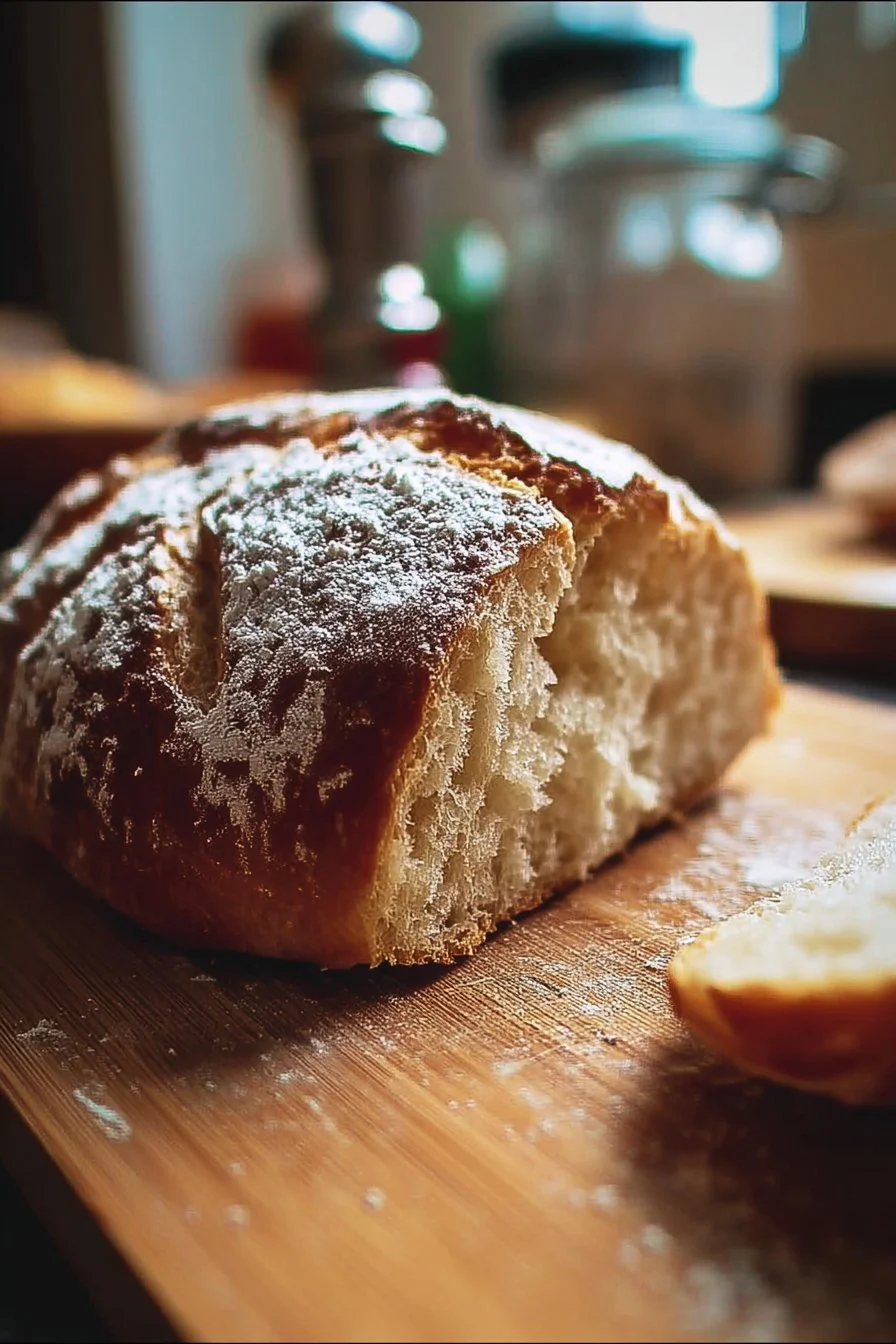
Warm, simple, and reliably comforting — this German bread is the kind of loaf you can pull together without a bakery degree. With just all-purpose flour, warm water, yeast, a touch of oil and salt, it’s an easy everyday bread that browns beautifully and slices into hearty sandwiches or toast. If you like a rustic, crust-forward loaf, you might also enjoy trying a garlic herb Dutch oven bread for another simple weekend bake that emphasizes crust and flavor.
Why you’ll love this dish
This German bread is stripped down to essentials—no fancy ingredients, no long waits, and still delicious. It’s ideal for anyone who wants fresh bread on a weeknight or needs a budget-friendly baking project that works the first time.
“Exactly the kind of loaf my family reaches for every morning — crisp crust, soft center, and forgiving for bakers of any level.”
Reasons to make it:
- Fast rise: only one short proof makes it quicker than enriched breads.
- Minimal equipment: a bowl, a pan, and an oven.
- Budget-friendly: pantry staples only.
- Versatile: perfect for sandwiches, soups, or simple butter and jam.
How this recipe comes together
Think of this as straightforward yeast bread: bloom the yeast, stir in flour and salt until it looks shaggy, then knead briefly until smooth. After a short rise and shaping into a loaf pan, a moderate oven temperature gives a golden crust in about half an hour. The process is gentle, so small timing differences won’t ruin the loaf — that makes it great for beginners.
Typical timeline (rough estimate):
- Yeast bloom: 5 minutes
- Mixing + kneading: 10–15 minutes total
- First rise in pan: ~30 minutes
- Bake: 25–30 minutes
What you’ll need
- 2 cups all-purpose flour (240–250 g) — swap up to half with bread flour for a chewier crumb.
- 1 cup warm water (about 105–115°F / 40–46°C) — too hot will kill the yeast.
- 1 teaspoon sugar — feeds the yeast; you can use honey as a 1:1 substitute.
- 1 teaspoon salt — don’t skip; it controls yeast activity and flavors the loaf.
- 1 packet (2 1/4 teaspoons) active dry yeast — instant yeast can be used without proofing if you add it directly to the flour (reduce water absorption slightly).
- 1 tablespoon vegetable oil — olive oil or melted butter work well for flavor.
Notes:
- If your kitchen is cool, use slightly warmer water (but not over 115°F). If it’s hot, aim for the lower end of the range.
- For a richer loaf, swap the oil for 1 tablespoon melted butter and 2 tablespoons milk.
Step-by-step instructions
- Warm the water to about 105–115°F and pour it into a large mixing bowl. Stir in the sugar. Sprinkle the active dry yeast over the surface and let it sit 5 minutes until foamy.
- Add the flour, salt, and oil to the yeast mixture. Mix with a spoon or dough scraper until a shaggy dough forms and no large dry patches remain.
- Turn the dough onto a lightly floured surface. Knead by hand for about 5 minutes until the dough is smooth and slightly elastic. It should be tacky but not sticky; add flour sparingly if it clings to your hands.
- Shape the dough into a loaf and place it seam-side down in a greased 9×5-inch loaf pan. Cover loosely with a clean towel or plastic wrap and let it rise in a warm spot for about 30 minutes, until it’s puffed and nearly doubled.
- While the dough rises, preheat the oven to 375°F (190°C).
- Bake the loaf for 25–30 minutes until the top is golden brown and an instant-read thermometer inserted in the center reads around 190°F (88°C). If the crust browns too quickly, tent with foil.
- Remove from the oven and let the bread cool in the pan for 10 minutes, then transfer to a wire rack to cool completely before slicing. Cooling prevents a gummy crumb.
Best ways to enjoy it
This loaf loves simple treatments that show off its texture and flavor:
- Thick-sliced with butter and a sprinkle of flaky salt.
- Turn into classic ham-and-cheese or BLT sandwiches.
- Toast slices and rub with garlic for a quick bruschetta base.
- Serve alongside a bowl of stew or vegetable soup for soaking up broth.
For a crustier exterior with herb notes, you can compare techniques against a garlic herb Dutch oven bread — the Dutch oven method traps steam to build a glossy, blistered crust.
Storage and reheating tips
- Room temperature: Keep the loaf in a bread bag or wrapped in a clean kitchen towel on the counter for 2–3 days.
- Refrigerator: Not recommended for storage; refrigeration speeds staling.
- Freezing: Slice the cooled loaf and freeze slices in an airtight bag for up to 3 months. Thaw at room temperature or toast from frozen.
- Reheating: Warm slices in a toaster, or refresh whole slices in a 350°F oven for 5–8 minutes to revive crispness. For a steamier slice, wrap in foil with a tiny pat of butter and heat for 8–10 minutes.
Food safety note: If you add perishable ingredients (cheese, dairy, large amounts of butter), treat leftovers like other perishable foods and refrigerate within two hours.
Pro chef tips
- Proof test: If yeast doesn’t foam after 5–10 minutes, start over — the yeast may be old or the water too hot/cold.
- Knead just enough: About 5 minutes by hand develops good gluten for this recipe; over-kneading will make the loaf tight.
- Surface tension: When shaping the loaf, create good surface tension by tucking and rolling the dough seam-side down—this improves oven spring.
- Pan prep: Grease the pan lightly or use parchment to prevent sticking and make removal easier.
- Steam boost: For a slightly crisper crust, add a small oven-safe pan with hot water on the bottom rack at the start of baking, or mist the oven once as you slide the loaf in.
Creative twists
- Seeded top: Brush the loaf with water or egg wash and sprinkle sesame, poppy, or sunflower seeds before baking.
- Whole-wheat swap: Replace up to half the flour with whole wheat, but expect a denser crumb and add 1–2 tablespoons more water.
- Enriched version: Add 1 beaten egg and 2 tablespoons sugar for a softer, slightly sweet loaf—reduce bake time if the top browns quickly.
- Garlic-herb variant: Mix in 1–2 teaspoons dried herbs and 1 minced garlic clove for more savory notes.
- Dairy-free / vegan: This recipe is already oil-based; use a vegan butter or extra oil if you swap in enriched ingredients.
Common questions
Q: How long does this take from start to finish?
A: Active hands-on time is about 20 minutes (mixing, kneading, shaping). With the 30-minute rise and 25–30 minute bake, expect roughly 1 hour total.
Q: Can I use instant yeast instead of active dry yeast?
A: Yes. If using instant yeast, you can mix it with the dry ingredients and skip the 5-minute bloom. You may need a touch less water since instant yeast absorbs slightly differently.
Q: Why did my bread turn out dense?
A: Common causes are under-proofing, too much flour (dough too stiff), or inactive yeast. Make sure the dough puffs noticeably during the rise and that you measure flour correctly (spoon and level).
Q: Can I bake this in a Dutch oven?
A: Yes — for a blistered crust, bake at 425°F in a preheated Dutch oven for 20–25 minutes with the lid on, then 5–10 minutes uncovered. (Adjust temps/times slightly; watch the internal temp of 190°F for doneness.)
Q: Is this recipe suitable for gluten-free baking?
A: Not as written. Gluten-free bread needs specific flours and binders (like xanthan gum) and usually a different hydration and structure method. Use a dedicated gluten-free bread recipe for best results.

Simple German Bread
- Total Time: 45 minutes
- Yield: 1 loaf
- Diet: Vegetarian
Description
A comforting and budget-friendly German bread that is easy to make, perfect for sandwiches or toast.
Ingredients
- 2 cups all-purpose flour (240–250 g)
- 1 cup warm water (about 105–115°F / 40–46°C)
- 1 teaspoon sugar
- 1 teaspoon salt
- 1 packet (2 1/4 teaspoons) active dry yeast
- 1 tablespoon vegetable oil
Instructions
- Warm the water to about 105–115°F and pour it into a large mixing bowl. Stir in the sugar. Sprinkle the active dry yeast over the surface and let it sit for 5 minutes until foamy.
- Add the flour, salt, and oil to the yeast mixture. Mix with a spoon or dough scraper until a shaggy dough forms and no large dry patches remain.
- Turn the dough onto a lightly floured surface. Knead by hand for about 5 minutes until the dough is smooth and slightly elastic.
- Shape the dough into a loaf and place it seam-side down in a greased 9×5-inch loaf pan. Cover loosely and let it rise in a warm spot for about 30 minutes.
- Preheat the oven to 375°F (190°C).
- Bake the loaf for 25–30 minutes until golden brown. If the crust browns too quickly, tent with foil.
- Remove from the oven and let the bread cool in the pan for 10 minutes, then transfer to a wire rack to cool completely before slicing.
Notes
For a richer loaf, swap the vegetable oil for 1 tablespoon melted butter and 2 tablespoons milk. Store at room temperature for up to 2–3 days.
- Prep Time: 15 minutes
- Cook Time: 30 minutes
- Category: Bread
- Method: Baking
- Cuisine: German