
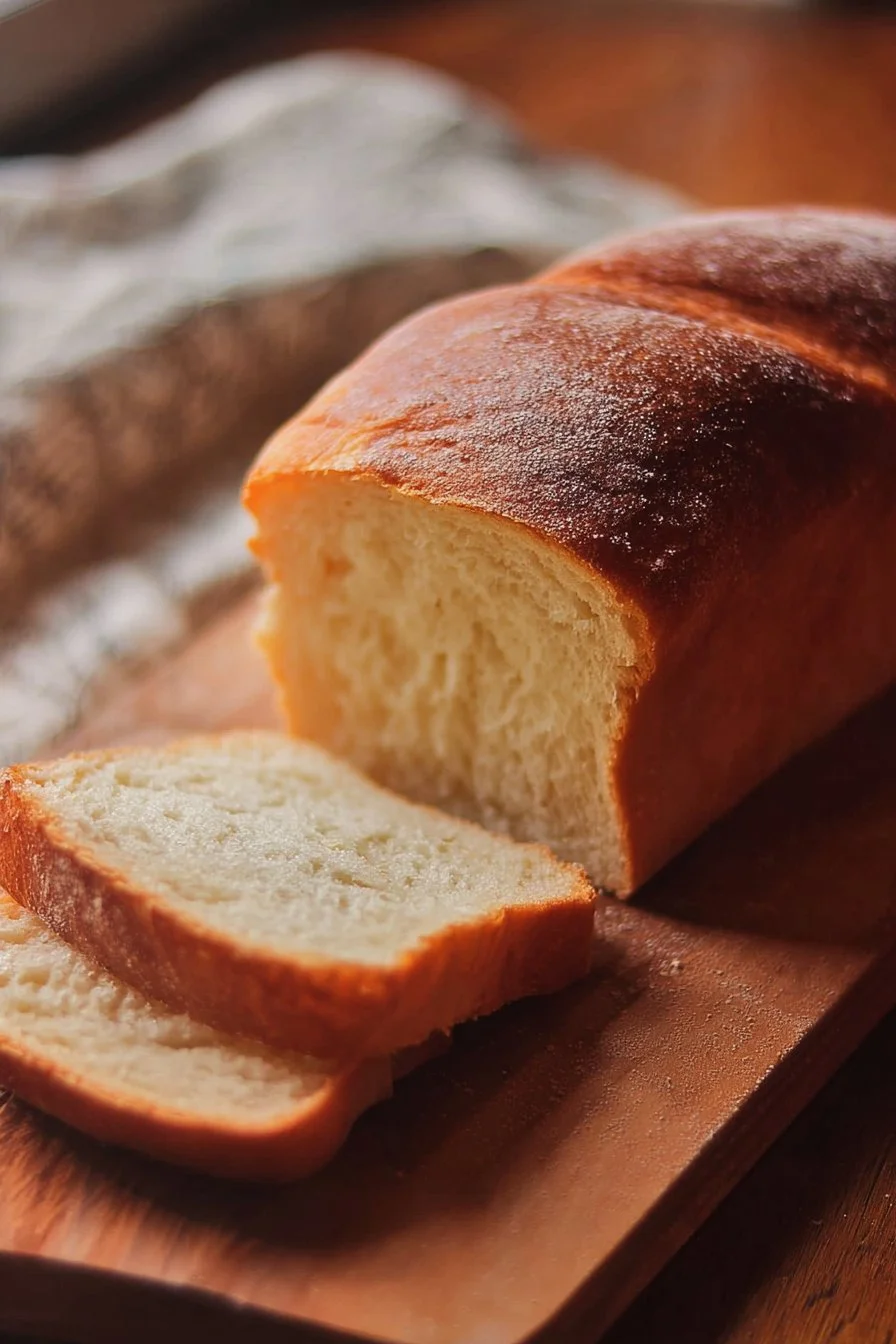
This quick sandwich loaf is the kind of everyday bread you can make on a weeknight and still slice for lunches the next morning. It uses rapid-rise yeast, a short first rise and a forgiving dough so you don’t need a mixer or hours of patience — just warm water, a little sugar and oil, and about 30–40 minutes of hands-on time. If you enjoy homemade sandwich loaves as the base for hearty subs, you might also like this rich, melty slow-cooker French dip to pair with it.
Why you’ll love this dish
This recipe is built for speed and reliability. The rapid-rise yeast and a short rise give you a soft, even crumb without an all-day starter or cold ferment. It’s budget-friendly, uses pantry staples, and makes two classic 9×5-inch loaves that are ideal for sandwiches, toast, or a quick grilled cheese.
"Perfectly soft sandwich bread in under an hour — the kids prefer it to store-bought." — home baker review
Perfect occasions: weeknight dinners, lunch prep for school or work, or a last-minute loaf to serve with soup. If you want sandwich bread that’s approachable and repeatable, this is it.
The cooking process explained
You start by blooming the rapid-rise yeast in very warm water (about 105–115°F / 40–46°C) with sugar so it foams quickly. After adding oil, some flour and salt, you finish building the dough with more flour until it pulls away from the bowl. A short knead (4–5 minutes) develops enough gluten for structure without a long workout. A 20-minute rise is enough to nearly double the dough because of the rapid yeast, then shape into two loaves and bake at 350°F (175°C) until golden. Expect 25–30 minutes in the oven.
This process keeps the crumb tender and the crust thin — ideal for sandwich slices that don’t crumble.
What you’ll need
- 2 cups very warm water (about 105–115°F / 40–46°C) — too-hot water kills yeast; too-cool water slows it.
- 1 packet rapid-rise (instant) yeast (2 1/4 teaspoons)
- 1/4 cup granulated sugar — feeds the yeast and tenderizes the crumb.
- 2 tablespoons vegetable oil (canola or sunflower work well)
- 4 3/4–5 1/4 cups all-purpose flour — start with less and add up to the higher amount as needed.
- 1 1/2 teaspoons salt
Notes and substitutions:
- Bread flour swap: For a chewier, taller loaf use bread flour 1:1; you may need slightly less water.
- Oil swap: Melted butter gives flavor but can brown the crust a touch more.
- Yeast alternatives: If you only have active dry yeast, use the same amount but proof it 10 minutes in the warm water (it may take longer to foam).
Step-by-step instructions
- In a large bowl, whisk together the very warm water, packet of rapid-rise yeast, and sugar. Let sit for 5 minutes — it should be foamy on top. If it doesn’t foam, the yeast may be old or the water temperature was off.
- Add the vegetable oil, 2 1/4 cups of the flour, and the salt. Mix with a dough hook or a sturdy wooden spoon until it begins to come together.
- Gradually add the remaining flour, 1/4 cup at a time, until the dough starts to pull cleanly away from the sides of the bowl but still feels slightly tacky. Stop adding flour once the dough isn’t sticking to your fingers excessively.
- Knead the dough for 4–5 minutes (by hand on a lightly floured surface or with a mixer) until it’s smooth and elastic. You’ll know it’s ready when it springs back slowly when poked.
- Cover the bowl with plastic wrap or a clean kitchen towel and let the dough rise in a warm spot for about 20 minutes, or until it nearly doubles.
- Gently deflate the dough, divide it into two even pieces. Shape each into a loaf by flattening into a rectangle, folding the long edge in toward the center, rolling tightly, and pinching the seam closed.
- Place each loaf seam-side down into greased 9×5-inch loaf pans. Cover and let rest 10–15 minutes while the oven preheats to 350°F (175°C).
- Bake for 25–30 minutes, until the tops are golden brown and the loaves sound hollow when tapped. For a reliable doneness check, the internal temperature should be about 190–200°F (88–93°C).
- Cool in the pans 5–10 minutes, then transfer the loaves to a wire rack to cool completely before slicing for the best texture.
Best ways to enjoy it
This bread is endlessly useful. Slice it thick for toasted avocado and eggs, thin for deli sandwiches, or cube and toast for croutons. Toasted with butter, it’s a simple breakfast star. For a hearty dinner sandwich, use it as the vehicle for hot roast beef and au jus — try pairing slices with that same rich slow-cooker French dip for dunking.
Pairings:
- Classic: ham, cheddar, and mustard
- Comfort: grilled cheese with sharp cheddar and a smear of tomato jam
- Breakfast: scrambled eggs, melted cheese, and sliced tomato
Storage and reheating tips
- Room temperature: Wrap cooled loaves tightly in plastic or keep in an airtight container for up to 3 days. Bread stored at room temperature keeps crumb softness best.
- Refrigeration: Avoid refrigerating unless your home is very humid — refrigeration speeds staling. If you must, wrap well and use within 4–5 days.
- Freezing: Slice before freezing for convenience. Wrap tightly in plastic and place in a freezer bag for up to 3 months. Toast or thaw slices at room temperature.
- Reheating: Refresh slices in a toaster or oven at 350°F (175°C) for 5–7 minutes. For a whole frozen loaf, thaw overnight in the refrigerator then warm in a 300°F (150°C) oven for 10–15 minutes.
Food safety: Always cool completely before wrapping to prevent condensation and mold. If the loaf develops an off smell, discoloration, or visible mold, discard it.
Helpful cooking tips
- Water temperature matters: Use a thermometer if you have one. 105–115°F (40–46°C) wakes rapid-rise yeast without damaging it.
- Flour amounts vary: Humidity and brand affect absorption. Add flour gradually; dough should feel slightly tacky but not sticky.
- Short knead works: Over-kneading can make a tight crumb; 4–5 minutes is enough with rapid yeast to develop gluten.
- Warm rise spot: Use an oven warmed briefly then turned off, or place the bowl near a warm stovetop. Avoid hot spots that will overproof.
- Shaping seam: Tuck the final seam under the loaf for a smooth top and even rise.
- Test for doneness: Hollow sound and internal temperature are better indicators than color alone.
Creative twists
- Sesame or poppy seed top: Brush loaves with an egg wash or milk and sprinkle seeds before baking.
- Honey-sweetened: Substitute 2 tablespoons honey for some of the sugar for a subtly sweeter crumb.
- Whole wheat blend: Replace up to 50% of the all-purpose flour with whole wheat and increase water by 2–4 tablespoons.
- Herb and garlic: Fold 1–2 teaspoons dried herbs and 1 teaspoon garlic powder into the dough for savory sandwiches.
- Milk-enriched: Replace half the water with warm milk for a richer, softer loaf.
Common questions
Q: How long does the whole recipe take from start to finish?
A: Active hands-on time is about 30–40 minutes. With rises and baking, plan 1 1/4 to 1 1/2 hours total.
Q: Can I make one large loaf instead of two?
A: Yes — use a larger pan and increase baking time by 10–15 minutes. Check for an internal temperature of 190–200°F.
Q: My dough didn’t rise. What went wrong?
A: Likely causes are old yeast, water that was too hot or too cold, or salt contacting yeast directly. Always check yeast freshness and water temperature, and mix salt into the flour before combining with yeast.
Q: Can I use a stand mixer?
A: Absolutely. Use the dough hook on low–medium speed and knead about 4 minutes. Watch the dough’s texture rather than the clock.
Q: Is this bread good for sandwiches and toasting?
A: Yes. It produces a tender crumb that slices cleanly and toasts evenly without crumbling.
If you have more questions about technique, substitutions, or pairing ideas, ask and I’ll help tailor the loaf to your kitchen and taste.
Print
Quick Sandwich Loaf
- Total Time: 60 minutes
- Yield: 2 loaves
- Diet: Vegetarian
Description
A quick and easy sandwich loaf perfect for weeknight dinners and lunch prep.
Ingredients
- 2 cups very warm water (about 105–115°F / 40–46°C)
- 1 packet rapid-rise (instant) yeast (2 1/4 teaspoons)
- 1/4 cup granulated sugar
- 2 tablespoons vegetable oil
- 4 3/4–5 1/4 cups all-purpose flour
- 1 1/2 teaspoons salt
Instructions
- In a large bowl, whisk together the very warm water, packet of rapid-rise yeast, and sugar. Let sit for 5 minutes until foamy.
- Add the vegetable oil, 2 1/4 cups flour, and salt. Mix until it begins to come together.
- Gradually add remaining flour, 1/4 cup at a time, until the dough pulls away from the sides of the bowl.
- Knead the dough for 4–5 minutes until smooth and elastic.
- Cover the bowl and let the dough rise for about 20 minutes until nearly doubled.
- Deflate the dough, divide it into two pieces, and shape each into a loaf.
- Place loaves seam-side down in greased loaf pans and let rest for 10-15 minutes.
- Bake at 350°F (175°C) for 25–30 minutes until golden brown and hollow-sounding when tapped.
- Cool in pans for 5–10 minutes before transferring to a wire rack to cool completely before slicing.
Notes
Bread flour can be substituted for a chewier texture. Consider melted butter instead of oil for flavor. Store at room temperature or freeze for later use.
- Prep Time: 30 minutes
- Cook Time: 30 minutes
- Category: Bread
- Method: Baking
- Cuisine: American