
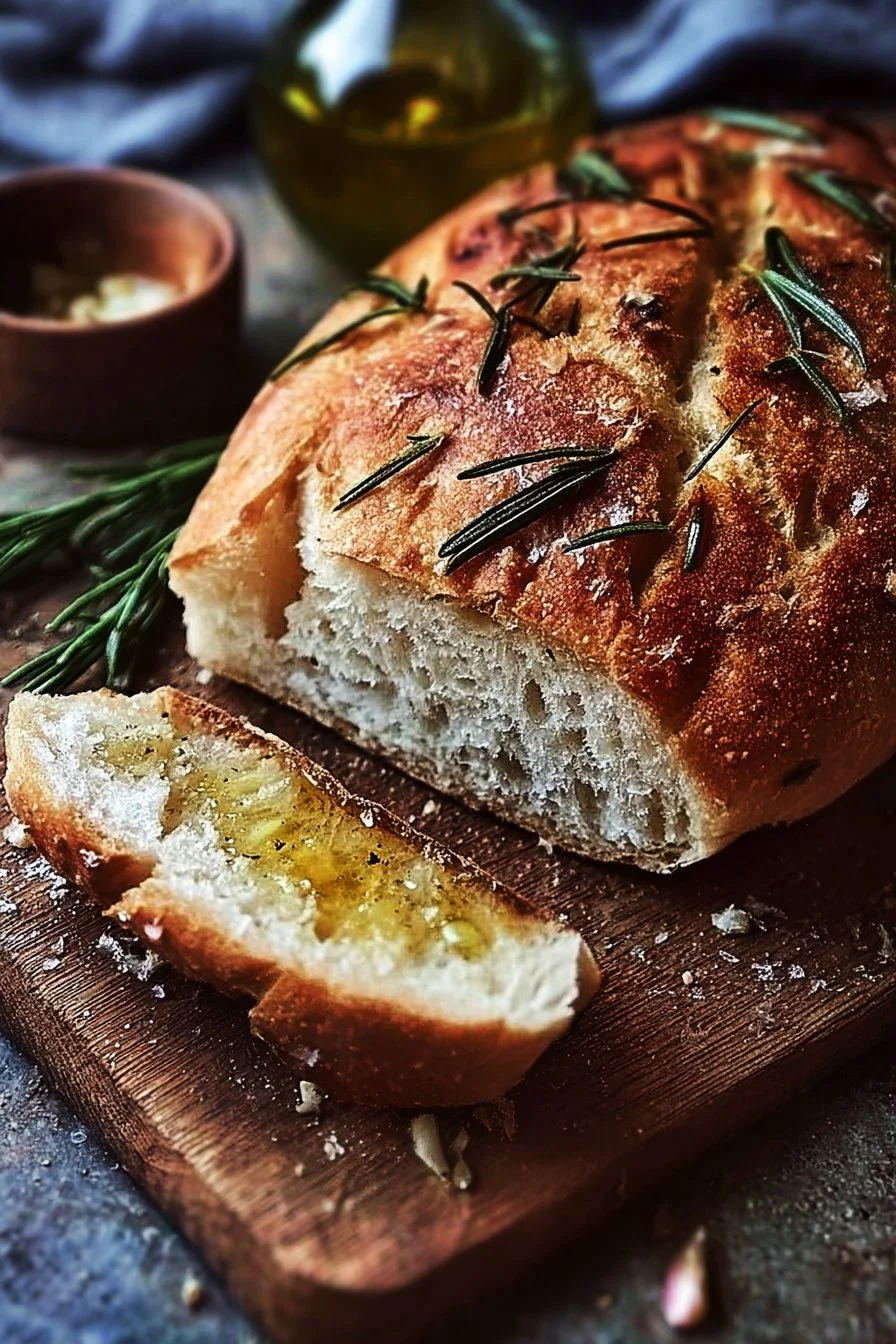
A warm loaf studded with aromatic rosemary and sweet roasted garlic is one of those simple pleasures that turns an ordinary meal into something memorable. This artisan-style bread has a crisp, golden crust, an open crumb, and enough garlicky perfume to make it the centerpiece of a weeknight dinner, a picnic, or a holiday spread. If you love hands-on baking that rewards you with bakery-quality results at home, this is a reliably satisfying loaf — and if you want a slightly different technique, you can compare it to a similar garlic-herb Dutch oven bread recipe for inspiration.
Why you’ll love this dish
This loaf hits a lot of home-baking sweet spots: minimal ingredients, forgiving technique, and a bold flavor profile from roasted garlic and fresh rosemary. It’s rustic enough for casual meals but elegant enough to serve at a dinner party.
“The smell alone makes guests line up at the table — nutty crust, garlic that melts into the crumb, and rosemary in every bite.” — a repeat baker’s quick review
Perfect occasions:
- Weeknight dinners (pairs beautifully with soups and salads)
- Brunch or a charcuterie board
- A holiday table when you want something homemade but not fussy
Save the crumbs for dipping in olive oil, or slice thick for sandwiches — this bread is versatile.
The cooking process explained
Before you start, here’s the workflow so you know what to expect: mix dry ingredients, add warm water and oil into a shaggy dough, fold in roasted garlic and chopped rosemary, knead until smooth, rise until doubled, shape, proof again, then bake at high heat for a crisp crust. A short rest after baking improves slicing. Expect about 1 hour 30 minutes of active time plus rise and bake — most of the timeline is hands-off rising.
What you’ll need
- 3 cups (about 375 g) all-purpose flour
- 1 tablespoon sugar
- 2 teaspoons fine salt
- 1 teaspoon active dry yeast
- 1 cup (240 ml) warm water, about 105–115°F (40–46°C)
- 2 tablespoons olive oil, plus extra for greasing
- 2 tablespoons fresh rosemary, finely chopped (strip leaves from stems before chopping)
- 1 head garlic, roasted (see note)
Notes and substitutions:
- Active dry yeast: can be swapped for instant yeast — reduce water slightly and mix yeast directly into dry ingredients (see FAQ).
- For a deeper flavor, use part bread flour (replace up to 1 cup of all-purpose).
- To make roasted garlic: trim the top of the head to expose cloves, drizzle with olive oil, wrap in foil, and roast at 400°F for 35–45 minutes until creamy and soft.
Step-by-step instructions
- In a large mixing bowl, whisk together the flour, sugar, salt, and yeast until evenly distributed.
- In a separate bowl, combine warm water and olive oil. Pour the liquid into the dry mixture a little at a time, stirring with a wooden spoon until a shaggy dough forms.
- Add chopped rosemary and the roasted garlic cloves. Gently mash the garlic into the dough so it disperses; leave some small pockets for bursts of flavor.
- Turn the dough onto a lightly floured surface and knead for about 10 minutes. The dough should become smooth, slightly tacky but not sticky, and elastic. If it’s very sticky, dust with a little more flour — don’t overdo it.
- Lightly oil a clean bowl, place the dough inside, cover with a damp towel or plastic wrap, and let it rise in a warm spot for about 1 hour, or until doubled in size.
- Preheat your oven to 425°F (220°C). If you roast garlic or want extra steam, preheat a small pan you’ll use for steam on the bottom rack.
- Gently deflate the dough, shape it into a loaf, and transfer it to a greased loaf pan or a baking sheet. For a more rustic crust, shape into a round and bake on a preheated baking stone or sheet.
- Cover and let it rise again for about 30 minutes until puffy.
- If desired, create steam in the oven by pouring a cup of hot water into the preheated pan or adding a few ice cubes at the bottom of the oven (careful with splatter). Bake the bread for 25–30 minutes, until golden brown and hollow-sounding when tapped. Internal temperature should be around 190–200°F (88–93°C).
- Remove from oven and cool on a wire rack for at least 20 minutes before slicing to let the crumb finish setting.
Best ways to enjoy it
This bread shines hot or room temperature. Try these pairings:
- Warm with a drizzle of good olive oil and flaky sea salt.
- Sliced and toasted with soft cheeses like burrata or ricotta.
- With soups (tomato, minestrone) or stews — the garlicky crumb soaks up broth beautifully.
- As a sandwich base for roasted vegetables or a simple grilled cheese.
For an impressive platter, slice thick, arrange with olives, cured meats, and a rosemary-garlic butter.
Storage and reheating tips
- Room temperature: Keep the cooled loaf in a paper bag or loosely wrapped in a kitchen towel for up to 48 hours. Paper helps preserve crust crispness.
- Short-term soft storage: A plastic bag or airtight container will keep slices soft for 2–3 days but will soften the crust.
- Freezing: Cool completely, slice, then wrap tightly in plastic wrap and foil or use an airtight freezer bag. Freeze up to 3 months. Reheat from frozen at 350°F for 10–15 minutes or toast slices.
- Reheating: Refresh slices in a 350°F oven for 5–10 minutes to restore crust. For single slices, a toaster oven works well. Avoid microwaving whole loaves — they go gummy.
Food safety: bread left out at room temperature is fine for several days; refrigerating can stale bread faster, so only refrigerate if storing with perishable fillings.
Pro chef tips
- Don’t over-flour while kneading. Slight tackiness yields a lighter crumb. Use a bench scraper to handle dough instead of adding lots of flour.
- Fold-in technique: instead of vigorous kneading, you can perform a series of stretch-and-folds every 20 minutes during the first hour — this builds strength with less effort and gives an open crumb.
- Steam matters: a hot oven with steam for the first 10 minutes gives a glossy, blistered crust. Use a preheated metal pan with boiling water or a tray of ice cubes placed quickly into the oven.
- Roasting garlic: roast until cloves can be mashed with a fork. If you prefer less intensity, mash into a paste and mix with a tablespoon of warm oil before adding.
- If you want a crispier bottom, bake directly on a preheated baking stone or heavy sheet.
For extra technique examples and a different method that uses a Dutch oven to trap steam, try this detailed garlic-herb Dutch oven bread tutorial.
Creative twists
- Cheesy rosemary garlic loaf: fold in 1 cup shredded Parmesan or sharp cheddar at the end of kneading.
- Whole wheat version: replace up to 1 cup of all-purpose with whole wheat flour and add an extra tablespoon of water. Knead slightly longer.
- Olives and lemon: add 1/2 cup chopped Kalamata olives and a teaspoon of lemon zest for a Mediterranean spin.
- Herb mix variations: swap rosemary for thyme or add chopped sage for autumnal flavor.
- Garlic intensity: for a milder profile, use 1/2 head roasted garlic or blend roasted cloves into softened butter and swirl into the loaf before shaping.
Common questions
Q: Can I use instant yeast instead of active dry yeast?
A: Yes. Use the same quantity of instant yeast but mix it directly into the dry ingredients. You may not need to proof in warm water first; the dough may rise a bit faster, so keep an eye on rise times.
Q: How do I roast a whole head of garlic?
A: Trim the top to expose cloves, place the head on foil, drizzle with olive oil, wrap tightly, and roast at 400°F for 35–45 minutes. Cloves should be soft and caramelized. Allow to cool before handling.
Q: My bread turned out dense — what went wrong?
A: Common causes are underproofing (didn’t double in the first rise), too much flour during kneading, or inactive yeast (check freshness). Also, water temperature that’s too hot can kill yeast; aim for 105–115°F when using active dry yeast.
Q: Can I make this in a bread machine or with a stand mixer?
A: Yes. Use the dough cycle on a bread machine and then shape and bake in your oven for best crust. In a stand mixer, knead with the dough hook on medium for 6–8 minutes until smooth and elastic.
Q: How can I tell when the bread is fully baked?
A: Tap the bottom of the loaf — it should sound hollow. A reliable check is internal temperature: 190–200°F (88–93°C) for enriched or garlic breads.
If you have more questions about adapting the recipe to your oven or desired crust, ask and I’ll walk through adjustments based on your equipment.
Print
Roasted Garlic and Rosemary Bread
- Total Time: 90 minutes
- Yield: 1 loaf
- Diet: Vegetarian
Description
A warm artisan-style loaf studded with aromatic rosemary and sweet roasted garlic, perfect for any meal or occasion.
Ingredients
- 3 cups (about 375 g) all-purpose flour
- 1 tablespoon sugar
- 2 teaspoons fine salt
- 1 teaspoon active dry yeast
- 1 cup (240 ml) warm water (about 105–115°F or 40–46°C)
- 2 tablespoons olive oil, plus extra for greasing
- 2 tablespoons fresh rosemary, finely chopped
- 1 head garlic, roasted
Instructions
- In a large mixing bowl, whisk together the flour, sugar, salt, and yeast until evenly distributed.
- In a separate bowl, combine warm water and olive oil. Pour the liquid into the dry mixture a little at a time, stirring with a wooden spoon until a shaggy dough forms.
- Add chopped rosemary and the roasted garlic cloves, gently mashing the garlic into the dough.
- Turn the dough onto a lightly floured surface and knead for about 10 minutes until smooth and elastic.
- Lightly oil a clean bowl, place the dough inside, cover, and let it rise in a warm spot for about 1 hour or until doubled in size.
- Preheat your oven to 425°F (220°C).
- Gently deflate the dough, shape it into a loaf, and transfer to a greased loaf pan or baking sheet.
- Cover and let it rise again for about 30 minutes until puffy.
- Bake the bread for 25–30 minutes until golden brown and hollow-sounding when tapped.
- Cool on a wire rack for at least 20 minutes before slicing.
Notes
Store leftovers in a paper bag or loosely wrapped in a kitchen towel for up to 48 hours. For longer storage, slice and freeze.
- Prep Time: 60 minutes
- Cook Time: 30 minutes
- Category: Bread
- Method: Baking
- Cuisine: Italian