
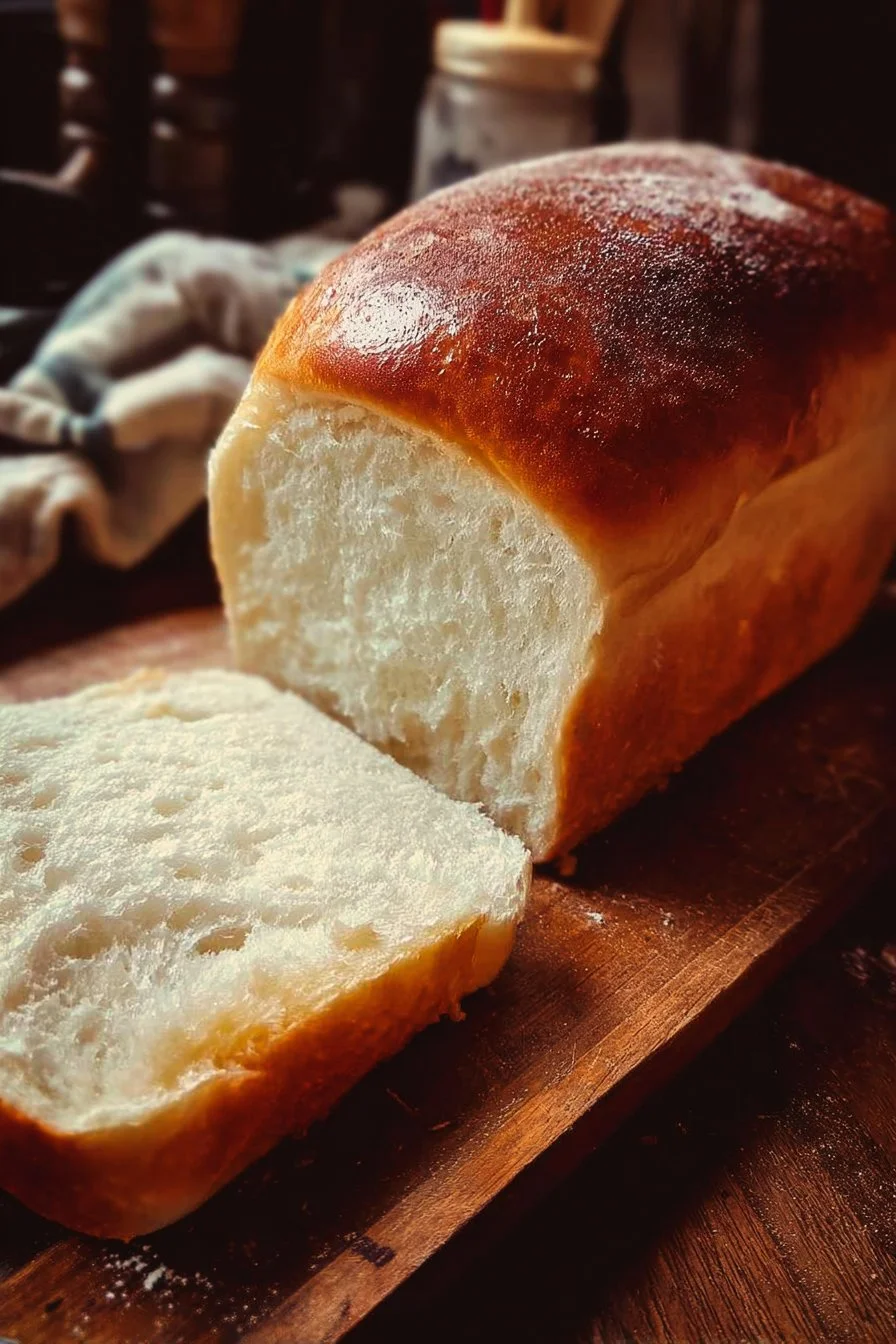
There’s something about pulling a warm, soft loaf of homemade white bread from the oven that feels quietly triumphant — and this version is built to be reliable, simple, and forgiving. It uses pantry staples (flour, yeast, sugar, salt, butter) and basic techniques so even a busy weeknight baker can end up with tender slices perfect for toast, sandwiches, or dunking into soups. If you like pairing fresh bread with slow-cooked mains, try it alongside something bold like Asian meatballs in the crockpot for an easy, crowd-pleasing meal.
Why you’ll love this recipe
This white bread recipe strikes the sweet spot between soft crumb and straightforward technique. It’s:
- Starter-friendly: no preferments or long refrigerated rises.
- Economical: pantry staples only.
- Kid-approved: soft, mild flavor that’s perfect for PB&J or grilled cheese.
- Flexible: works by hand or with a stand mixer.
“Soft, pillowy slices with a golden crust — the loaf that finally convinced me to stop buying store bread.” — a regular home-baker review
Perfect occasions: weekday sandwiches, family brunches, or a simple loaf to bring to a potluck. The formula scales well (double for more loaves) and tolerates small timing shifts, which makes it great for bakers who want consistent results without fuss.
How this recipe comes together
Before you dig in, here’s the process in plain terms so you know what to expect and why each stage matters:
- Bloom the yeast: warm water + sugar wakes the yeast and ensures it’s active.
- Combine dry ingredients and rub in butter: creates tenderness and flavor.
- Mix and knead: develops gluten for structure; dough will be slightly sticky.
- First rise (bulk fermentation): dough doubles and gains air.
- Shape and second rise: forms the loaf and improves oven spring.
- Bake: golden crust and internal set.
- Cool completely before slicing so the crumb finishes setting.
Knowing this flow helps you troubleshoot: slow rise? Your room is cool. Sticky dough? That’s okay — slightly tacky dough makes a softer loaf.
What you’ll need
- 2 cups warm water (about 105–115°F / 40–46°C)
- 1/4 cup granulated sugar
- 2 teaspoons active dry yeast (or rapid-rise; adjust rise time)
- 5 cups all-purpose flour (or bread flour for more chew)
- 2 teaspoons fine salt
- 3 tablespoons softened unsalted butter (or melted and cooled)
Notes and substitutions:
- Bread flour yields a slightly chewier loaf; all-purpose gives a tender crumb.
- Use slightly less salt if using salted butter.
- For a dairy-free option, substitute 3 tbsp vegetable oil or margarine.
- If using instant/rapid-rise yeast, you can mix it directly into the flour and shorten the first rise (about 30–40 minutes total).
Step-by-step instructions
- In a liquid measuring cup, combine 2 cups warm water and 1/4 cup sugar. Stir until dissolved. The water should feel warm but not hot — too-hot water will kill the yeast.
- Sprinkle 2 teaspoons of yeast over the water and let sit 5–10 minutes until foamy. If it doesn’t foam, the yeast may be old; start over with fresh yeast.
- In a large bowl, mix 5 cups flour and 2 teaspoons salt. Add 3 tablespoons softened butter and rub it into the flour until the mixture looks crumbly. This coats some flour with fat, helping a tender crumb.
- Add the foamy yeast water to the flour and stir until a shaggy dough forms.
- Knead by hand in the bowl for 8–10 minutes. The dough will be slightly sticky — resist adding a lot of extra flour, which can make the loaf dense. If using a stand mixer, knead with the dough hook on medium for 5–7 minutes until smooth and elastic. Perform a windowpane test (stretch a small piece — it should thin without tearing) to check gluten development.
- Cover the bowl with a clean towel or plastic wrap. Let the dough rise in a warm place for 1–2 hours, until roughly doubled. If using rapid-rise yeast, aim for about 35 minutes.
- Punch down the dough gently to release large gas pockets. Divide into two equal portions and shape each into a loaf by flattening into a rectangle, rolling tightly, and sealing the seam.
- Place loaves in greased 9×5-inch loaf pans. Cover and let rise again 30–45 minutes, until the dough rises about an inch above the pan rim. This ensures a full top and good oven spring.
- Preheat the oven to 375°F (190°C). Bake for about 25 minutes, or until the tops are golden brown and the internal temperature reaches about 190–200°F (88–93°C). Tap the bottom — it should sound hollow.
- Remove loaves from pans and cool on a wire rack at least 30 minutes before slicing. Cooling lets steam redistribute and the crumb finish setting; slicing too soon results in gummy texture.
Best ways to enjoy it
Freshly baked white bread is wonderfully versatile. Try these serving ideas:
- Thick-cut toast with butter and jam for breakfast.
- Classic grilled cheese or ham-and-cheese sandwiches.
- Use for French toast the next morning — slightly stale slices soak up the custard nicely.
- Make big deli-style sandwiches for picnics or school lunches.
For pairing inspiration, this bread is a great foil for hearty protein mains and saucy dishes — for more sandwich and meal ideas, check out these easy chicken recipes to pair with homemade bread.
Storage and reheating tips
- Room temperature: Store wrapped in a clean tea towel or in a bread box for 1–2 days. For best texture, use within 48 hours.
- Freezing: Slice the cooled loaves, wrap individual slices or whole loaves tightly in plastic, and freeze up to 3 months. Thaw at room temperature or toast slices directly from frozen.
- Refrigeration: Avoid refrigerating — it speeds up staling. Only refrigerate if your kitchen is very humid and you’re worried about mold, but expect firmer crumb.
- Reheating: For a fresh-baked feel, warm slices in a 350°F oven for 5–10 minutes or toast until golden. For a whole frozen loaf, thaw, then refresh in a 350°F oven for 10–15 minutes.
Pro chef tips
- Water temperature is critical: 105–115°F wakes yeast without killing it. Use a thermometer if unsure.
- Don’t over-flour while kneading; a slightly tacky dough yields a softer crumb. Dust hands with a little flour instead of adding to the dough.
- If the room is cool, proof the dough inside an oven with just the light on (not heated) — it raises the temperature a few degrees for steady fermentation.
- Brush the top with melted butter immediately after baking for a soft, shiny crust. For a crispier crust, skip the butter and bake with a shallow pan of hot water on the bottom oven rack for steam.
- Measure flour properly: spoon into the cup and level — packing flour leads to dry, dense loaf.
Creative twists
- Honey-Buttered: Replace half the sugar with honey for a subtle floral note.
- Milk-Enriched: Swap half the water for warm milk for a richer, softer crumb.
- Seeded Top: Brush with egg wash and sprinkle sesame, poppy, or everything bagel seasoning before the second rise.
- Whole Wheat Blend: Replace up to 2 cups of the flour with whole wheat and add 1–2 extra tablespoons of water to compensate.
- Garlic-Herb: Fold in 1–2 teaspoons garlic powder and a tablespoon chopped fresh herbs into the dough for savory slices.
Common questions
Q: Can I use instant yeast instead of active dry yeast?
A: Yes. If using instant (rapid-rise) yeast, you can mix it directly into the flour and skip proofing in water. Reduce the first rise to 30–40 minutes as the yeast works faster.
Q: My dough is very sticky — should I add more flour?
A: Slight stickiness is normal and will produce a softer loaf. Dust your hands and work surface with a little flour, but avoid adding more than 1–2 tablespoons unless the dough is unmanageably wet.
Q: How do I know when the bread is fully baked?
A: The top should be golden brown, the loaf should sound hollow when tapped on the bottom, and the internal temperature should be 190–200°F (88–93°C) for white bread.
Q: Can I halve or double the recipe?
A: Absolutely. Halving works fine (use a single 9×5 pan). Doubling is convenient for larger families — bake extra loaves and freeze sliced portions.
Q: Why is my loaf dense after baking?
A: Common causes are under-kneading (insufficient gluten development), too much flour, old yeast, or not allowing proper rise time. Check your yeast foam, knead to a smooth elastic dough, and ensure adequate warm proofing.
If you have a specific oven or altitude and want tailored adjustments, tell me your conditions and I’ll suggest precise changes.
Print
Homemade White Bread
- Total Time: 45 minutes
- Yield: 2 loaves
- Diet: Vegetarian
Description
A reliable and simple recipe for soft, homemade white bread perfect for toast, sandwiches, or with soups.
Ingredients
- 2 cups warm water (about 105–115°F / 40–46°C)
- 1/4 cup granulated sugar
- 2 teaspoons active dry yeast
- 5 cups all-purpose flour
- 2 teaspoons fine salt
- 3 tablespoons softened unsalted butter
Instructions
- Combine warm water and sugar in a measuring cup; stir until dissolved.
- Sprinkle yeast over the water; let sit until foamy.
- Mix flour and salt in a large bowl; rub in softened butter until crumbly.
- Add foamy yeast water to the flour mixture; stir until a shaggy dough forms.
- Knead by hand in the bowl for 8–10 minutes or use a stand mixer for 5–7 minutes until smooth.
- Cover the bowl and let it rise in a warm place for 1–2 hours until doubled.
- Punch down the dough and divide into two portions; shape each into a loaf.
- Place in greased loaf pans and let rise for another 30–45 minutes.
- Preheat the oven to 375°F (190°C).
- Bake for about 25 minutes until golden brown and hollow sound when tapped.
- Remove from pans and cool on a wire rack for at least 30 minutes before slicing.
Notes
For a dairy-free option, use vegetable oil instead of butter. Avoid over-flouring during kneading for a softer loaf.
- Prep Time: 15 minutes
- Cook Time: 25 minutes
- Category: Bread
- Method: Baking
- Cuisine: American