
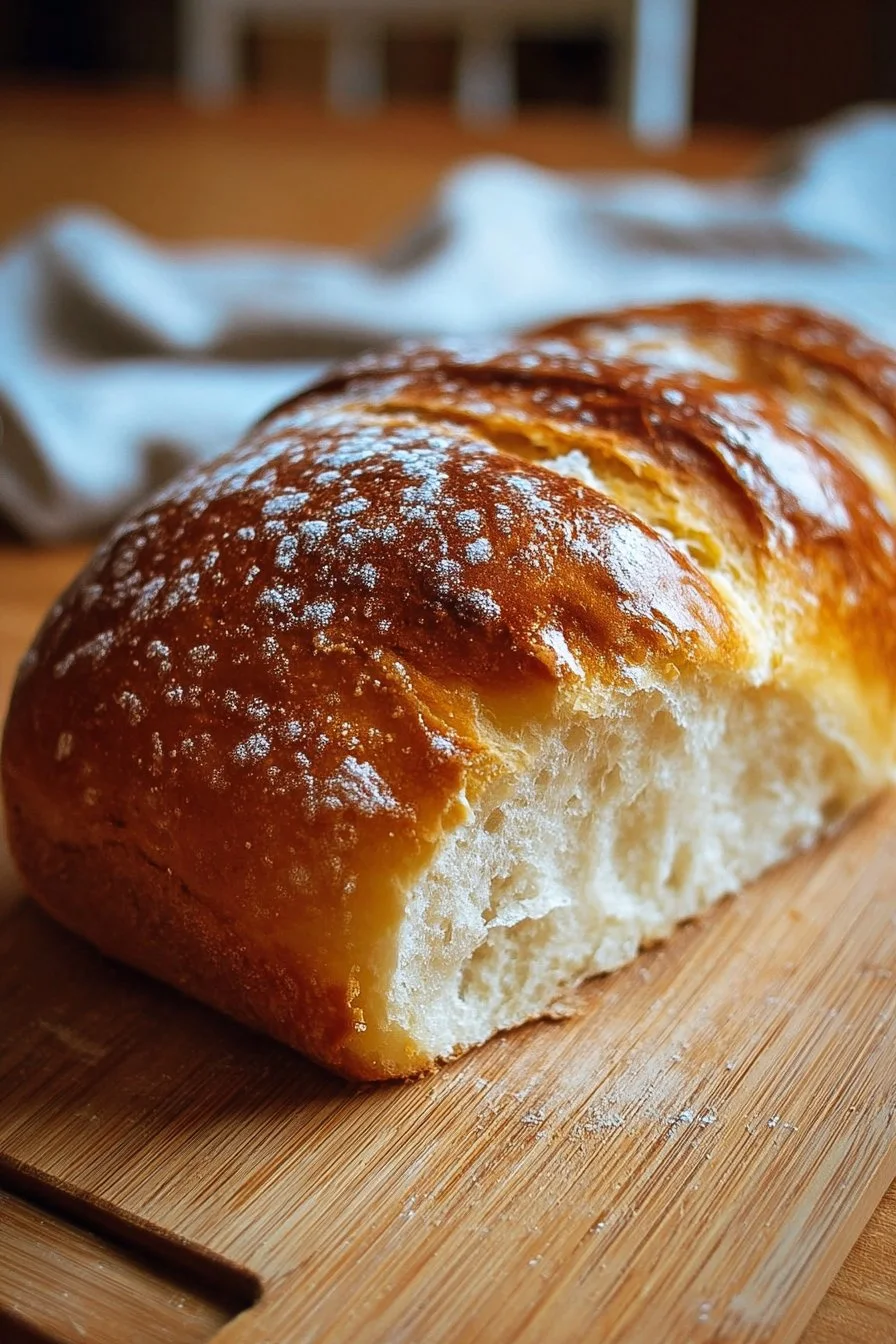
A warm, crackling loaf straight from your oven is one of the simplest home luxuries. This straightforward recipe turns basic pantry staples — flour, yeast, water, sugar, salt, and olive oil — into a soft, golden loaf that’s perfect for sandwiches, soups, or simply smeared with butter. If you enjoy experimenting with crumb structure or shaping loaves, try pairing these fundamentals with the techniques in homemade artisan bread techniques to take texture and crust further.
Why you’ll love this dish
This bread is the kind of recipe you make when you want reliable results without complicated steps. It’s forgiving, budget-friendly, and produces a tender interior with a pleasant crust — ideal for weeknight dinners, school lunches, or weekend baking therapy.
“I made this on a rainy afternoon and the whole house smelled like a bakery. The crumb was soft, and it sliced perfectly for grilled cheese.” — a home baker who tested this loaf
Reasons to try it:
- Fast-ish timeline: active hands-on time is about 20–30 minutes; most time is passive rising.
- Minimal ingredients you probably already have.
- Kid-friendly: kids can help knead and shape.
- Versatile: works as sandwich bread, toast, or a base for garlic bread.
How this recipe comes together
Step-by-step overview before you start:
- Activate yeast in warm water with sugar so you know it’s alive (foam means good).
- Add salt and oil for flavor and crumb tenderness.
- Gradually add flour until a soft dough forms, then knead until smooth and elastic.
- Twice rise: a first bulk rise to develop flavor and a final rise in the pan to set the shape.
- Bake at 350°F (175°C) until golden and hollow-sounding.
This sequence keeps things simple and predictable: proof, mix, knead, rise, shape, bake.
What you’ll need
- 3 1/4 cups (about 410 g) all-purpose flour — you can swap up to 1 cup with whole wheat (expect a denser crumb).
- 1 packet (2 1/4 teaspoons) active dry yeast
- 1 1/4 cups warm water (about 105–115°F / 40–46°C)
- 2 tablespoons sugar (feeds the yeast and lightly sweetens the loaf)
- 1 teaspoon salt
- 2 tablespoons olive oil (or neutral oil like vegetable)
Notes:
- If using instant yeast, you can mix it with the dry ingredients and skip the preproof step — but this recipe assumes active dry yeast, so proofing is safer.
- For richer flavor, substitute 1–2 tablespoons of the water with warm milk.
Step-by-step instructions
- In a large bowl, dissolve the sugar in the warm water. Sprinkle the active dry yeast evenly over the surface. Let it sit 5–10 minutes until foamy. If it doesn’t foam, the yeast may be dead — start with fresh yeast and try again.
- Stir in the salt and olive oil to the yeast mixture.
- Gradually add the flour, stirring with a wooden spoon or dough scraper until a soft dough forms. The dough should be slightly tacky but pull away from the bowl sides.
- Turn the dough onto a lightly floured surface and knead for 8–10 minutes until smooth and elastic. If the dough sticks excessively, dust with a little more flour but avoid adding too much — you want the loaf tender.
- Place the dough in a greased bowl, turning once to coat. Cover with a clean cloth or plastic wrap and let rise in a warm spot about 1 hour, or until doubled in size.
- Gently punch down the dough to release gas. Shape it into a loaf and place it into a greased 9×5-inch loaf pan. Cover and let rise another 30–45 minutes until puffy and nearly doubled.
- While it finishes the second rise, preheat your oven to 350°F (175°C).
- Bake 25–30 minutes until the crust is golden and the loaf sounds hollow when tapped on the bottom. If the top browns too quickly, tent loosely with foil.
- Remove from the pan and cool on a wire rack. Let the bread cool at least 20–30 minutes before slicing to allow the crumb to set.
Best ways to enjoy it
This bread is extremely versatile:
- Sliced and buttered for breakfast toast.
- For sandwiches: pair with deli meats, roasted vegetables, or creamy spreads.
- Turn slices into garlic bread: brush with garlic butter and broil 2–3 minutes.
- Serve thick with soups or stews; it soaks up broths without disintegrating.
- For brunch, use day-old slices to make French toast.
Storage and reheating tips
- At room temperature: wrap cooled loaf in a clean cloth or store in a bread box for 2–3 days.
- Refrigeration: not recommended for fresh bread (it accelerates staling). Only refrigerate if your kitchen is very humid and mold risk is high.
- Freezing: slice the loaf, wrap slices or whole loaf tightly in plastic and foil, then freeze up to 3 months. Thaw at room temperature or toast directly from frozen.
- Reheating: warm slices in a toaster or oven at 350°F (175°C) for 5–8 minutes. For a freshly-baked crust-like texture, spritz the surface lightly with water and heat briefly.
Pro chef tips
- Water temperature matters: 105–115°F (40–46°C) wakes yeast without killing it. If too hot, yeast dies; too cold, it won’t activate.
- Knead until windowpane: you should be able to stretch a small piece thinly without tearing — that’s gluten development.
- Warm proofing: place the bowl in an oven turned off but with the light on, or on top of a warm appliance. Avoid direct heat.
- Crust control: for a thinner, softer crust, brush melted butter on the hot loaf. For a crispier crust, place a small oven-safe pan with hot water on the bottom rack during the first 10 minutes of baking.
- Short on time? Try this quick 20-minute homemade bread when you need a loaf in a hurry.
- If your dough is sticky: resist adding large amounts of flour. Use oil on your hands and bench for handling instead.
Creative twists
- Herb and garlic: add 1–2 teaspoons dried Italian herbs and 1–2 cloves minced garlic to the dough.
- Seeded top: brush with water and press sesame, poppy, or sunflower seeds on top before the second rise.
- Whole-grain swap: replace 1 cup of all-purpose flour with whole-wheat flour, increase water by 1–2 tablespoons to compensate.
- Sweet loaf: add 2 tablespoons honey and 1/4 cup raisins for a breakfast-style loaf.
- No-knead version: increase the hydration slightly and use a long, slow rise overnight in the fridge; shape and bake the next day.
Common questions
Q: How can I tell if the yeast is alive?
A: After sprinkling yeast over warm water with sugar, it should foam and smell slightly yeasty within 5–10 minutes. No foam = replace the yeast.
Q: My dough didn’t double — what went wrong?
A: Cooler room temperature, inactive yeast, or too much salt contacting the yeast can slow or stop rising. Move dough to a warmer spot (ideally 75–85°F / 24–29°C) and give it extra time.
Q: Can I use bread flour instead of all-purpose?
A: Yes. Bread flour will give more chew and higher rise due to higher protein. You may need a touch more water.
Q: Can I make this gluten-free?
A: Not as written. Gluten-free baking requires different flour blends and often xanthan gum and modified hydration. Use a tested gluten-free bread recipe for best results.
Q: How long should the bread cool before slicing?
A: At least 20–30 minutes. The crumb continues to set as it cools; slicing too soon makes it gummy.
Q: Is it safe to freeze the baked loaf?
A: Yes — wrap tightly and freeze up to 3 months. Thaw at room temperature or warm slices directly in the toaster.
If you have a specific oven type, dietary restriction, or want shaping tips (boule, baguette, or rolls), tell me and I’ll tailor adjustments for your kitchen and taste.
Print
Homemade Bread Loaf
- Total Time: 60 minutes
- Yield: 1 loaf
- Diet: Vegetarian
Description
A simple recipe for a warm, homemade loaf that’s perfect for sandwiches, soups, or enjoyed with butter.
Ingredients
- 3 1/4 cups (about 410 g) all-purpose flour
- 1 packet (2 1/4 teaspoons) active dry yeast
- 1 1/4 cups warm water (about 105–115°F / 40–46°C)
- 2 tablespoons sugar
- 1 teaspoon salt
- 2 tablespoons olive oil
Instructions
- Dissolve the sugar in the warm water. Sprinkle the active dry yeast evenly over the surface and let sit for 5–10 minutes until foamy.
- Stir in the salt and olive oil to the yeast mixture.
- Gradually add the flour, stirring until a soft dough forms.
- Turn the dough onto a lightly floured surface and knead for 8–10 minutes until smooth and elastic.
- Place the dough in a greased bowl, cover, and let rise in a warm spot for about 1 hour, or until doubled in size.
- Punch down the dough, shape it into a loaf, and place into a greased 9×5-inch loaf pan. Cover and let rise another 30–45 minutes until puffy.
- Preheat your oven to 350°F (175°C) during the second rise.
- Bake for 25–30 minutes until golden and hollow sounding when tapped.
- Remove from the pan and cool on a wire rack for at least 20–30 minutes before slicing.
Notes
For richer flavor, substitute 1–2 tablespoons of the water with warm milk. For a softer crust, brush with melted butter after baking.
- Prep Time: 30 minutes
- Cook Time: 30 minutes
- Category: Bread
- Method: Baking
- Cuisine: American