
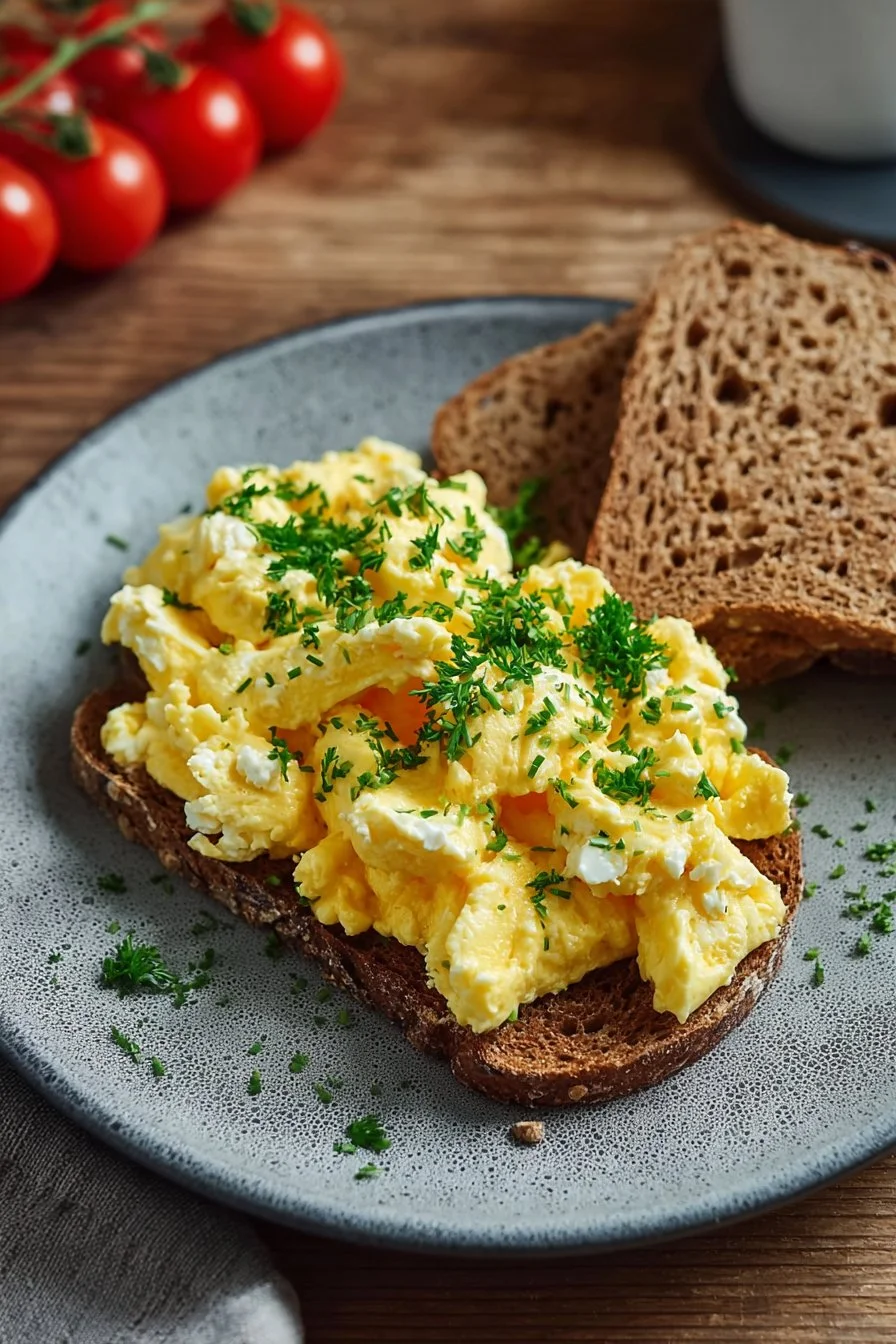
Short, velvety, and impossibly easy — these scrambled eggs get a tangy, creamy lift from cottage cheese. In less than 10 minutes you’ll have soft curds that taste richer than plain eggs, without heavy cream or long techniques. It’s a terrific weekday breakfast, a light brunch centerpiece, or a protein-packed snack when you want something quick and satisfying.
Why you’ll love this dish
This recipe turns ordinary scrambled eggs into something almost luxurious with one simple swap: cottage cheese. The little curds add moisture and protein while keeping the eggs light. It’s ideal when you want a fast, nourishing meal that still feels a bit special.
“I made these for a rushed weekend brunch and every bite was creamy without being greasy. My kids actually asked for seconds.” — a short review from a home cook
Reasons to try it:
- Fast: ready in about 10 minutes from bowl to plate.
- Budget-friendly: eggs and cottage cheese are inexpensive pantry staples.
- High-protein: cottage cheese adds protein without a lot of fuss.
- Kid- and picky-eater friendly: smooth texture and mild flavor.
If you like comforting, creamy dishes, you might also enjoy a bowl of creamy Parmesan Italian sausage ditalini soup for a cozy meal pairing.
How this recipe comes together
Start by whisking eggs with cottage cheese until mostly smooth. Heat a nonstick skillet over medium heat with a drizzle of oil or a knob of butter. Pour in the egg mixture and cook gently, folding the curds slowly with a spatula so they remain soft and moist. Stop cooking when the eggs are just set but still slightly glossy — they’ll continue to firm up a bit off the heat.
This is a low-and-slow approach in miniature: moderate heat, gentle movement, and attention to timing produce the silkiest texture.
Key ingredients
- 4 large eggs — room temperature helps them cook evenly.
- 1/2 cup cottage cheese (small or medium curd) — gives creaminess and tang.
- Salt and black pepper — to taste; add a pinch while whisking and adjust at the end.
- 1 tablespoon olive oil or butter — for the pan. Butter gives richer flavor; olive oil is lighter.
Notes and substitutions:
- Greek yogurt (plain) can substitute for cottage cheese for an even silkier texture, but it’s tangier and thinner.
- Use small-curd cottage cheese for a smoother finish; medium curd is fine too.
- For dairy-free, try a silken tofu blended until smooth, though flavor and texture will differ.
Step-by-step instructions
- Crack the eggs into a bowl. Add the cottage cheese, a pinch of salt, and a few grinds of black pepper. Whisk until the mixture looks creamy and mostly uniform — small curds from the cottage cheese are fine.
- Warm a nonstick skillet over medium heat. Add the olive oil or butter and swirl to coat the surface.
- Pour the egg-cottage cheese mixture into the skillet. Tilt the pan so the eggs spread into an even layer.
- Using a spatula, stir gently and slowly. Fold the eggs over themselves rather than scraping aggressively. This preserves soft curds and prevents overcooking.
- Cook about 3–5 minutes, or until the eggs are just set but still moist and slightly glossy. Remove from heat a touch early — carryover will finish them.
- Taste and adjust seasoning. Serve immediately with toast, a handful of greens, or fresh fruit.
Best ways to enjoy it
These eggs are versatile. Serve them:
- On buttered toast or whole-grain bread with a sprinkle of flaky salt.
- Over sautéed spinach or arugula for a warm-green combo.
- With sliced avocado, a handful of cherry tomatoes, or a side of fresh fruit for balance.
For a heartier meal, try pairing the eggs with a creamy pasta dish — they complement milder sauces like in this creamy salmon pasta for a brunch buffet.
Plating tip: pile the eggs in the center of the plate, add a small scatter of chopped chives or toasted pepper, and place toast leaning against the eggs for an inviting look.
Storage and reheating tips
- Refrigeration: Store leftovers in an airtight container in the fridge for up to 2 days. Eggs with cottage cheese spoil faster than plain cooked eggs, so keep them chilled promptly.
- Freezing: Not recommended — the texture becomes watery and unappealing after thawing.
- Reheating: Warm gently in a nonstick skillet over low heat, stirring once or twice, or microwave in 20-second bursts, stirring in between, until just warm. Avoid high heat; it will make the curds dry and rubbery.
- Food safety: Cook eggs until they are just set; if serving to pregnant people, infants, or immunocompromised guests, ensure eggs reach a firmer set to reduce risk from undercooked eggs.
Pro chef tips
- Low and patient wins: medium heat and gentle folding make glossy, tender curds. High heat gives dry, crumbly eggs.
- Whisk texture: don’t over-whisk. A slightly uneven mixture with visible cottage curds will still cook smoothly and add pleasant texture.
- Salt timing: adding a small pinch of salt while whisking is fine, but reserve most seasoning for the end. Salt draws moisture out; too early can make eggs watery.
- Butter for flavor, oil for browning: choose butter if you want richer flavor; choose olive oil if you prefer a lighter, less browned finish.
- Use a silicone spatula or rubber-edged turner to fold without damaging the pan or breaking the curds.
Creative twists
- Herb-forward: fold in chopped chives, dill, or parsley at the end for freshness.
- Spicy cheese: mix in a spoonful of cream cheese and a pinch of smoked paprika or chili flakes.
- Veg boost: briefly sauté finely diced onion, bell pepper, or mushrooms in the pan before adding the egg mixture.
- Mediterranean: top with crumbled feta and a few kalamata olives for briny contrast.
- Keto / low-carb: serve on a bed of sautéed greens or with avocado instead of toast.
Your questions answered
Q: Can I use large-curd cottage cheese?
A: Yes — it will still work. Large curds give more visible texture; if you prefer a smoother finish, pulse cottage cheese quickly in a blender before mixing.
Q: Can I make this ahead for meal prep?
A: You can prep the egg-cottage cheese mixture and keep it sealed in the fridge for a day, but cook just before eating for best texture. Fully cooked leftovers keep 1–2 days refrigerated, but they’re best eaten the same day.
Q: Is this recipe suitable if I’m watching calories?
A: It’s a relatively lean, high-protein option. Use olive oil and low-fat cottage cheese to reduce fat, or swap to nonfat cottage cheese — but expect slightly less richness.
Q: Will the eggs be runny if I stop cooking early?
A: Stop when eggs are just set and slightly glossy. They should not be liquid-runny; residual heat will finish them. If serving to vulnerable eaters (pregnant, elderly, immunocompromised), cook until firmer.
Q: Can I add milk or cream too?
A: You can, but cottage cheese already adds moisture and creaminess. Adding cream may make the mixture richer but isn’t necessary.
If you have a question not covered here, tell me what you’d like to tweak (dietary needs, scale-up for a crowd, or wine pairings) and I’ll tailor suggestions.
Print
Creamy Cottage Cheese Scrambled Eggs
- Total Time: 10 minutes
- Yield: 2 servings
- Diet: High-Protein
Description
A fast and nourishing breakfast featuring velvety scrambled eggs lifted with creamy cottage cheese.
Ingredients
- 4 large eggs
- 1/2 cup cottage cheese (small or medium curd)
- Salt and black pepper, to taste
- 1 tablespoon olive oil or butter
Instructions
- Crack the eggs into a bowl. Add the cottage cheese, a pinch of salt, and a few grinds of black pepper. Whisk until creamy and mostly uniform.
- Warm a nonstick skillet over medium heat. Add the olive oil or butter and swirl to coat.
- Pour the egg-cottage cheese mixture into the skillet, tilting the pan for an even layer.
- Using a spatula, gently stir and fold the eggs over themselves to preserve soft curds.
- Cook for about 3–5 minutes or until just set but still glossy. Remove from heat slightly early.
- Taste and adjust seasoning before serving immediately.
Notes
For a dairy-free option, try blended silken tofu. Store leftovers in an airtight container for up to 2 days.
- Prep Time: 5 minutes
- Cook Time: 5 minutes
- Category: Breakfast
- Method: Stovetop
- Cuisine: American