
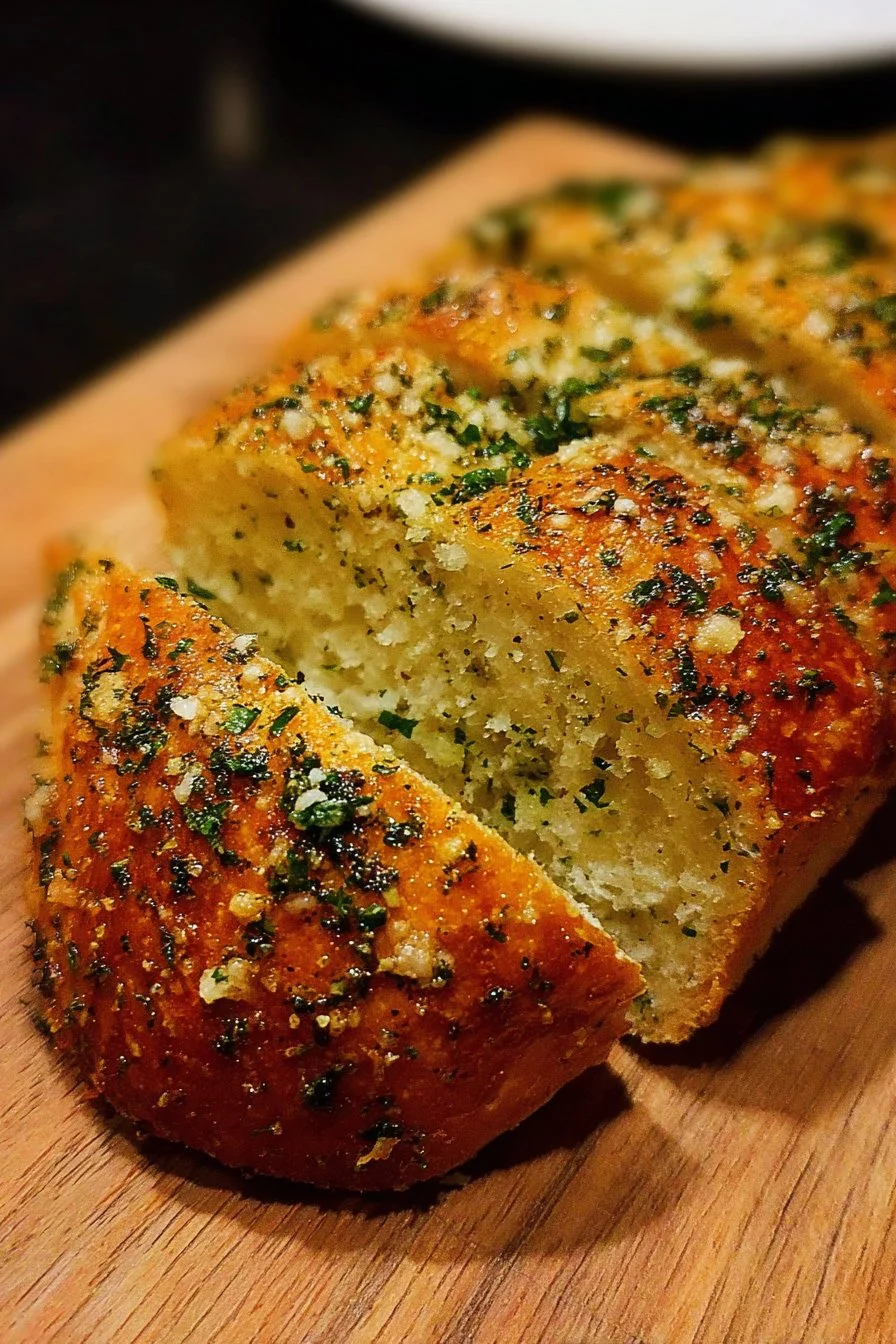
Warm, fragrant bread studded with garlic, herbs, and sharp Parmesan is one of those simple pleasures that instantly upgrades dinner, sandwiches, or a casual brunch. This Garlic Parmesan Herb Bread is an easy yeast loaf that delivers a crisp golden crust and a tender, flavorful crumb—perfect when you want fresh bread without a long list of steps. If you want to compare a slightly different take on the same flavor profile, try the garlic-parmesan herb bread recipe for a helpful variation and inspiration.
What makes this recipe special
This loaf balances three big flavor players—garlic, fresh herbs, and grated Parmesan—so every slice tastes like it was pulled from a bakery. It’s also approachable: one rise, a short second proof in the pan, and a straightforward bake at 375°F makes it a great weeknight or weekend baking project.
“Baked this for family dinner and everyone went back for seconds—simple to make, incredible flavor.”
Why people search for recipes like this: they want a homemade bread that’s flavorful without complicated techniques, plus a loaf that pairs with soups, pasta, or a lazy cheeseboard.
How this recipe comes together
You’ll proof the yeast, mix it into a flour-salt base, fold in olive oil, cheese, garlic, and herbs, then knead until smooth. After a one-hour rise and a 30-minute second rest in the loaf pan, the bread bakes to a golden top in about 25–30 minutes. Expect total active time of roughly 20–30 minutes, with rises and baking bringing the total closer to two hours.
What you’ll need
- 3 cups bread flour (substitute 3 cups all-purpose for a slightly softer crumb)
- 1 packet (2 1/4 teaspoons) active dry yeast
- 1 teaspoon sugar
- 1 teaspoon salt
- 1 cup warm water (about 110°F / 43°C)
- 1/4 cup grated Parmesan cheese (use freshly grated for best flavor)
- 2 tablespoons olive oil (plus a little extra to grease the bowl/pan)
- 2 tablespoons fresh herbs, chopped (rosemary, thyme, or a mix)
- 2 cloves garlic, minced
Notes: If you prefer a dairy-free version, omit the Parmesan and add 1 tablespoon extra olive oil and 1 teaspoon nutritional yeast for a savory boost. For a softer crust, brush the loaf with melted butter as soon as it comes out of the oven.
How to prepare it
- Stir warm water, sugar, and yeast in a bowl. Let sit 5 minutes until foamy. If it doesn’t foam, the yeast may be old; discard and start with fresh yeast.
- In a separate large bowl, whisk together bread flour and salt.
- Add the yeast mixture, olive oil, grated Parmesan, minced garlic, and chopped herbs to the flour. Mix with a spoon until a shaggy dough forms.
- Turn the dough onto a lightly floured surface. Knead for 8–10 minutes until smooth and slightly springy. If dough is sticky, dust with a bit more flour, but avoid adding too much—aim for a slightly tacky dough for good oven spring.
- Place the dough in a lightly greased bowl, cover with plastic wrap or a clean towel, and let rise in a warm spot about 1 hour or until doubled.
- Preheat oven to 375°F (190°C) while the dough completes its first rise.
- Gently punch down the dough to release excess air, shape into a loaf, and transfer to a greased 9×5-inch loaf pan.
- Cover and let rise another 30 minutes until puffy.
- Bake 25–30 minutes until the top is deep golden and an instant-read thermometer in the center reaches about 190–200°F (88–93°C).
- Remove the loaf from the pan and cool on a rack at least 20–30 minutes before slicing so the crumb sets.
Best ways to enjoy it
- Serve warm with olive oil and balsamic for dunking, or with softened butter.
- Pair with tomato soup, minestrone, or creamy pasta—its garlic and herb notes complement bright, acidic sauces.
- Turn slices into sandwiches: roast beef, fresh mozzarella & tomato, or a simple grilled cheese are excellent choices.
- For a party, slice thinly and use as crostini topped with ricotta and roasted tomatoes or smoked salmon.
Storage and reheating tips
At room temperature: store whole or sliced in a loosely sealed bread bag or wrapped in a clean kitchen towel for up to 2–3 days. Avoid the refrigerator—bread stale faster there.
Freezing: wrap tightly in plastic wrap and then foil; freeze up to 3 months. Thaw at room temperature, then refresh in a 350°F (175°C) oven for 8–10 minutes.
Reheating slices: toast or warm in a skillet with a touch of butter for 2–3 minutes per side for a crisp, freshly-baked feel. Always cool completely before freezing to avoid sogginess.
Pro chef tips
- Water temperature matters: 105–115°F (40–46°C) wakes the yeast without killing it. Use a thermometer if you’re unsure.
- Fresh herbs punch up flavor; if using dried herbs, use about one-third the amount and sprinkle some on top before baking.
- Grate the Parmesan from a block—pre-grated versions can be drier and less flavorful.
- If you want an extra-crisp crust, place a shallow pan of hot water on the oven floor during the first 5 minutes of baking to create steam. Remove it afterward.
- Avoid overflouring while kneading—slightly tacky dough produces a lighter crumb. If using a stand mixer, knead on low with the dough hook 6–7 minutes.
Creative twists
- Cheese-forward: add 1/2 cup shredded mozzarella to the dough for a pull-apart texture.
- Spicy herb: fold in 1/4 cup sun-dried tomatoes and 1/2 teaspoon red pepper flakes.
- Sweet-savory: mix 1 tablespoon honey into the dough and add a sprinkle of sea salt on top before baking.
- No-knead / Dutch oven option: to get a crisp, rustic crust try baking a boule in a hot Dutch oven instead—this method is ideal if you want minimal hands-on kneading and a different crust texture; see the garlic herb Dutch oven loaf for a helpful adaptation.
Helpful answers
Q: Can I use active dry yeast interchangeably with instant yeast?
A: Yes. If using instant yeast, you can mix it directly into the dry ingredients and skip the proofing step; otherwise, follow the recipe and proof active dry yeast in warm water first.
Q: How can I tell when the bread is done?
A: The crust should be deep golden and the loaf should sound hollow when tapped on the bottom. For certainty, an internal temperature of 190–200°F (88–93°C) means it’s fully baked.
Q: My dough didn’t rise—what went wrong?
A: Common causes are water that’s too hot (killing the yeast) or too cold (not activating it), expired yeast, or a cold room. Discard the dough if the yeast never bubbled and start with fresh yeast and properly warmed water.
Q: Can I mix the herbs differently or use dried herbs?
A: Yes—fresh herbs give the best flavor, but if using dried, reduce the amount to about 1 tablespoon and add some to the top for visual appeal.
Q: Is there a way to make this bread ahead?
A: Yes—after kneading, refrigerate the dough in a greased bowl covered overnight for a slow cold rise. Shape and proof in the morning, then bake. This deepens flavor and works well for planning ahead.
Enjoy the aroma as this bakes—there’s something genuinely comforting about a homemade garlic and herb loaf that brings people to the table.
Print
Garlic Parmesan Herb Bread
- Total Time: 60 minutes
- Yield: 1 loaf
- Diet: Vegetarian
Description
This easy yeast loaf features garlic, fresh herbs, and sharp Parmesan for a flavorful bread perfect for any meal.
Ingredients
- 3 cups bread flour
- 1 packet (2 1/4 teaspoons) active dry yeast
- 1 teaspoon sugar
- 1 teaspoon salt
- 1 cup warm water (about 110°F / 43°C)
- 1/4 cup grated Parmesan cheese
- 2 tablespoons olive oil
- 2 tablespoons fresh herbs, chopped (rosemary, thyme, or a mix)
- 2 cloves garlic, minced
Instructions
- Stir warm water, sugar, and yeast in a bowl. Let sit 5 minutes until foamy.
- Whisk together bread flour and salt in a separate large bowl.
- Add the yeast mixture, olive oil, grated Parmesan, minced garlic, and chopped herbs to the flour. Mix with a spoon until a shaggy dough forms.
- Turn the dough onto a lightly floured surface. Knead for 8–10 minutes until smooth and slightly springy.
- Place the dough in a lightly greased bowl, cover, and let rise in a warm spot for about 1 hour or until doubled.
- Preheat oven to 375°F (190°C).
- Punch down the dough to release excess air, shape into a loaf, and transfer to a greased loaf pan.
- Cover and let rise another 30 minutes until puffy.
- Bake for 25–30 minutes until the top is deep golden and the internal temperature reaches 190–200°F (88–93°C).
- Cool on a rack for at least 20–30 minutes before slicing.
Notes
For a dairy-free version, omit the Parmesan and add 1 tablespoon extra olive oil. Brush with melted butter for a softer crust after baking.
- Prep Time: 30 minutes
- Cook Time: 30 minutes
- Category: Bread
- Method: Baking
- Cuisine: Italian