
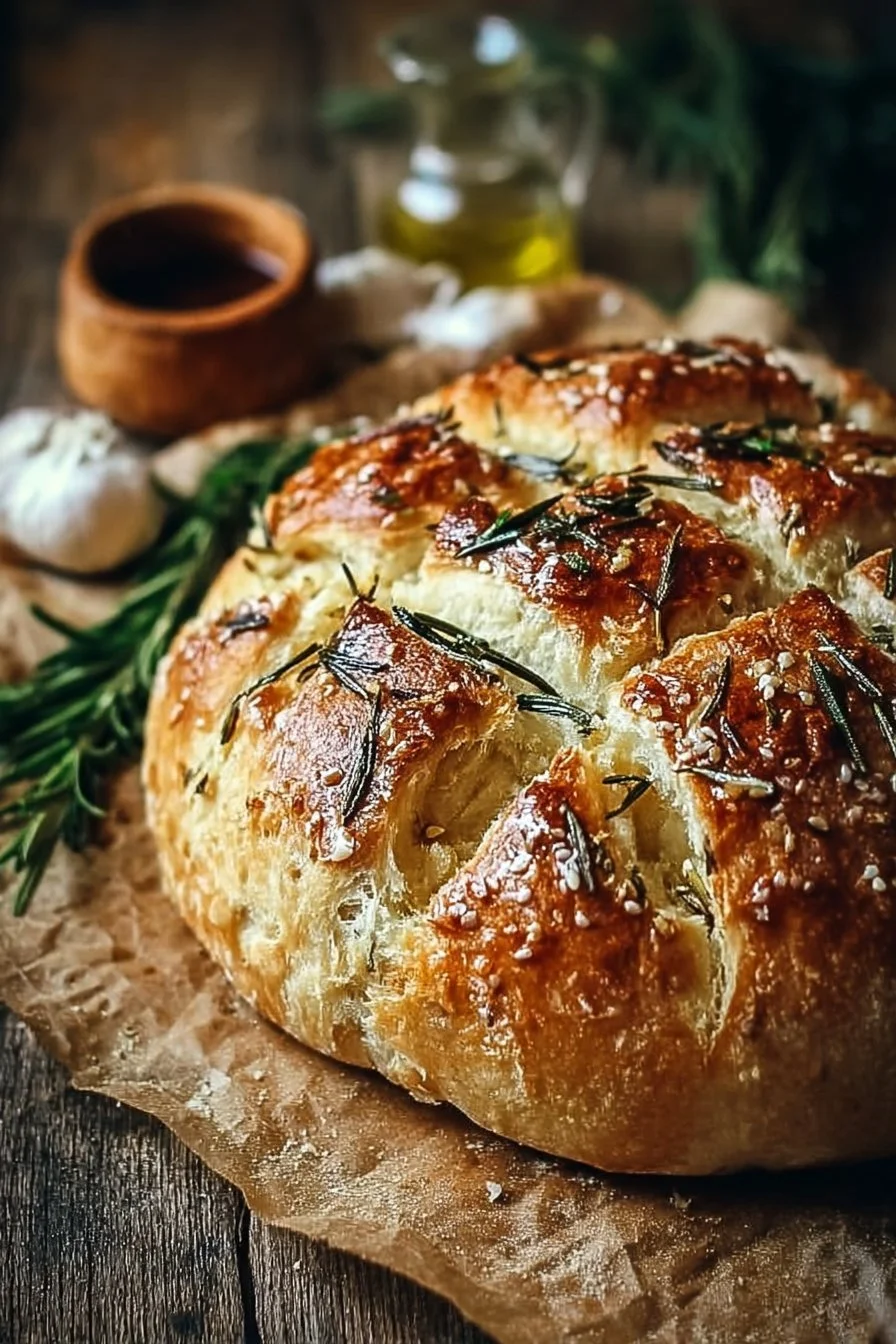
A warm, crusty loaf studded with rosemary and the sweet, caramelized notes of whole roasted garlic — this Garlic Rosemary Artisan Bread is the kind of bake that makes your kitchen smell like a bakery and your dinner table feel special. It’s rustic enough for a relaxed family meal and elegant enough to bring to a potluck. If you like simple Dutch oven loaves, you may also enjoy this version of a garlic-herb Dutch oven bread that highlights the same method with bold savory flavors.
Why you’ll love this dish
This loaf gives you bakery-style crust and an open, tender crumb with minimal hands-on time. A long, room-temperature first rise develops flavor without needing fancy equipment. Roasted whole garlic melts into the dough, creating a mellow, caramelized garlic backbone that’s more complex than raw minced garlic. The fresh rosemary adds an aromatic lift that pairs beautifully with olive oil, soups, and roasted meats.
“We tore into this still-warm loaf and it was gone in minutes — the garlic was sweet, the crust perfectly blistered, and the rosemary smelled like summer.” — home baker review
Perfect for weeknight dinners, sharing at brunch, or paired with a cheese board, this recipe is budget-friendly and beginner-friendly: no stand mixer is required, and you can shape and cold-ferment the dough ahead to fit your schedule.
How this recipe comes together
This recipe is straightforward: roast garlic, proof yeast, mix a sticky dough, let it rise slowly, cold-ferment to build strength and flavor, then bake in a preheated Dutch oven for steam and a high, even heat. The result is a crisp, golden crust and soft, garlicky interior. For tips on handling and baking in a Dutch oven, the same techniques used in this garlic herb Dutch oven method apply here — preheating the pot and trapping steam are key to great oven spring.
What you’ll need
- 1 whole head garlic, halved crosswise
- 1 tablespoon extra-virgin olive oil, divided (½ tbsp for roasting, ½ tbsp for dough)
- Coarse sea salt & freshly ground black pepper, to taste (for roasting and finishing)
- 1½ cups (about 360 g) room-temperature water (~70°F / 21°C)
- 1 teaspoon active dry yeast
- 3 cups bread or all-purpose flour (about 360 g), plus extra for dusting
- ½ teaspoon dried oregano
- 1 teaspoon kosher or fine sea salt
- 2 teaspoons finely chopped fresh rosemary, plus extra for topping
Ingredient notes/substitutions:
- Use bread flour for slightly more chew and better rise; all-purpose works fine too.
- If you prefer stronger garlic flavor, use one extra roasted head or fold in a garlic butter after baking.
- Instant yeast can replace active dry yeast — reduce proofing time slightly and add directly to flour if you’re confident it’s active.
Step-by-step instructions
- Roast the garlic: Preheat the oven to 400°F (204°C). Slice the top off the garlic head so the cloves are exposed. Drizzle about ½ tablespoon olive oil over the cut surface. Season with a pinch of coarse salt and black pepper. Wrap tightly in foil and roast for ~40 minutes until the cloves are soft, caramelized, and squeeze easily. Cool slightly, then squeeze or press the cloves into a bowl and mash lightly with a fork.
- Activate the yeast: In a small bowl, stir the teaspoon of active dry yeast into the 1½ cups room-temperature water. Let it sit 10–15 minutes until foamy. If it doesn’t foam, the yeast may be old — start over with fresh yeast.
- Mix the dough: In a large bowl, whisk together the flour, dried oregano, and 1 teaspoon salt. Add the foamy yeast water, the mashed roasted garlic, the remaining ½ tablespoon olive oil, and the chopped rosemary. Stir with a wooden spoon until a sticky, shaggy dough forms. No kneading is required; you just want all the flour hydrated.
- First rise: Cover the bowl with a clean towel and leave it at room temperature for 8–10 hours (overnight works well). The dough should roughly double and show bubbles.
- Shape and cold ferment: Lightly flour your work surface. Turn the dough out and shape it into a tight ball by folding the edges into the center and pinching the seam. Place seam-side up in a bowl dusted with flour. Cover and refrigerate for 1–24 hours. Cold fermenting firms the dough and deepens flavor.
- Preheat for baking: At least 30 minutes before baking, place a Dutch oven (with lid) into the oven and preheat to 450°F (232°C). Preheating the pot ensures a hot environment and helps create steam for oven spring.
- Score and bake: Remove the dough from the fridge, invert it onto a sheet of parchment paper, dust lightly with flour, and score the top with a sharp blade (a single long slash or decorative slash). Carefully lower the dough (on the parchment) into the hot Dutch oven. Cover and bake 30 minutes. Then remove the lid and bake another 15–20 minutes until deeply golden and the crust is blistered. The internal temperature should register about 200–210°F (93–99°C) for a fully baked loaf.
- Cool: Transfer the bread to a wire rack and let it cool at least 1 hour before slicing. Cooling finishes the crumb and prevents a gummy interior.
How to serve Garlic Rosemary Artisan Bread
This bread shines warm with good olive oil or a smear of softened butter. Serve slices with soup (tomato bisque, creamy mushroom), alongside roasted chicken, or as a vehicle for bruschetta toppings. For entertaining, slice into rounds and top with whipped feta and roasted cherry tomatoes, or present long slabs with herb butter for a family-style meal. Toasted slices with melted provolone or a garlicky aioli make excellent sandwiches.
Storage and reheating tips
- Room temperature: Store in a paper bag or wrapped in a clean kitchen towel for 1–2 days. This preserves crust texture better than plastic.
- Refrigeration: Not recommended for bread—cold shortens shelf life and dries crumb faster. If you must, wrap tightly and use within 2–3 days.
- Freezing: Cool completely, then slice and wrap portions tightly in plastic wrap and foil or freeze in a freezer bag for up to 3 months. Toast or bake frozen slices directly from the freezer.
- Reheating: For a crisp crust, sprinkle the loaf lightly with water and heat in a 350°F (175°C) oven for 8–12 minutes. For individual slices, use a toaster oven. Avoid microwaving — it softens the crust.
Pro chef tips
- Water temperature: Aim for room-temperature water (~70°F / 21°C). Too-warm water can kill yeast; too-cold water slows fermentation.
- Yeast check: Always proof active dry yeast in water — if it doesn’t foam in 15 minutes, it’s inactive.
- Dough hydration: The dough is intentionally sticky. Resist adding a lot of flour; a tacky dough yields an open crumb. Use wet hands and a bench scraper to handle it.
- Scoring: Score with a very sharp razor or lame. A clean cut helps controlled expansion and a prettier loaf.
- Steam matters: The preheated covered Dutch oven traps steam, which helps the crust expand before it hardens. Don’t skip preheating the pot.
- Doneness: Use an instant-read thermometer for reliable results — 200–210°F (93–99°C) is ideal. If you don’t have one, the loaf should sound hollow when tapped on the bottom.
Creative twists
- Cheesy rosemary: Fold ½–1 cup grated Parmesan or aged cheddar into the dough before the first rise.
- Olive-garlic: Add ½ cup chopped brined olives for a Mediterranean spin. Reduce added salt slightly.
- Whole-wheat: Replace up to 25–30% of the flour with whole-wheat for nuttier flavor; you may need a touch more water.
- Vegan/garlic-forward: Use extra roasted garlic or a garlic confit paste for a softer, richer garlic profile.
- Gluten-free: This method relies on gluten structure; for a gluten-free version, use a tested gluten-free artisan blend and follow its hydration guidelines — results will differ.
Common questions
Q: How long does this take from start to finish?
A: Active hands-on time is about 30–40 minutes (not including roasting the garlic). Allow 8–10 hours for the first rise plus 1–24 hours for cold fermentation, and about 45–50 minutes for baking. Plan for at least one full day if you include resting times.
Q: Can I skip roasting the garlic and use fresh minced garlic?
A: Roasted garlic is sweeter, mellower, and less likely to create hot spots in the dough. Fresh raw garlic will be sharper and can darken during baking. Roasting is recommended for the best flavor.
Q: Can I use instant yeast?
A: Yes. If using instant yeast, you can sprinkle it into the dry ingredients and skip the separate proofing step. The fermentation times may be slightly shorter.
Q: What if my dough seems too wet to shape?
A: A tacky dough is normal. Dust lightly with flour when shaping and use a bench scraper. Chilling the dough for an hour helps firm it for a neater shape before the cold ferment.
Q: How do I get a really crisp crust?
A: Preheat the Dutch oven thoroughly and bake covered for the first part to trap steam. Uncover for the last 15–20 minutes to brown and crisp. Spritzing or adding a few drops of water to the pot before covering can help if your oven is dry.
Q: Is the bread safe to freeze?
A: Yes. Cool completely, slice, and freeze in airtight packaging for up to 3 months. Reheat slices directly from frozen in a toaster oven or warm the whole loaf in a 325°F (163°C) oven for 15–20 minutes covered, then uncover to crisp.
Enjoy the ritual of slicing into this garlicky, rosemary-studded loaf — it’s comfort baking with bright flavor and a satisfying crust.
Print
Garlic Rosemary Artisan Bread
- Total Time: 10 hours 20 minutes
- Yield: 1 loaf
- Diet: Vegetarian
Description
A warm, crusty loaf studded with rosemary and sweet, caramelized whole roasted garlic, creating an aromatic and flavorful bread.
Ingredients
- 1 whole head garlic, halved crosswise
- 1 tablespoon extra-virgin olive oil, divided (½ tbsp for roasting, ½ tbsp for dough)
- Coarse sea salt & freshly ground black pepper, to taste
- 1½ cups (about 360 g) room-temperature water (~70°F / 21°C)
- 1 teaspoon active dry yeast
- 3 cups bread or all-purpose flour (about 360 g), plus extra for dusting
- ½ teaspoon dried oregano
- 1 teaspoon kosher or fine sea salt
- 2 teaspoons finely chopped fresh rosemary, plus extra for topping
Instructions
- Roast the garlic: Preheat the oven to 400°F (204°C). Slice the top off the garlic head to expose the cloves. Drizzle ½ tablespoon olive oil over the cut surface. Season with coarse salt and black pepper. Wrap in foil and roast for ~40 minutes until soft and caramelized. Cool slightly, then mash the cloves with a fork.
- Activate the yeast: Stir the teaspoon of active dry yeast into the room-temperature water in a small bowl. Let it sit for 10-15 minutes until foamy.
- Mix the dough: In a large bowl, whisk together the flour, dried oregano, and salt. Add the foamy yeast water, mashed roasted garlic, the remaining olive oil, and chopped rosemary. Stir until a sticky dough forms.
- First rise: Cover the bowl with a clean towel and leave it at room temperature for 8-10 hours until it roughly doubles in size.
- Shape and cold ferment: Lightly flour your work surface. Turn the dough out, shape it into a tight ball, and place seam-side up in a bowl dusted with flour. Cover and refrigerate for 1-24 hours.
- Preheat for baking: At least 30 minutes before baking, place a Dutch oven into the oven and preheat to 450°F (232°C).
- Score and bake: Remove the dough from the fridge, invert it onto parchment paper, dust lightly with flour, and score the top. Carefully lower the dough into the hot Dutch oven, cover, and bake for 30 minutes. Then remove the lid and bake for another 15-20 minutes until deeply golden.
- Cool: Transfer the bread to a wire rack and let it cool for at least 1 hour before slicing.
Notes
Serve warm with olive oil or butter. This bread can be stored at room temperature for 1-2 days or frozen for up to 3 months.
- Prep Time: 30 minutes
- Cook Time: 50 minutes
- Category: Bread
- Method: Baking
- Cuisine: Italian