
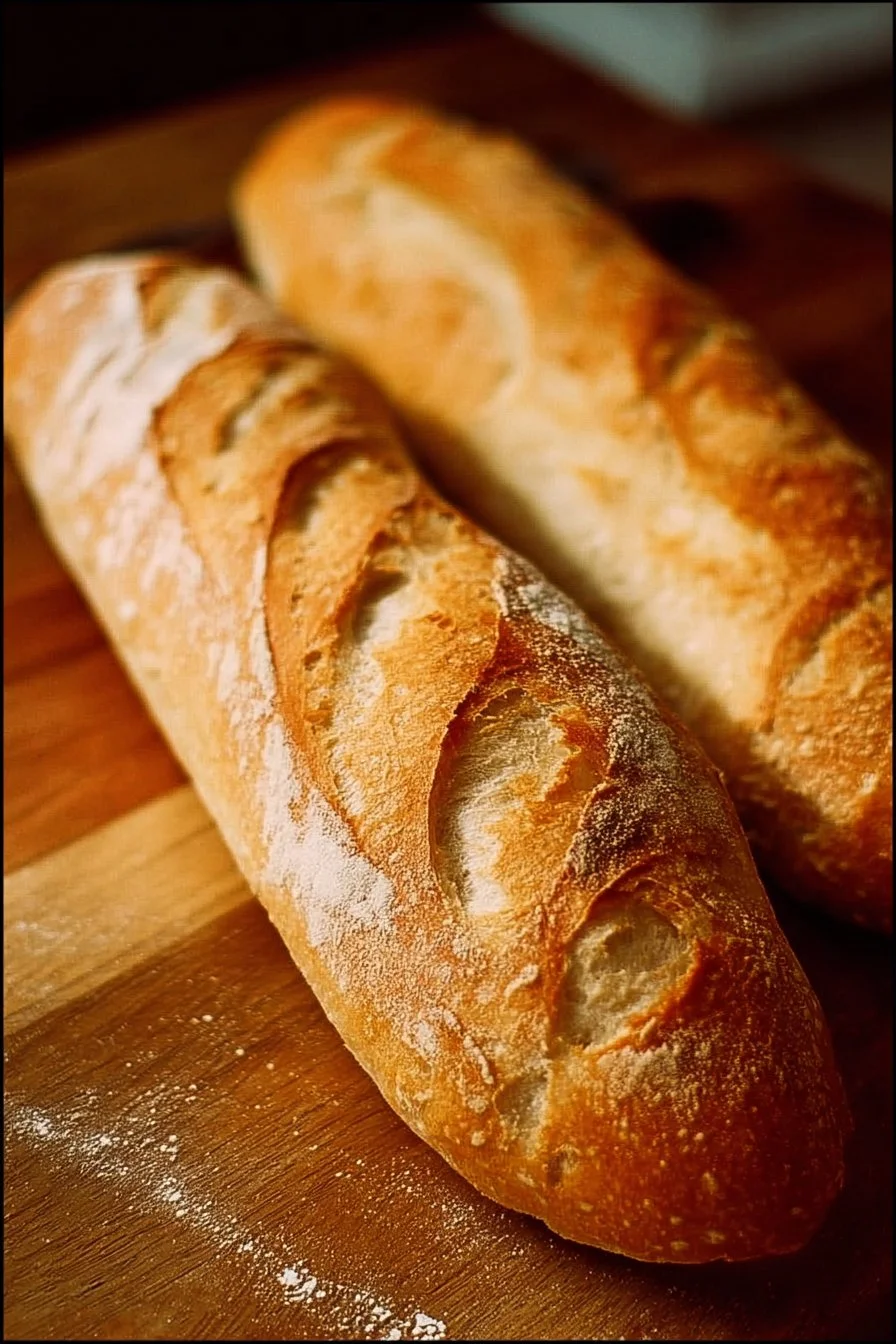
A warm, crackling loaf with a glossy crust and pillowy crumb—this golden and crispy French bread is the kind of loaf you’ll bake on a lazy weekend and wish you’d made sooner. It’s straightforward enough for a weeknight but impressive on the table for brunch or to accompany soups and sandwiches. If you like dunking bread into rich au jus, try pairing a few slices with the hearty Crockpot French Dip Sandwiches recipe for a comfort-food feast.
Why you’ll love this dish
This French bread recipe delivers a perfect balance: a crunchy, golden exterior and a soft, open interior. It doesn’t require advanced techniques like steam ovens or long cold fermentations, so home bakers can get bakery-style results with just one rise and simple ingredients. It’s:
- Budget-friendly: pantry staples only.
- Kid-approved: soft inside for sandwiches, crunchy for dipping.
- Versatile: great for garlic bread, soups, or slicing for bruschetta.
“The first slice is always distracting—crispy crust, warm crumb, and you can’t help but go back for more.” — a weekend tester
How this recipe comes together
The method is intentionally simple. You bloom the yeast in warm water and sugar, mix into flour and salt, then knead until smooth. After a single rise to double, shape the loaf, let it proof briefly, slash the top to control expansion, and bake until deeply golden. Total hands-on time is under an hour; total clock time (including rising) is about 1.5–2 hours.
What you’ll need
- 3 cups all-purpose flour (about 360–390 g) — use the higher end if you prefer a firmer dough
- 1 packet (2 1/4 teaspoons) active dry yeast
- 1 cup warm water (about 105–115°F / 40–46°C) — too hot will kill the yeast; too cool slows action
- 1 tablespoon sugar — feeds the yeast and aids browning
- 1 teaspoon salt — for flavor and gluten control
- 1 tablespoon olive oil — keeps the crumb tender and prevents sticking
Substitutions/notes:
- Use bread flour for a chewier, more open crumb.
- Replace olive oil with melted butter for a slightly richer flavor.
- If you need a no-gluten option, try a tested gluten-free flour blend and a xanthan gum–based recipe instead (this recipe is designed for wheat flour).
Step-by-step instructions
- Pour 1 cup warm water into a small bowl. Stir in 1 tablespoon sugar. Sprinkle 1 packet active dry yeast evenly over the surface. Wait 5–10 minutes until it’s frothy and bubbly.
- In a large bowl, whisk together 3 cups all-purpose flour and 1 teaspoon salt.
- Add the yeast mixture and 1 tablespoon olive oil to the flour. Stir with a wooden spoon until a rough dough forms.
- Turn dough onto a lightly floured surface. Knead about 10 minutes until smooth and elastic. The dough should be slightly tacky but not sticky.
- Lightly oil a clean bowl. Place the dough inside, turn once to coat, cover with a cloth, and let rise about 30 minutes until roughly doubled.
- Preheat the oven to 375°F (190°C). Position a rack in the middle.
- Punch down the dough gently. Shape into a loaf and place on a lightly greased baking sheet.
- Use a sharp knife to make 3–4 diagonal slashes across the top. Cover and let the loaf rise for 20 minutes.
- Bake 25–30 minutes until the crust is deep golden brown and the loaf sounds hollow when tapped on the bottom.
- Cool on a rack at least 20 minutes before slicing to let the crumb set.
How to plate and pair
Best served warm but not piping hot—slicing too early can leave a gummy interior. Try these pairings:
- Classic: butter and flaky sea salt.
- For soups: pair with tomato bisque, French onion, or a rustic vegetable stew.
- Sandwiches: slice thick for hearty fillings. If you want a meaty companion, serve alongside slow-cooked roast sandwiches like a slow-cooker French dip sandwiches for dunking and soaking up every savory drop.
- Appetizer: top slices with olive tapenade, ricotta and honey, or roasted tomatoes.
Storage and reheating tips
- Room temperature: wrap cooled loaf in a clean cloth or paper bag for 1–2 days to preserve crust and avoid condensation. Avoid plastic wrap if you want to keep the crust crisp.
- Freezing: slice the cooled loaf, place parchment between slices, and freeze in an airtight bag for up to 3 months. Toast or reheat from frozen.
- Reheating: refresh slices in a 350°F (175°C) oven for 5–8 minutes. For a crisp crust, heat directly on the rack. For microwave convenience, wrap in a damp paper towel and microwave in 20–30 second bursts (crumb will be softer).
Food safety note: keep the bread at room temperature; refrigeration speeds staling.
Helpful cooking tips
- Water temperature matters: test with your finger—warm but not hot. Yeast prefers about 105–115°F (40–46°C).
- Knead to the windowpane stage (thin, stretchable dough) for the best crumb. Ten minutes by hand is a good target.
- Slash the top just before the final rise to control where the bread opens in the oven. Use a very sharp knife or a lame for clean cuts.
- If you want a shinier crust, brush with a little olive oil as soon as it comes out of the oven. Don’t brush before baking—oil can inhibit crust formation.
Creative twists
- Garlic-herb: fold in 1 tablespoon minced garlic and 1 tablespoon chopped fresh rosemary or thyme into the dough.
- Cheese-topped: sprinkle grated Parmesan or shredded Gruyère on top after slashing, before baking.
- Whole wheat: replace up to half the white flour with whole wheat for nuttier flavor—add a touch more water if the dough seems dry.
- Seeded crust: brush loaf with water and press sesame, poppy, or mixed seeds into the surface before baking.
Common questions
Q: How long does this bread take from start to finish?
A: Active hands-on time is about 25–40 minutes (mixing, kneading, shaping). Rising and baking add roughly 1–1.5 hours, so expect 1.5–2 hours total.
Q: Can I make this in a bread machine?
A: Yes. Use the dough cycle to knead and rise, then shape and bake in the oven for a crisper crust. Avoid the machine’s bake cycle if you want a higher-quality crust.
Q: My loaf came out dense—what went wrong?
A: Common causes: under-kneading (not enough gluten development), inactive yeast (use fresh yeast and correct water temperature), or too much flour (measure by weight or spoon-and-level). Make sure the dough doubles in size during the first rise.
Q: Can I add sugar or honey for a slightly sweet loaf?
A: Yes—add 1–2 tablespoons sugar or 1 tablespoon honey to the dough for a subtly sweet note. Reduce other liquids slightly if the dough feels too wet.
Q: Is this recipe suitable for beginners?
A: Absolutely. The steps are forgiving, and the single-rise method makes it a great first loaf for home bakers.
If you’d like a printable version or a shopping checklist, I can format the recipe card for you.
Print
Homemade French Bread
- Total Time: 70 minutes
- Yield: 1 loaf
- Diet: Vegetarian
Description
A warm, crusty loaf of French bread with a soft, pillowy interior—perfect for dipping or sandwiches.
Ingredients
- 3 cups all-purpose flour
- 1 packet (2 1/4 teaspoons) active dry yeast
- 1 cup warm water (about 105–115°F / 40–46°C)
- 1 tablespoon sugar
- 1 teaspoon salt
- 1 tablespoon olive oil
Instructions
- Pour 1 cup warm water into a small bowl. Stir in 1 tablespoon sugar and sprinkle 1 packet active dry yeast over the surface. Wait 5–10 minutes until frothy.
- In a large bowl, whisk together 3 cups all-purpose flour and 1 teaspoon salt.
- Add the yeast mixture and 1 tablespoon olive oil to the flour and stir until a rough dough forms.
- Knead the dough on a lightly floured surface for about 10 minutes until smooth and elastic.
- Lightly oil a clean bowl, place the dough inside, cover, and let rise for about 30 minutes until doubled.
- Preheat the oven to 375°F (190°C).
- Punch down the dough gently, shape it into a loaf, and place it on a greased baking sheet.
- Slash the top with a sharp knife and let it rise for another 20 minutes.
- Bake for 25–30 minutes until deeply golden brown and hollow when tapped.
- Cool on a rack for at least 20 minutes before slicing.
Notes
For a chewier texture, use bread flour. This recipe can be adapted for gluten-free needs.
- Prep Time: 40 minutes
- Cook Time: 30 minutes
- Category: Bakery
- Method: Baking
- Cuisine: French