
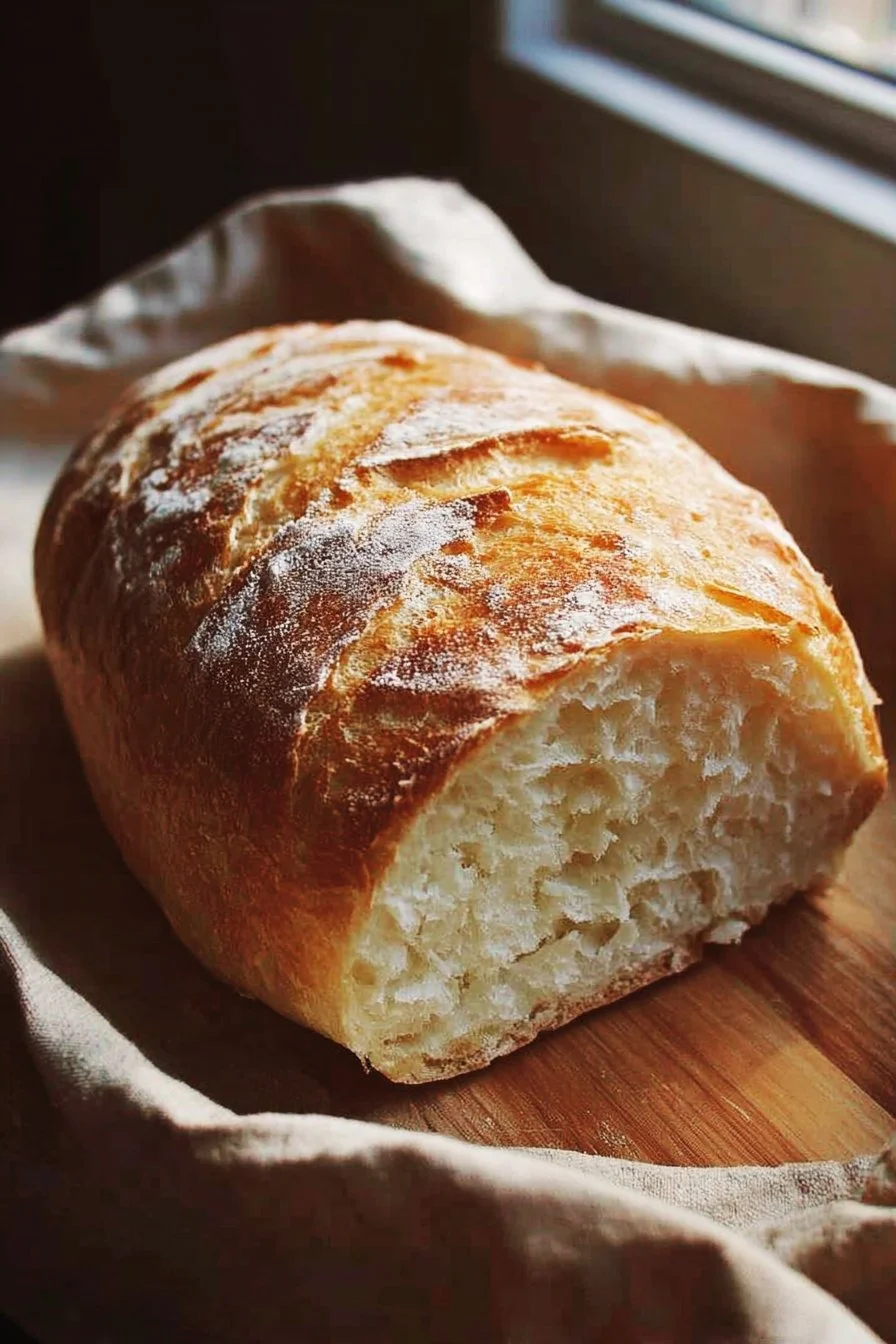
I still remember the first time I pulled a hot loaf from my oven—the crust snapped, steam danced off the cut, and the kitchen smelled like Sunday mornings. This homemade bread recipe is that comforting, everyday loaf: simple ingredients, straightforward technique, and a reliably tender crumb. It’s perfect for sandwiches, toasting, or serving alongside soups. If you like a chewier, more rustic exterior, consider techniques from an artisan-style method that add steam and a longer ferment.
Why you’ll love this dish
This is the kind of bread you can make on a weeknight without fuss and still impress guests on the weekend. It uses pantry staples—water, yeast, flour, oil, and a touch of sweetener—so it’s budget-friendly and predictable. The dough is forgiving for beginners but also responds well to small tweaks by more experienced bakers who want a tighter crumb or a crustier top.
“Soft inside, golden outside, and guaranteed to make your house smell amazing—my family asks for this loaf every week.” — a regular home baker
Perfect occasions: family sandwiches, an easy side for stews, or as the base for garlic bread at a casual dinner party. It’s also an ideal recipe to teach kids dough-handling and the basics of yeast baking.
How this recipe comes together
You’ll start by waking up the yeast in warm water so it becomes reliably active. Then combine the yeast with sugar or honey, salt, oil, and most of the flour to make a shaggy dough. Add extra flour slowly until the dough pulls away from the sides, then knead until smooth and elastic. After a first rise to double in size, shape into loaves, proof again, and bake until golden. Expect two rises in total and about 25–35 minutes of baking time per loaf at a moderate oven temperature.
What you’ll need
- 2 cups warm water (105–115°F / 40–46°C) — warm enough to feel like a hot bath but not scalding
- 1 tablespoon active dry yeast
- 1/4 cup honey or sugar (use honey for a slightly richer taste)
- 2 teaspoons salt
- 2 tablespoons neutral oil (canola or vegetable)
- 4–5 1/2 cups all-purpose or bread flour (start with 4 cups and add up to 1 1/2 cups more as needed)
Ingredient notes and substitutions:
- Bread flour gives more chew and structure; all-purpose is perfectly fine for a softer crumb.
- Use olive oil for flavor if you prefer, but reduce strong-flavored olive oil if you want a neutral loaf.
- For a lower-sugar loaf, cut the sweetener to 1 tablespoon; the yeast still needs a small feed to bloom nicely.
Step-by-step instructions
- Proof the yeast: Pour warm water into a bowl, stir in a pinch of the sugar or honey and sprinkle the active dry yeast over the surface. Let sit 5–10 minutes until foamy. If it doesn’t foam, the yeast may be old—start again with fresh yeast.
- Mix the dough: Add the remaining sugar or honey, salt, oil, and about 3 cups of flour to the yeast mixture. Stir with a wooden spoon or dough hook until combined.
- Add flour gradually: Add more flour, 1/4 cup at a time, until the dough pulls away from the bowl and is no longer overly sticky. You may use 4 to 5 1/2 cups total depending on humidity and flour brand.
- Knead: Turn the dough onto a lightly floured surface and knead 8–10 minutes by hand until smooth and elastic. If using a stand mixer, knead on medium-low 6–8 minutes. The dough should spring back when poked.
- First rise: Lightly grease a bowl, place the dough inside, and cover with a clean towel or plastic wrap. Let rise in a warm, draft-free spot until doubled—about 1–1.5 hours.
- Shape and pan: Gently deflate the dough, divide if making two loaves, shape into loaves, and place into greased bread pans.
- Second rise: Cover and let the loaves rise in the pans until they’ve filled most of the pan and look puffy—about 30–45 minutes.
- Bake: Preheat the oven to 375°F (190°C). Bake the loaves 25–35 minutes until the crust is golden and the internal temperature reads 190–200°F (88–93°C) on an instant-read thermometer.
- Cool: Remove from pans and cool on a wire rack before slicing to set the crumb—30–60 minutes recommended.
Best ways to enjoy it
This bread is versatile: slice it thick for toast with butter and jam, use it for classic grilled cheese, or cube and toast for croutons. Serve warm from the oven with softened butter and sea salt for a simple crowd-pleaser. For a meal, pair it with a hearty stew, homemade chili, or a fresh salad and olive oil for dipping.
Storage and reheating tips
- Room temperature: Store wrapped in a clean kitchen towel or in a bread box for up to 2 days. Avoid sealing hot bread in plastic — that traps moisture and softens the crust.
- Refrigeration: Not recommended for storing bread long-term; it dries out the crumb faster.
- Freezing: Slice and freeze in an airtight bag for up to 3 months. Pull slices directly from the freezer to toast, or thaw at room temperature.
- Reheating: Refresh slices in a toaster or re-crisp a whole loaf at 350°F (175°C) for 10–12 minutes. To revive a slightly stale loaf, sprinkle the crust with a little water and warm in the oven for 5–10 minutes.
Pro chef tips
- Measure flour by weight if possible: 1 cup all-purpose flour ≈ 120–125 g. That removes guesswork.
- Use an instant-read thermometer to confirm doneness (190–200°F internal). Color alone can be misleading.
- Knead to windowpane: stretch a small piece of dough between fingers—if it stretches thin without tearing, you’re done.
- For better flavor, try a longer, cooler first rise in the fridge overnight (retardation). Shape, then return to fridge; bake the next day after coming back to room temp.
- If you want a crispier crust, place a shallow pan of hot water on the oven floor during the first 10 minutes of baking to create steam.
Creative twists
- Whole wheat swap: Replace up to half the flour with whole wheat; increase water slightly and knead a bit longer.
- Herbed loaf: Fold in 1–2 tablespoons chopped fresh herbs (rosemary, thyme) during shaping.
- Seeds & grains: Top with sesame, poppy, or sunflower seeds after brushing with water or egg wash.
- No-oil version: Replace oil with an equal amount of melted butter for richness, or omit and add 1–2 tablespoons extra water to keep dough hydrated.
- Faster option: For a quick bake, compare this method with a quick 20-minute homemade bread to decide which fits your schedule; the quicker versions trade some depth of flavor for speed.
Common questions
Q: My yeast didn’t foam—can I still use the dough?
A: If the yeast doesn’t foam during proofing, it’s safest to start over with fresh yeast. Unfoamed yeast suggests it’s dead or the water was too hot/too cold.
Q: Can I use instant yeast instead of active dry yeast?
A: Yes. Reduce proofing time: either dissolve it directly into the flour and skip blooming in water, or treat it the same as active dry if you prefer—just expect slightly faster rises.
Q: How do I make the crust crispier?
A: Bake with steam for the first 10 minutes (a hot pan of water in the oven), or brush the loaf with water before baking. A slightly higher bake temperature for the last 5–10 minutes also helps brown the crust.
Q: Can I make this with whole wheat flour only?
A: You can, but 100% whole wheat produces a denser loaf. Use vital gluten or extra kneading and slightly more water, and expect a chewier crumb.
Q: How long does the dough need to rise?
A: First rise usually 1–1.5 hours at room temperature; second rise 30–45 minutes. Cooler environments will need longer; warmer environments shorten rise times. Trust the dough (double in size), not the clock.
Q: Is it safe to freeze and reheat made bread?
A: Yes. Slice before freezing for convenience; toast straight from frozen or thaw then reheat in a 350°F oven for 10–12 minutes for best texture.
Enjoy baking — the process is as rewarding as the loaf itself.
Print
Homemade Bread
- Total Time: 50 minutes
- Yield: 2 loaves
- Diet: Vegetarian
Description
A comforting, everyday loaf made with simple ingredients and a straightforward technique, perfect for sandwiches or toasting.
Ingredients
- 2 cups warm water (105–115°F / 40–46°C)
- 1 tablespoon active dry yeast
- 1/4 cup honey or sugar
- 2 teaspoons salt
- 2 tablespoons neutral oil (canola or vegetable)
- 4–5 1/2 cups all-purpose or bread flour
Instructions
- Proof the yeast: Pour warm water into a bowl, stir in a pinch of the sugar or honey and sprinkle the active dry yeast over the surface. Let sit 5–10 minutes until foamy.
- Mix the dough: Add the remaining sugar or honey, salt, oil, and about 3 cups of flour to the yeast mixture. Stir with a wooden spoon or dough hook until combined.
- Add flour gradually: Add more flour, 1/4 cup at a time, until the dough pulls away from the bowl and is no longer overly sticky.
- Knead: Turn the dough onto a lightly floured surface and knead 8–10 minutes by hand until smooth and elastic.
- First rise: Lightly grease a bowl, place the dough inside, and cover with a clean towel or plastic wrap. Let rise in a warm, draft-free spot until doubled—about 1–1.5 hours.
- Shape and pan: Gently deflate the dough, divide if making two loaves, shape into loaves, and place into greased bread pans.
- Second rise: Cover and let the loaves rise in the pans until they’ve filled most of the pan—about 30–45 minutes.
- Bake: Preheat the oven to 375°F (190°C). Bake the loaves 25–35 minutes until the crust is golden.
- Cool: Remove from pans and cool on a wire rack before slicing—30–60 minutes recommended.
Notes
For a chewier crust, consider adding steam during baking. Store bread wrapped in a towel at room temperature for up to 2 days.
- Prep Time: 15 minutes
- Cook Time: 35 minutes
- Category: Baking
- Method: Baking
- Cuisine: American