
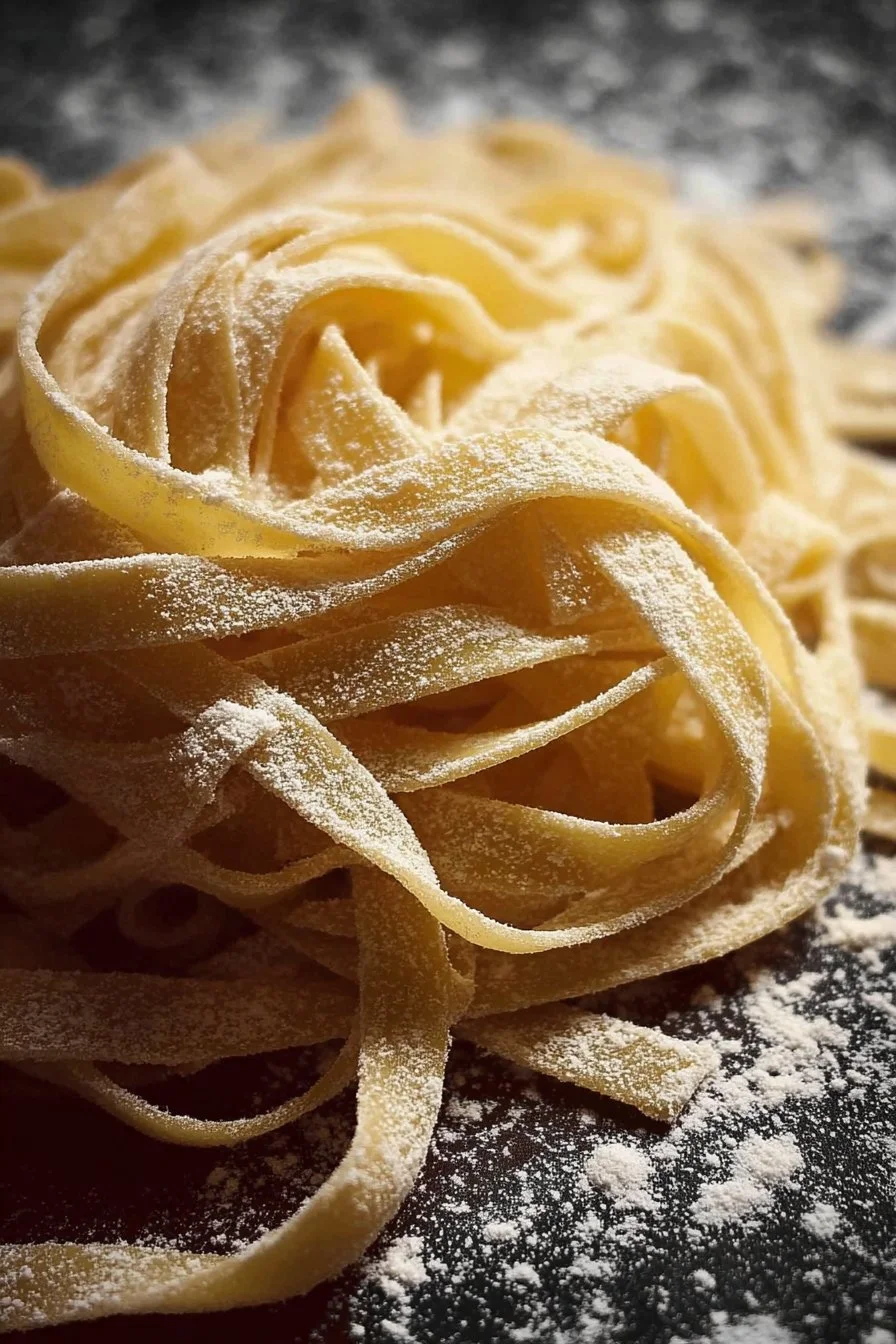
Fresh pasta made with just flour, eggs, and a pinch of salt is one of those kitchen victories that feels elaborate but is shockingly simple. With a handful of pantry staples you get tender, springy ribbons that beat dried pasta in texture and flavor. This recipe is ideal when you want a quick homemade upgrade—perfect for a weeknight with a simple butter-and-parmesan sauce or for a weekend plan with a richer topping (try it with a silky creamy salmon pasta for an indulgent pairing).
Why you’ll love this dish
Homemade fresh pasta is comfort food with control. You’re shaping texture, thickness, and even the flour blend (all-purpose alone or mixed with semolina for more bite). It cooks in minutes and rewards minimalism: a few quality ingredients make a dish that feels restaurant-level.
"The first time I rolled my own pasta it changed dinner forever—chewy, tender, and impossibly fast to cook." — a regular home cook
Reasons to try it:
- Quick hands-on time: about 10 minutes active, plus a short rest.
- Cost-effective: pantry staples, no need for expensive equipment.
- Versatile: cut into tagliatelle, use for filled pastas, or shape into nests.
- Great for teaching kids basic cooking skills.
Preparing Homemade Fresh Pasta
This recipe follows a classic, foolproof workflow. You’ll mix flour and salt, form a well for eggs, draw the flour in until a shaggy mass forms, then knead briefly until smooth. After a short rest in the fridge, roll, cut, and let the noodles air-dry a little before a very quick boil. Expect about 30–45 minutes total including resting and drying time.
What you’ll need
- 1 cup (about 125 g) all-purpose flour — or mix half all-purpose and half semolina for more grip and a slightly coarser bite.
- 1/2 teaspoon fine salt (mixed into the flour).
- 2 large eggs, room temperature.
- Optional: 1 teaspoon olive oil (helps the dough stay supple).
- Extra flour for dusting and rolling.
Substitutions and notes:
- For a richer dough, use 1 whole egg + 1 yolk.
- Semolina adds texture and is traditional for many regional pastas.
- For gluten-free, use a tested blend formulated for pasta (technique varies).
Step-by-step instructions
- Combine the flour and salt in a medium bowl and whisk to distribute the salt evenly.
- Make a well in the center of the flour mound. Crack the eggs into the well (add the olive oil here if using).
- Use a fork to beat the eggs gently, then begin drawing flour from the inner walls of the well into the liquid. Continue until the mixture becomes a shaggy dough.
- Turn the dough out onto a lightly floured surface. Knead with the heels of your hands for 3–5 minutes until smooth and slightly elastic. If it’s sticky, dust with a little more flour, but avoid over-drying.
- Wrap the dough tightly in plastic wrap and refrigerate at least 30 minutes. This relaxes the gluten and makes rolling easier.
- Unwrap and divide the dough into 2 pieces. Roll each piece with a rolling pin (or pass through a pasta machine) to your desired thickness. Aim for about 1–2 mm for tagliatelle.
- Dust lightly with flour and cut into ribbons with a knife or the pasta machine’s cutter. Toss the cut noodles gently with a little flour to prevent sticking.
- Let the noodles air-dry on a rack or baking sheet for 2–3 hours (or up to 24 hours if you want firmer texture).
- To cook, bring a large pot of salted water to a rolling boil. Fresh pasta needs only 1–2 minutes—taste early for al dente. Drain and toss with sauce or butter immediately.
Best ways to enjoy it
Fresh pasta shines with light sauces that showcase its texture. Toss hot noodles with browned butter, sage, and grated Parmesan for a fast classic. A quick tomato-and-garlic sauce, a lemon cream, or simply olive oil, chili flakes, and Pecorino work beautifully. For a restaurant-style feast, pair with seafood—think a delicate cream sauce and smoked salmon or a buttery white-wine shrimp topping. If you want inspiration for a rich accompaniment, try this luscious creamy salmon pasta served over fresh ribbons.
Plating tips:
- Twirl noodles into a nest on warm plates for an elegant presentation.
- Finish with a drizzle of good olive oil and a microplane of lemon zest for brightness.
- Serve with a crisp salad or roasted vegetables to balance richness.
Storage and reheating tips
- Refrigerating raw: wrapped tightly, fresh pasta dough will keep up to 24 hours in the fridge. Cut noodles can be refrigerated in an airtight container for 1–2 days.
- Freezing raw: place cut nests on a baking sheet, freeze until firm (about 30–45 minutes), then transfer to a freezer bag; frozen pasta cooks from frozen in 2–4 minutes.
- Dried noodles: fully air-dried pasta can be stored in an airtight container for several weeks.
- Reheating cooked pasta: refresh briefly in boiling water (30–60 seconds) or warm gently in a skillet with sauce. Avoid microwaving—texture suffers.
Food safety: always use fresh eggs and keep dough chilled if you’re not cooking it immediately. Do not leave raw dough at room temperature for extended periods.
Pro chef tips
- Room-temperature eggs mix into the flour more evenly.
- Don’t add too much flour while kneading. Slight tackiness helps the dough develop gluten.
- Resting is crucial—skip it and the dough will spring back while you roll.
- If using a pasta machine, start on the widest setting and pass the dough through progressively thinner settings, folding once or twice to build strength.
- For uniform cooking, cut ribbons the same width and avoid stacking wet layers.
- Salt the cooking water generously—this seasons the pasta itself.
- Keep a reserve of pasta cooking water to emulsify sauces.
Creative twists
- Spinach noodles: wilt and puree 1 cup spinach, squeeze out excess liquid, then use in place of 1–2 tablespoons of egg liquid for green pasta.
- Herb-flecked dough: finely chop fresh basil or parsley and knead into dough for subtle flavor and color.
- Whole-wheat or spelt: replace up to half the all-purpose flour with whole-grain flour for nuttier taste. Expect a denser texture and potentially more kneading.
- Gluten-free: use a tested blend and add xanthan or psyllium as required by the mix; technique and hydration will change.
- Make ravioli: roll thin, place filling in small mounds, top with another sheet, press and cut into shapes.
Common questions
Q: How long does this fresh pasta take from start to plate?
A: Active time is about 10 minutes. Factor in 30 minutes resting and 2–3 hours light drying if you choose. If you skip extended drying, you can be eating in under an hour.
Q: Can I use a food processor to mix the dough?
A: Yes. Pulse flour and salt, add eggs (and oil) through the feed tube until it forms a shaggy ball, then finish kneading by hand for a few minutes for best texture.
Q: Is semolina necessary?
A: No. Semolina gives more bite and a slightly golden color. All-purpose flour alone makes perfectly good fresh pasta—semolina is optional depending on texture preference.
Q: Can fresh pasta be frozen after cooking?
A: Cooked fresh pasta can be frozen, but texture may soften after thawing. For best results freeze raw or par-cooked nests and finish boiling or sautéing from frozen.
Q: How do I know when it’s al dente?
A: Taste. Fresh pasta cooks quickly; it should be firm to the bite with a slight chew—about 1–2 minutes depending on thickness.
Q: Any tips for rolling thin by hand?
A: Use a long, even rolling pin. Rotate and flip the dough frequently, dust lightly, and roll from the center outward with consistent pressure.
Enjoy making your own fresh noodles—the sensory payoff is immediate, and once you’ve tried homemade, reaching for a box of dried pasta will feel like a compromise.
Print
Homemade Fresh Pasta
- Total Time: 45 minutes
- Yield: 2 servings
- Diet: Vegetarian
Description
Fresh pasta made with just flour, eggs, and a pinch of salt, perfect for upgrading any meal.
Ingredients
- 1 cup (about 125 g) all-purpose flour
- 1/2 teaspoon fine salt
- 2 large eggs, room temperature
- Optional: 1 teaspoon olive oil
- Extra flour for dusting and rolling
Instructions
- Combine the flour and salt in a medium bowl and whisk to distribute the salt evenly.
- Make a well in the center of the flour mound. Crack the eggs into the well (add the olive oil if using).
- Use a fork to beat the eggs gently, then begin drawing flour from the inner walls of the well into the liquid until a shaggy dough forms.
- Turn the dough out onto a lightly floured surface. Knead for 3-5 minutes until smooth and elastic.
- Wrap the dough tightly in plastic wrap and refrigerate for at least 30 minutes.
- Divide the dough into 2 pieces. Roll each piece to your desired thickness using a rolling pin or pasta machine.
- Dust the rolled dough lightly with flour and cut into ribbons or your desired shape.
- Let the noodles air-dry for 2-3 hours (or up to 24 hours if a firmer texture is preferred).
- To cook, bring a large pot of salted water to a boil. Cook fresh pasta for 1-2 minutes, then drain and toss with sauce or butter immediately.
Notes
For a richer dough, use 1 whole egg + 1 yolk. Semolina adds texture and is traditional for many regional pastas. Store fresh pasta dough tightly wrapped in the fridge for up to 24 hours.
- Prep Time: 10 minutes
- Cook Time: 2 minutes
- Category: Main Course
- Method: Baking
- Cuisine: Italian