
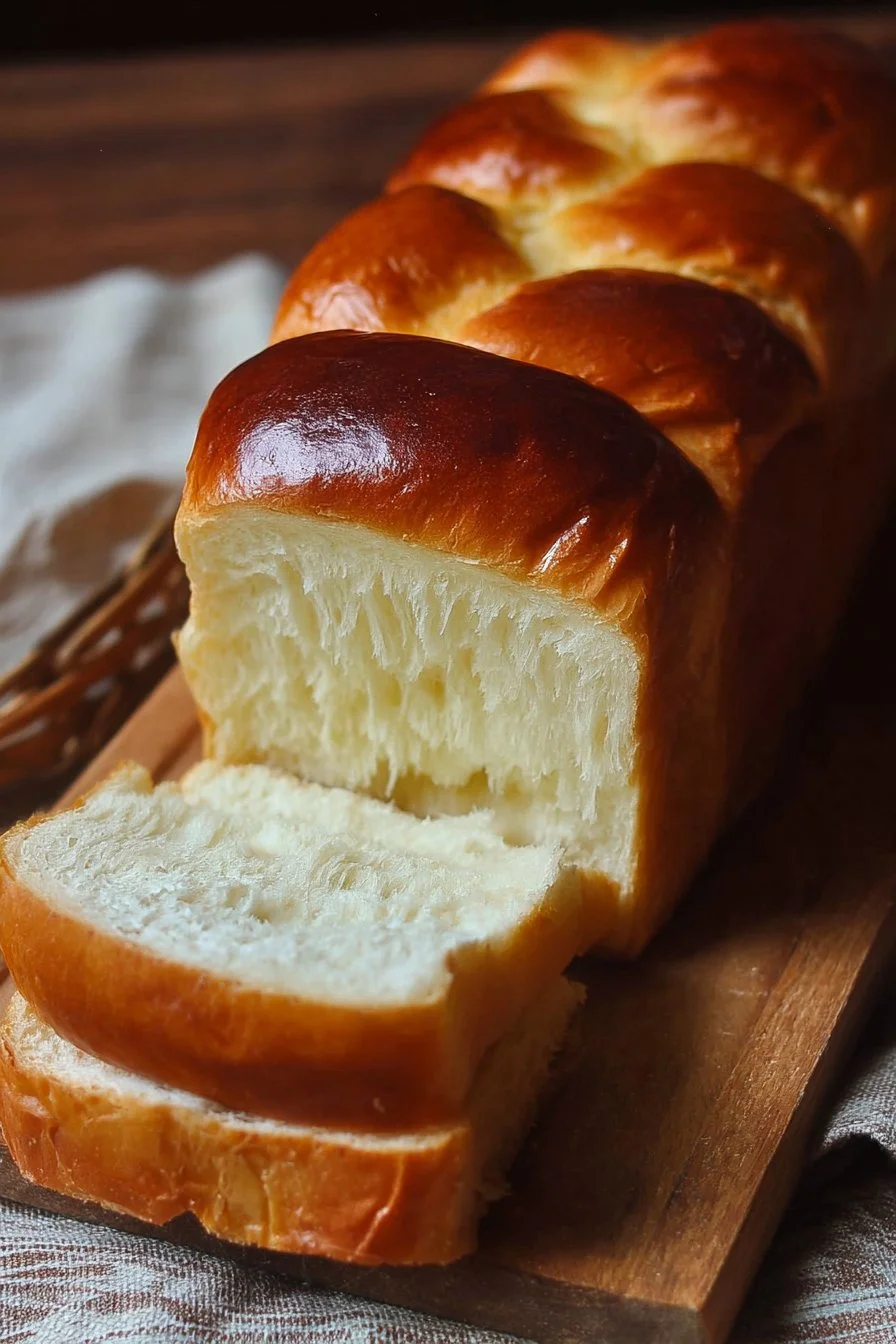
A milk bread loaf is the kind of everyday comfort that doubles as show-off-worthy when guests arrive. Soft, slightly sweet, and tender-crusted, this loaf is enriched with milk and butter for a pillowy crumb that toasts beautifully. It’s perfect for sandwiches, afternoon tea, or when you want something better than store-bought. If you enjoy soft, tender loaves with a glossy top, compare techniques with my take on a garlic-herb Dutch oven bread to see how baking method changes texture and crust.
Why you’ll love this dish
Milk bread is beloved because it’s both simple and indulgent. The enrichment from milk and butter gives a milky flavor and a tender crumb that keeps longer than a plain white loaf. It’s forgiving for new bakers and scales well for special occasions or weekly sandwich bread.
“This loaf is soft enough to melt in a child’s mouth, yet sturdy enough for hearty sandwiches — the ideal everyday bread.” — a satisfied taste-test note
This recipe is great for:
- Weeknight sandwich needs (sliced thin or thick).
- Brunch or tea when you want sliced bread with an elevated crumb.
- Bakers who want consistent results with straightforward steps.
How this recipe comes together
A quick overview so you know what to expect before starting:
- Mix dry ingredients, then add cold milk and water to form a rough dough.
- Knead by hand until smooth, then work in butter until glossy.
- Bulk rise until doubled, shape into a loaf, proof in a greased 9×5-inch pan, brush with butter, and bake 25–30 minutes.
- Cool fully before slicing for best texture.
The cold liquids slow the yeast slightly, giving you a little more control during kneading and making the dough easier to manage when working by hand.
Key ingredients
- 500 g bread flour (about 3¾ cups) — higher-protein flour gives better structure and chew.
- 40 g granulated sugar (3 tablespoons) — sweetness and color.
- 1½ teaspoons instant yeast — for a predictable, fast rise.
- 225 g cold water (a little less than 1 cup) and 115 g cold milk (½ cup) — cold liquids help control fermentation in warm kitchens. Use whole milk for best richness; skim will work but the crumb is leaner.
- 9 g sea salt (1½ teaspoons) — flavor enhancer and yeast regulator.
- 25 g unsalted butter (1¾ tablespoons) — cut into small pieces for incorporation; add extra for coating and brushing.
Substitution notes:
- For richer brioche-like crumb, replace 1–2 tablespoons of water with an egg or add more butter (adjust handling).
- For dairy-free, use an unsweetened plant milk and vegan butter; expect minor texture differences.
Step-by-step instructions
- In a large mixing bowl, whisk together the bread flour, sugar, instant yeast, and sea salt until evenly distributed.
- Pour the cold milk and cold water into the dry mix. Stir with a spoon or spatula until a rough, shaggy dough forms. Don’t worry about smoothness at this point.
- Turn the dough onto a lightly floured surface. Knead by hand for about 10 minutes until the dough is smooth, elastic, and slightly tacky but not sticky. If it sticks, add flour sparingly—too much will dry the loaf.
- Add the unsalted butter in small pieces. Continue kneading until each piece is fully absorbed and the dough becomes glossy and supple. This can take several minutes; patience yields the silkier crumb.
- Lightly grease a clean bowl, place the dough inside, and cover with a cloth. Let it rise in a warm spot for about 1 hour, or until doubled in size. The exact time depends on your kitchen temperature.
- Gently deflate (punch down) the dough. Shape it into a loaf by rolling or folding to create surface tension and a smooth top. Place it into a greased 9×5-inch (or similar) loaf pan.
- Cover the pan and let the dough rise again for about 30 minutes, until it’s noticeably puffy but not overproofed. Preheat your oven to 180°C (350°F) while the dough finishes its second rise.
- Brush the top with melted butter just before baking for a rich, glossy crust.
- Bake for 25–30 minutes until the top is golden brown and the loaf sounds hollow when tapped on the bottom. An internal temperature of ~190–200°F (88–93°C) confirms doneness.
- Remove the pan from the oven. Let the loaf rest in the pan for a few minutes, then transfer to a wire rack to cool completely before slicing.
Best ways to enjoy it
- Fresh from the loaf: serve slightly warm with butter or a honey smear.
- Sandwich-ready: slices hold up to ham, soft cheeses, or avocado nicely.
- Toasted: a quick toast with jam or nut butter elevates breakfast.
- Croutons or bread pudding: slightly stale slices make excellent repurposed dishes.
Pair with light soups, soft cheeses, or use as the base for a decadent French toast. For a crispier exterior, slice and toast under a broiler for a minute, watching closely.
Storage and reheating tips
- Room temperature: keep the loaf in a bread bag or wrapped in plastic for up to 3 days. Avoid refrigeration; it accelerates staling.
- Freezing: slice and freeze in airtight bags for up to 3 months. Separate layers with parchment if needed.
- To refresh: thaw slices at room temp, then warm in a toaster or oven at 160°C (325°F) for 5–8 minutes. For a whole loaf, wrap in foil and warm at 150°C (300°F) for 10–15 minutes. A quick microwave with a damp paper towel will soften a single slice for immediate use, but texture is best when finished in an oven or toaster.
Pro chef tips
- Windowpane test: when kneading, stretch a small piece—when it forms a thin, translucent membrane without tearing, gluten development is sufficient.
- Butter management: add butter only after developing the dough’s gluten. Incorporate in small cold pieces to avoid greasy lumps.
- Temperature control: because the recipe calls for cold liquids, yeast activity is moderated. If your kitchen is cool, rise times will be longer—be patient.
- If you prefer a crisper crust or a different oven method, try baking in a closed vessel; this garlic-herb Dutch oven bread guide shows how a covered bake traps steam and changes the crust—useful inspiration for an alternate finish.
Recipe variations
- Sesame or poppy seed top: brush with egg wash and sprinkle seeds before baking.
- Sweet milk loaf: increase sugar to 60 g and swirl in cinnamon sugar after shaping for a pull-apart version.
- Whole wheat mix: substitute up to 150 g of the bread flour with whole wheat; increase water slightly to compensate.
- Herb and cheese: knead in 50 g grated cheese and 1–2 teaspoons dried herbs for a savory twist.
- Vegan: swap plant milk and vegan butter; use slightly less fat or add an extra minute of kneading for structure.
Your questions answered
Q: Can I use warm liquids instead of cold?
A: Yes. Warm liquids speed yeast activity and shorten rise times. If you use warm (around 100–110°F / 38–43°C), watch the rises closely to avoid overproofing.
Q: Can I use active dry yeast instead of instant?
A: You can. Proof active dry yeast in part of the warm water first (about 5–10 minutes) until foamy, then proceed. Substitution ratio is roughly 1¼ times active dry for instant by volume.
Q: How long does this take from start to finish?
A: Active hands-on time is about 30–45 minutes (mixing, kneading, shaping). Total time including rises and baking is around 2½ to 3 hours depending on your kitchen temperature.
Q: Can I make this in a stand mixer?
A: Absolutely. Use a dough hook on low-to-medium speed. Mix until smooth, then add butter and continue until glossy. Watch the dough—mixing times are shorter than hand kneading.
Q: Is it safe to slice before the loaf cools?
A: Slicing too soon gives a gummy texture. Allow the loaf to cool completely for clean slices, about 1–2 hours for full cooling.

Milk Bread Loaf
- Total Time: 45 minutes
- Yield: 1 loaf
- Diet: Vegetarian
Description
A soft and slightly sweet milk bread loaf perfect for sandwiches or toasting, enriched with milk and butter for a tender crumb.
Ingredients
- 500 g bread flour (about 3¾ cups)
- 40 g granulated sugar (3 tablespoons)
- 1½ teaspoons instant yeast
- 225 g cold water (a little less than 1 cup)
- 115 g cold milk (½ cup)
- 9 g sea salt (1½ teaspoons)
- 25 g unsalted butter (1¾ tablespoons), plus extra for coating and brushing
Instructions
- In a large mixing bowl, whisk together the bread flour, sugar, instant yeast, and sea salt until evenly distributed.
- Pour the cold milk and cold water into the dry mix. Stir until a rough, shaggy dough forms.
- Turn the dough onto a lightly floured surface. Knead by hand for about 10 minutes until the dough is smooth, elastic, and slightly tacky.
- Add the unsalted butter in small pieces. Continue kneading until the dough becomes glossy and supple.
- Lightly grease a clean bowl, place the dough inside, and cover with a cloth. Let it rise in a warm spot for about 1 hour, or until doubled in size.
- Gently deflate the dough. Shape it into a loaf and place it into a greased 9×5-inch loaf pan.
- Cover the pan and let the dough rise again for about 30 minutes.
- Brush the top with melted butter just before baking.
- Bake at 180°C (350°F) for 25-30 minutes until golden brown and hollow when tapped.
- Remove from the oven and let cool completely before slicing.
Notes
For a richer crumb, add an egg or extra butter. For a dairy-free version, use plant milk and vegan butter.
- Prep Time: 15 minutes
- Cook Time: 30 minutes
- Category: Bread
- Method: Baking
- Cuisine: American