
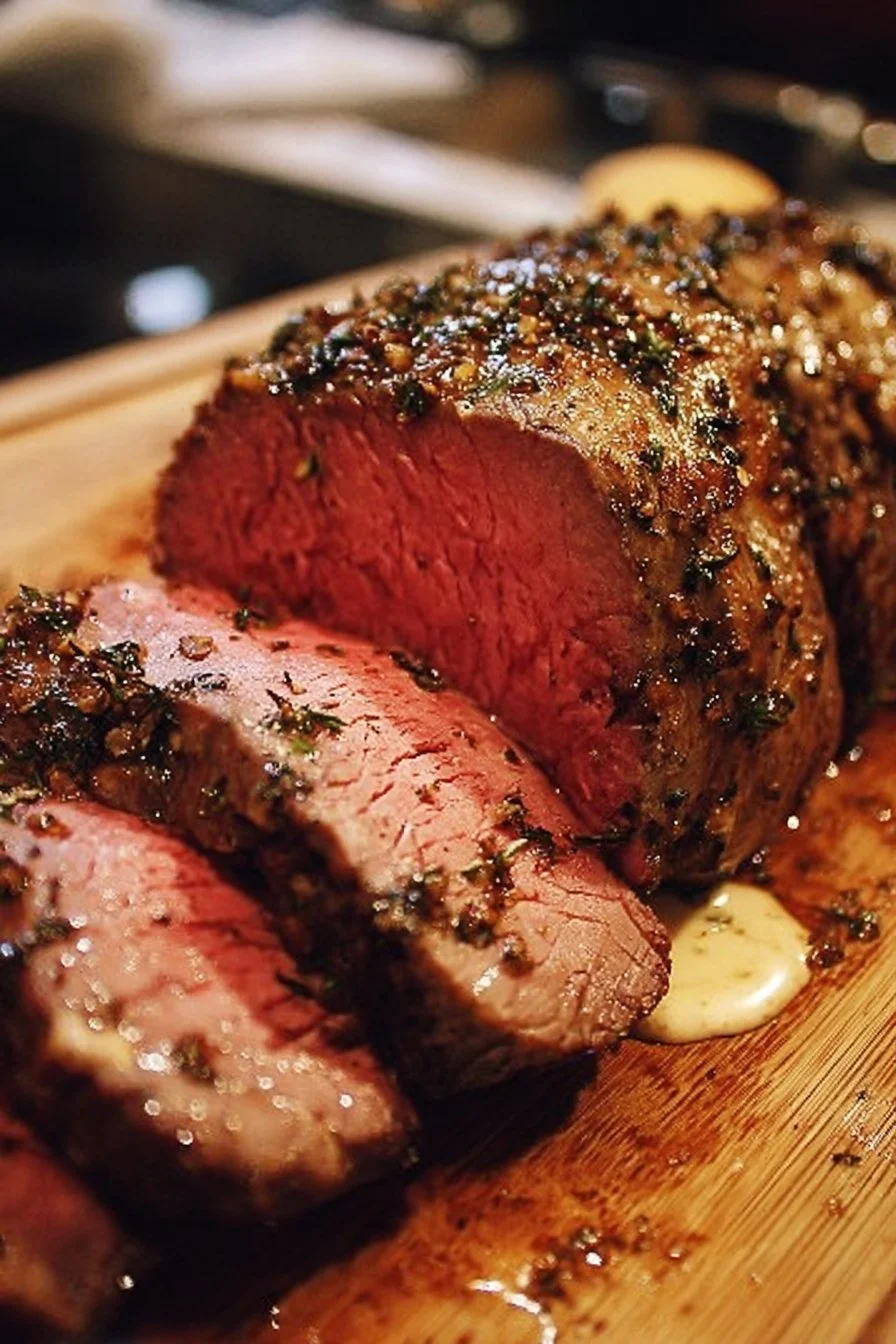
A perfectly seared, herb‑kissed beef tenderloin that slices like butter—Million Dollar Roast Beef Tenderloin is the kind of main that makes holidays, dinner parties, and special Sunday suppers feel memorable without a lot of stress. It’s simply trimmed tenderloin rubbed with garlic, rosemary, thyme and Dijon, seared for a savory crust, then roasted until just the right doneness and rested to keep every slice tender and juicy. If you appreciate bold pan juices and show‑stopping presentations, you might also enjoy the flavor-forward bourbon-peach roasted salmon as a contrasting weeknight or celebration option.
Why you’ll love this dish
Million Dollar Roast Beef Tenderloin looks and tastes like fine‑dining food but is surprisingly straightforward. A few fresh herbs, a sharp hit of Dijon, and a quick sear build deep flavor; the oven finishes it gently so the center stays tender. It’s a top pick for small gatherings, anniversaries, holiday roasts, or any night you want an impressive centerpiece without fuss.
“We served this for a holiday meal and everyone asked for seconds—perfectly pink inside and the pan juices were irresistible.” — A home cook’s quick review
Why make it:
- Fast prep for a roast: 30 minutes active plus roasting and resting.
- Elegant results: restaurant texture and presentation.
- Flexible: works for 2–6 people depending on slicing.
- Reliable: sear then roast technique produces a consistent crust and even doneness.
Step-by-step overview
This recipe follows three main stages: marinate (quickly), sear, and roast. First, whisk olive oil, Dijon, Worcestershire, herbs, garlic, salt and pepper into a paste and rub into the trimmed tenderloin. After a 30‑minute rest at room temperature, sear all sides in a hot oven‑safe skillet to develop a brown crust. Add beef broth to the pan, then roast in a 425°F oven until the thermometer reads your target doneness (135°F for medium‑rare is a common target). Let the meat rest under a loose tent for 10–15 minutes so the juices redistribute before slicing.
What you’ll need
- 2 to 3 pounds beef tenderloin, trimmed (filet mignon roast)
- 2 tablespoons olive oil
- 2 teaspoons kosher salt (adjust if using finer salt)
- 1 teaspoon black pepper, freshly cracked
- 4 cloves garlic, minced
- 2 tablespoons fresh rosemary, chopped (substitute 2 teaspoons dried)
- 2 tablespoons fresh thyme, chopped (substitute 2 teaspoons dried)
- 1 tablespoon Dijon mustard (or grainy mustard for texture)
- 1 tablespoon Worcestershire sauce (use gluten‑free Worcestershire if needed)
- 1 cup beef broth (or substitute low‑sodium chicken broth or ½ cup red wine + ½ cup water)
Ingredient notes:
- If the tenderloin isn’t tied, ask your butcher to tie it or use kitchen twine for even cooking.
- For a richer pan sauce, finish the pan juices with a tablespoon of butter and a splash of cream or red wine after roasting.
Step-by-step instructions
- Preheat oven to 425°F (218°C). Position a rack in the center.
- In a small bowl, combine olive oil, salt, pepper, minced garlic, rosemary, thyme, Dijon mustard, and Worcestershire sauce into a coarse paste.
- Pat the tenderloin dry with paper towels. Rub the marinade all over the meat, coating evenly. Let sit at room temperature for 30 minutes (this helps it cook more evenly).
- Heat a large oven‑safe skillet over medium‑high. When hot, add a little oil and sear the tenderloin on each side until deeply browned, about 3–4 minutes per side.
- Pour beef broth into the skillet around (not over) the meat to deglaze and add moisture.
- Transfer skillet to the preheated oven. Roast for about 25–30 minutes for a 2–3 lb tenderloin, or until an instant‑read thermometer reads 135°F for medium‑rare. (If you prefer a firmer doneness, remove at 145°F for medium.)
- Remove skillet from oven. Transfer the tenderloin to a cutting board and loosely tent with foil. Rest 10–15 minutes—this step is crucial so the juices redistribute.
- Slice into ½‑inch thick medallions and spoon pan juices over the top. Serve immediately.
Timing tip: oven times vary—always rely on a thermometer to avoid overcooking.
Best ways to enjoy it
This roast loves classic, comforting sides. Consider:
- Creamy mashed potatoes or duchess potatoes
- Roasted root vegetables (carrots, parsnips, baby potatoes)
- A bright green like sautéed haricots verts or wilted spinach
- A gratin dauphinois for a showy, rich side
- Red wine (Cabernet Sauvignon, Merlot) or a full-bodied Pinot Noir
For a surf‑and‑turf evening, pair slices of this tenderloin with a lighter fish course such as the Bourbon Peach Roasted Salmon recipe. Dress plates with a smear of horseradish cream or a drizzle of pan sauce made from the roast’s juices.
Storage and reheating tips
- Refrigeration: Store leftovers in an airtight container for 3–4 days. Slice only what you’ll eat to keep remaining roast juicier.
- Freezing: Wrap tightly in plastic and foil or vacuum seal. Freeze up to 3 months. Thaw overnight in the fridge before reheating.
- Reheating: Warm gently to avoid drying. Place slices in a baking dish, splash a little beef broth, cover tightly with foil, and heat in a 275–300°F oven until warmed through (10–15 minutes depending on thickness). Alternatively, reheat sous‑vide at 130°F for medium‑rare texture.
- Food safety: USDA recommends cooking whole cuts of beef to 145°F with a 3‑minute rest for safety; many chefs and diners prefer lower temps for texture—use caution and informed preference.
Pro chef tips
- Bring the meat to room temperature before cooking for even roasting.
- Pat the tenderloin very dry before applying the rub—moisture inhibits browning.
- Use a hot cast‑iron skillet for the best crust. Sear in batches if the pan gets crowded.
- Invest in an instant‑read thermometer or a leave‑in probe. Visual cues are unreliable.
- Let the roast rest; cutting too soon releases flavorful juices.
- Make a pan sauce: after removing the roast, sauté a minced shallot in the drippings, deglaze with red wine, reduce, add beef broth and finish with a pat of butter and a sprig of thyme.
- If your tenderloin is uneven, tie it to ensure uniform thickness and consistent cooking.
Creative twists
- Herb‑parmesan crust: press a mixture of panko, grated Parmesan, and chopped parsley onto the seared roast and finish briefly under the broiler.
- Bacon‑wrapped: wrap the tenderloin with overlapping bacon strips before roasting for smoky richness.
- Mustard‑crusted coffee rub: add a tablespoon of finely ground coffee to the rub for a complex bitter note.
- Gluten‑free: swap Worcestershire for tamari or a splash of gluten‑free soy + a dash of anchovy paste.
- Red wine reduction: swap the beef broth for a splash of robust red wine and reduce into a glossy sauce.
- Vegetarian inspiration: the same herb‑mustard technique can be used to season thick, roasted portobello caps or a seared cauliflower steak for a vegetarian centerpiece.
Common questions
Q: How do I know when the roast is done?
A: Use an instant‑read or probe thermometer. Medium‑rare is about 135°F when removed, though some remove it at 125–130°F and allow carryover to reach 135°F during rest. USDA safety guidance is 145°F with a 3‑minute rest for whole beef cuts.
Q: Should I tie the tenderloin?
A: Yes, if the roast tapers or has uneven thickness. Tying with kitchen twine creates even cooking and a neater presentation. Many butchers will tie it for you.
Q: Can I make this ahead of time?
A: You can sear and cool the roast, then refrigerate for up to 24 hours. Rewarm in a 300°F oven until the internal temperature reaches your target. For best texture, finish searing and roast on the day you serve it.
Q: How thin should I slice the tenderloin?
A: Slice into ½‑inch thick medallions for elegant presentation. For sandwiches or salads, cut thinner against the grain.
Q: What if I don’t have fresh herbs?
A: Dried herbs work—use about one‑third the amount of fresh. Add them to the rub but consider adding a bit more fresh flavor after roasting (a sprinkle of fresh parsley or a squeeze of lemon).
If you’d like, I can format a printable recipe card version of the ingredients and directions or help calculate roasting time for a specific tenderloin weight.