
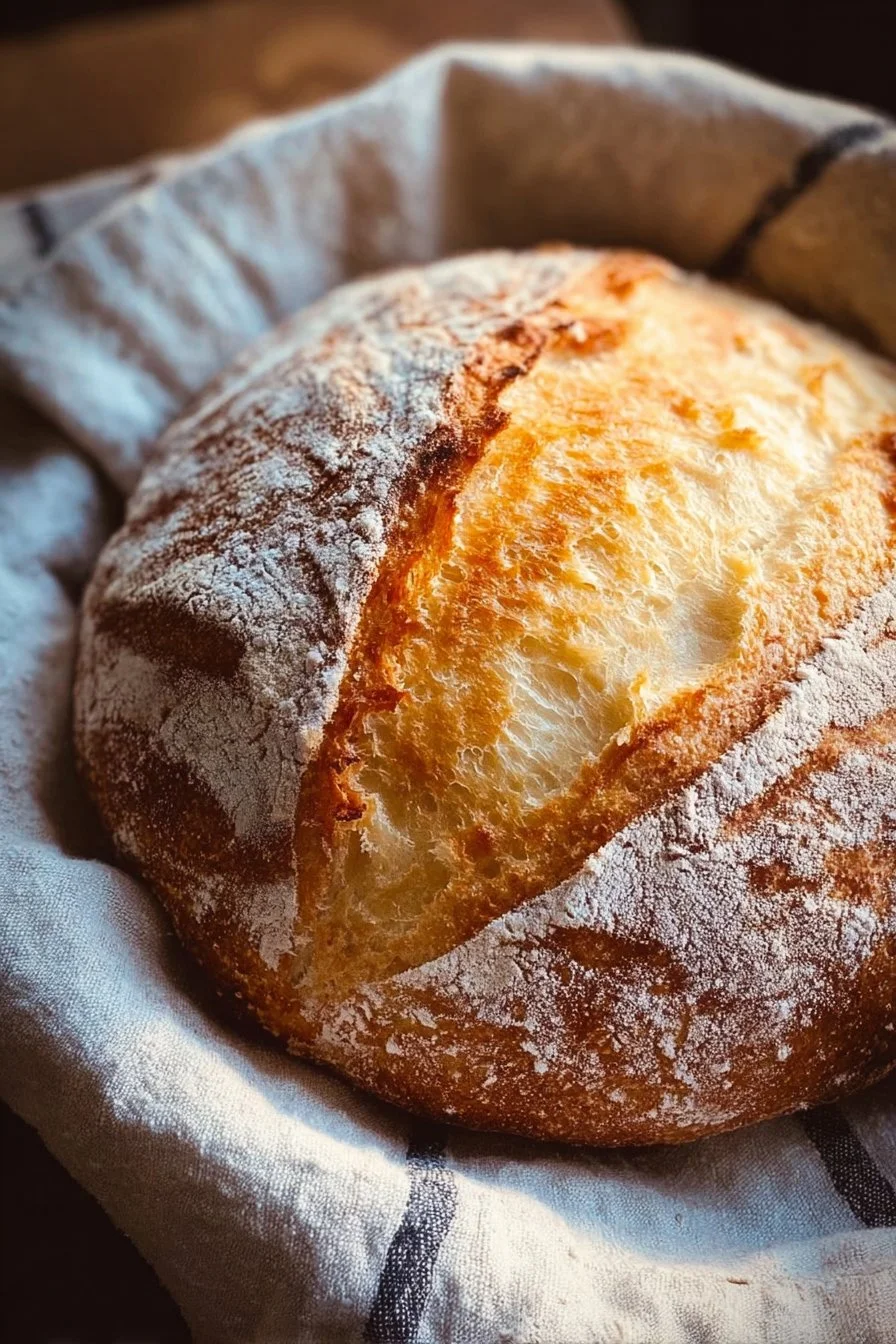
In my kitchen, a reliably crusty, open-crumb sourdough loaf is the kind of comfort that turns weekday baking into an accomplishment. This no-fail sourdough method uses a simple ingredient list and predictable timings to get you a golden crust and tangy crumb without stress — perfect for bakers who want the sourdough experience minus the fuss. For a deeper troubleshooting guide and photos, see the detailed no-fail sourdough guide that complements this recipe.
Why you’ll love this dish
This recipe hits the sweet spot between classic flavor and practical technique. With just flour, water, salt and a healthy starter, you get:
- A 75% hydration dough (375 g water to 500 g flour) for an open, airy crumb.
- Predictable bulk fermentation (4–8 hours) so you can time the bake around your day.
- A Dutch oven finish for a crisp, blistered crust.
“Hands-off enough for busy mornings, rewarding enough for weekend bakers — one of the best everyday sourdoughs I’ve made.” — home baker review
Occasions: weekday toast, weekend brunch, sandwich loaves, or a centerpiece for holiday spreads. It’s also a forgiving recipe for those new to sourdough — you’ll learn fermentation cues more than follow the clock.
Step-by-step overview
Before you start, here’s what the process looks like at a glance so you can plan:
- Autolyse: mix flour and water until shaggy, rest 30 minutes.
- Add salt and active starter, then knead to develop gluten (~10 minutes).
- Bulk ferment: let the dough rise in a greased bowl for 4–8 hours at room temp.
- Pre-shape and bench rest: shape into a ball, rest 30 minutes.
- Final shape and proof in a banneton for 2–4 hours.
- Bake in a preheated Dutch oven at 450°F (230°C): 30 minutes covered, then 15–20 minutes uncovered.
- Cool fully on a wire rack before slicing.
This sets realistic expectations: the hands-on time is short, most of the clock is passive fermentation.
What you’ll need
- 500 g bread flour (high-protein for structure; you can do 450 g bread + 50 g whole wheat for extra flavor)
- 375 g water (75°F/24°C is a comfortable starting temp)
- 10 g fine sea salt
- 100 g active sourdough starter (fed and bubbly; about 8–12 hours after feeding at room temp)
Optional tools and notes:
- Dutch oven (6–8 quart) for steam and oven spring.
- Proofing basket (banneton) or a bowl lined with a well-floured towel.
- Bench scraper, lame or sharp knife for scoring, digital scale for accuracy.
Substitutions: all-purpose flour can work but expect a slightly softer crust and less chew. If using whole-grain flours, reduce hydration 5–10% or expect a stickier dough.
Step-by-step instructions
- In a large bowl, pour 375 g water over 500 g flour. Stir until no dry pockets remain — the dough will be shaggy. Cover and rest 30 minutes (autolyse).
- Sprinkle 10 g salt and add 100 g active starter. Mix thoroughly: squeeze and fold until ingredients are fully incorporated.
- Knead on a lightly floured surface or in the bowl for about 10 minutes until the dough feels smooth and elastic. You can use stretch-and-folds every 30 minutes during bulk fermentation as an alternative to intensive kneading.
- Transfer dough to a greased bowl, cover with a damp towel or plastic wrap. Let it bulk ferment at room temperature for 4 to 8 hours. The dough should increase in volume by about 30–50% and show small bubbles. Timing depends on starter strength and room temp.
- Turn the dough out, shape into a loose ball (pre-shape), and let it rest on the counter for 30 minutes under a towel.
- Final shape into a tight boule or batard and place seam-side up in a well-floured banneton. Cover and proof for 2 to 4 hours at room temp, or refrigerate overnight for a slower, more flavorful proof (cold proofing also makes scoring easier).
- About 45 minutes before baking, preheat the oven to 450°F (230°C) with your Dutch oven inside.
- When ready, carefully invert the proofed dough onto parchment, score the top, and transfer to the hot Dutch oven. Cover and bake 30 minutes.
- Remove the lid and bake an additional 15 to 20 minutes until the crust is deep golden brown and sounds hollow when tapped.
- Cool completely on a wire rack for at least 1 hour before slicing to set the crumb.
Safety note: always use oven mitts when handling a hot Dutch oven and avoid sudden drafts that can crack the pan.
Best ways to enjoy it
Serve warm slices with butter and flaky salt, use thick-cut for sandwiches, or turn day-old slices into outstanding French toast. For a party or potluck, this loaf pairs wonderfully with bold dips, olive oil and balsamic, or a rich soup. If you want a complementary crowd-pleasing pull-apart side, try the savory chicken alfredo monkey bread for a contrasting, indulgent accompaniment.
Plating idea: slice at an angle, fan the pieces on a board alongside a small jar of herb butter, and a bowl of olives for an instant rustic spread.
Storage and reheating tips
- At room temperature: keep the loaf in a paper bag or wrapped in a clean tea towel for 2–3 days; plastic will soften the crust.
- Refrigeration: avoid refrigerating a fresh loaf — it accelerates staling. Only refrigerate if the loaf has moist toppings or fillings.
- Freezing: slice, wrap tightly in plastic wrap and foil, and freeze up to 3 months. Reheat slices from frozen in a toaster or 350°F oven for 10–12 minutes.
- Re-crisping: to revive a softened crust, bake the whole or halved loaf at 375°F for 10–12 minutes, or mist lightly with water and bake at 450°F for 5–7 minutes.
Pro chef tips
- Hydration note: 75% hydration gives an open crumb but can be sticky. Use wet hands and a bench scraper if the dough gets clingy.
- Starter strength: use a starter that doubles 4–6 hours after feeding at room temp. Underactive starter = longer bulk fermentation.
- Temperature control: warmer rooms shorten proof times; if your kitchen is cool, allow extra time or proof in a slightly warm oven (oven off, light on).
- Scoring: a quick, decisive slash (about 1/4-inch deep) helps the loaf expand where you want it. Wavy, shallow scores yield less oven spring.
- Steam alternative: if you don’t have a Dutch oven, use a baking tray filled with hot water on the oven floor, and spray the loaf with water before baking to encourage steam.
Creative twists
- Seeded crust: brush the loaf with water or egg wash before baking and press sesame, poppy or sunflower seeds into the surface.
- Olive and rosemary: fold 100 g chopped, pitted olives and a tablespoon of chopped fresh rosemary into the dough at the mixing stage for a Mediterranean loaf.
- Whole-grain blend: swap 100–150 g of the bread flour for rye or whole wheat, but reduce water by ~10–20 g and expect a denser crumb.
- Garlic butter pull-apart: slice the cooled loaf into thick slices, butter with garlic-herb butter, reheat until warm and serve.
Common questions
Q: How do I know my starter is ready to use?
A: A ready starter doubles in volume 4–8 hours after feeding, has lots of bubbles, and a pleasant tangy aroma. Perform the float test (a spoonful should float in water) as a quick indicator — it’s not foolproof but often helpful.
Q: Can I speed up the bulk fermentation?
A: Yes — increase ambient temperature (around 75–80°F) or use a warmer spot. Be cautious: fermenting too fast can reduce flavor complexity and cause overproofing.
Q: Why is my crumb dense?
A: Common causes are under-kneading/weak gluten development, insufficient bulk fermentation, or an underactive starter. Try longer kneading/stretch-and-folds, watch fermentation cues (bubbles and slight rise), and ensure your starter is vigorous.
Q: Can I bake this without a Dutch oven?
A: Yes. Use a baking stone or sheet, create steam by placing a tray of boiling water on the bottom rack and spritzing the loaf during the first 8–10 minutes. Results will be slightly different — less dramatic oven spring and a crust that browns differently.
Q: How long should the loaf cool before slicing?
A: Resist slicing until the loaf is mostly cool (about 60 minutes). Cutting too early gives a gummy crumb because the interior is still finishing its internal structure.
Q: Is this recipe suitable for beginners?
A: Absolutely. It’s designed to teach fermentation cues and basic shaping. Follow the timings, keep notes, and you’ll learn adjustments for your kitchen conditions.
No-Fail Sourdough Loaf
- Total Time: 8 hours 10 minutes
- Yield: 1 loaf
- Diet: Vegetarian
Description
A reliably crusty sourdough loaf with an open crumb, perfect for busy bakers and beginners alike.
Ingredients
- 500 g bread flour
- 375 g water
- 10 g fine sea salt
- 100 g active sourdough starter
Instructions
- Pour 375 g water over 500 g flour in a large bowl. Stir until no dry pockets remain — the dough will be shaggy. Cover and rest 30 minutes (autolyse).
- Sprinkle 10 g salt and add 100 g active starter. Mix thoroughly: squeeze and fold until fully incorporated.
- Knead on a lightly floured surface for about 10 minutes until the dough feels smooth and elastic.
- Transfer dough to a greased bowl, cover, and let it bulk ferment at room temperature for 4 to 8 hours.
- Turn the dough out, shape into a loose ball, and rest on the counter for 30 minutes under a towel.
- Final shape into a tight boule or batard and place seam-side up in a well-floured banneton. Proof for 2 to 4 hours.
- Preheat the oven to 450°F (230°C) with your Dutch oven inside.
- Invert the proofed dough onto parchment, score the top, and transfer to the hot Dutch oven. Cover and bake for 30 minutes.
- Remove the lid and bake an additional 15 to 20 minutes until the crust is deep golden brown.
- Cool completely on a wire rack for at least 1 hour before slicing.
Notes
Serve warm slices with butter or use thick-cut for sandwiches. Avoid refrigeration unless necessary.
- Prep Time: 10 minutes
- Cook Time: 50 minutes
- Category: Bread
- Method: Baking
- Cuisine: International