
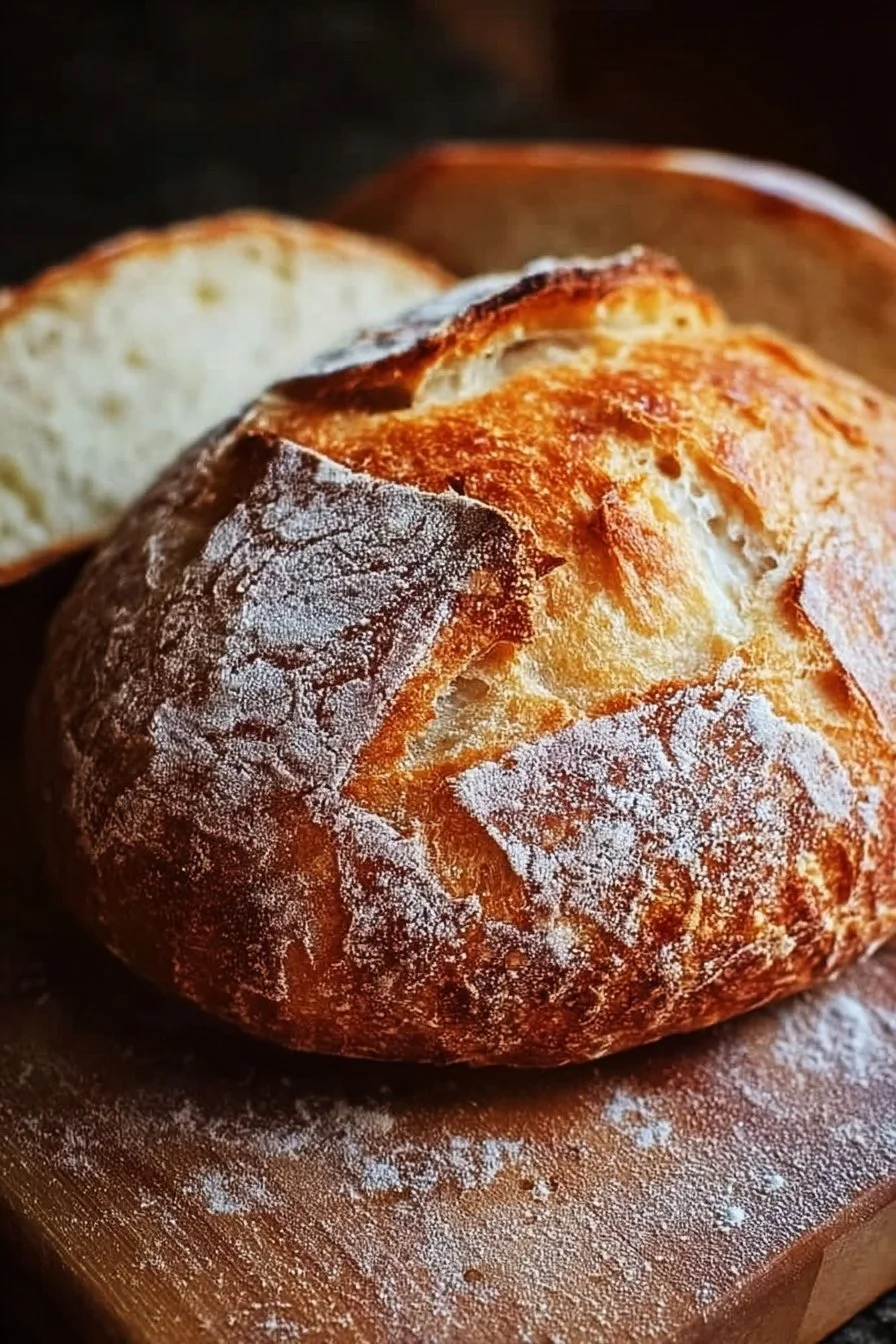
A slow, hands-off loaf that looks and tastes like it came from a bakery: this no-knead artisan bread delivers a blistered, crackly crust and an open, chewy crumb with almost no effort. It’s perfect for weekend sandwiches, dunking into soups, or serving alongside a cheese board. If you like flavored crusts, try a similar approach in my take on garlic herb Dutch oven bread for an aromatic twist.
Why you’ll love this dish
This is one of those recipes that rewards patience rather than elbow grease. You mix once, leave the dough to ferment, shape quickly, and bake in a preheated Dutch oven for the classic artisan rise and crust. It’s ideal when you want fresh-baked bread with minimal active time.
“We made this for Sunday dinner—crusty outside, tender inside, and everyone asked for seconds. So easy!” — Home baker review
Reasons to try it now:
- Minimal skill required: no kneading, no shaping gymnastics.
- Budget-friendly: pantry staples only.
- Great texture: long fermentation builds flavor without bulk starters or special equipment.
- Flexible timing: fermentation windows fit busy schedules.
Step-by-step overview
This recipe follows three big stages so you know what to expect:
- Mix: whisk flour, salt, and instant yeast, then stir in warm water until sticky.
- Long ferment: cover and let the dough sit 12–18 hours at room temperature to develop flavor and structure.
- Shape and bake: gentle folds, a short final rise on parchment, then into a blazing-hot Dutch oven for 45–55 minutes total.
The long, slow fermentation is where the magic happens — it creates that nutty, slightly tangy flavor and the airy crumb without kneading.
What you’ll need
- 3 cups (approximately 375 g) all-purpose flour — bread flour works, too, for extra chew.
- 1/4 teaspoon instant yeast — very small amount; this slow rise builds flavor.
- 1 1/2 teaspoons fine sea salt or kosher salt — balances flavor and strengthens the dough.
- 1 1/2 cups (about 360 ml) warm water, 105–115°F (40–46°C) — warm enough to activate yeast but not kill it.
Notes and substitutions:
- Instant vs active dry yeast: instant can be mixed directly; if using active dry, proof briefly in part of the water and reduce the bulk time slightly if your kitchen is very warm.
- For whole-wheat: replace up to 25% of the flour with whole-wheat flour; expect a denser crumb and slightly more water absorption.
- Add-ins: herbs, roasted garlic, or seeds can be mixed in at shaping.
Step-by-step instructions
- In a large bowl, whisk together the flour, salt, and instant yeast until evenly combined.
- Pour the warm water into the bowl. Stir with a sturdy spoon until a shaggy, very sticky dough forms. Scrape the sides so everything is mixed.
- Cover the bowl tightly with plastic wrap or a lid. Let the dough ferment at room temperature for 12–18 hours. The dough should double-ish and be bubbly on the surface.
- Lightly flour your work surface. Gently scrape the dough out and fold the edges toward the center a few times to form a loose ball — handle it gently to preserve air pockets.
- Place the dough seam-side down on a sheet of parchment paper. Dust the top lightly with flour and let it rise uncovered for 1–2 hours until puffy and jiggly.
- Meanwhile, preheat your oven to 450°F (232°C) with a heavy Dutch oven (lid on) inside for 30 minutes.
- Score the top of the dough with a sharp blade or lame to give it a planned expansion line. Using the parchment, lift and transfer the dough into the hot Dutch oven. Cover and bake for 30 minutes.
- Remove the lid and bake for an additional 15–25 minutes until the crust is deep golden brown and crisp.
- Carefully remove the loaf and cool on a rack for at least 1–2 hours before slicing. Cooling finishes the crumb set and prevents a gummy interior.
Timing tips: the long fermentation builds flavor; if your kitchen is warm, check earlier (12 hours). If cooler, allow the full 18 hours.
Best ways to enjoy it
Slice thick for sandwiches, tear into chunks for dipping, or serve warm with butter. For a simple meal, cut the loaf and serve with olive oil, flaky salt, and a handful of herbs. For a richer pairing, this bread shines with stew, minestrone, or a creamy cheese plate — and if you want a garlicky, cheesy spin, consider serving it alongside my garlic parmesan herb bread for inspiration on flavor pairings.
Serving ideas:
- Breakfast: toasted with ricotta and honey.
- Dinner: alongside tomato soup or a slow-braised ragù.
- Appetizer: slice, brush with oil, toast, and top with marinated tomatoes.
Storage and reheating tips
- At room temperature: keep whole loaf in a paper bag or loosely wrapped in a tea towel for up to 2 days. The crust will soften over time.
- To keep longer: slice and freeze in an airtight bag for up to 3 months. Toast slices straight from frozen.
- Reheating: revive the crust in a 375°F (190°C) oven for 8–12 minutes, or sprinkle with water and bake 10 minutes for extra crispness.
- Food safety: this is a low-moisture bread; refrigeration is not recommended for storage (it speeds staling). Freeze instead for longer storage.
Pro chef tips
- Measuring flour: spoon flour into the cup and level; or better, weigh it for consistency (3 cups ≈ 375 g).
- Hydration: the dough is wet by design. Don’t add extra flour when shaping — use a bench scraper and lightly dusted hands.
- Dutch oven steam: the enclosed pot traps steam and produces a shiny, blistered crust. If you don’t have a Dutch oven, use a heavy baking stone and place a tray of boiling water on the bottom rack to create steam.
- Scoring: a single long slash gives a nice oven spring. Score gently—deep cuts can deflate the loaf.
- Cooling: resist slicing too soon. The crumb continues to set as it cools; cutting early yields a gummy texture.
Creative twists
- Herb and garlic: fold in roasted garlic and chopped rosemary at shaping for a fragrant loaf.
- Seeded crust: brush the dough with water then press seeds (sesame, sunflower, poppy) on top before the final rise.
- Whole-grain: swap 25–50% of the flour for whole wheat or spelt; increase water slightly.
- Cheesy: press shredded Parmesan into the top before baking for a cheesy crust.
- Sourdough-style: replace some water with a starter (if you have one) and reduce yeast to taste; proof times will change.
Common questions
Q: Do I have to knead this bread?
A: No. The long fermentation and stretch-and-fold action during gentle shaping develop gluten. That’s the point of the no-knead method.
Q: Can I use active dry yeast instead of instant?
A: Yes. If using active dry yeast, dissolve it in a small portion of the warm water for 5–10 minutes until foamy, then proceed. Because active dry is slightly less potent, the timeline can remain similar but watch the dough’s bubble activity.
Q: Why is my dough so sticky? Is something wrong?
A: High hydration doughs feel sticky—that’s normal. Resist adding more flour. Use a bench scraper and lightly floured hands to handle it. Over-flouring reduces oven spring and yields a denser crumb.
Q: Can I make this ahead and refrigerate the dough?
A: Yes. After mixing, cover and refrigerate for up to 48 hours for a slow cold ferment; bring to room temperature before shaping and allow the final rise to complete. Cold fermentation deepens flavor.
Q: How can I get a more rustic, open crumb?
A: Use higher-protein flour (bread flour), keep the dough wet, handle it gently, and avoid degassing when shaping.
Enjoy the satisfying rhythm of this loaf: a little mixing, a long wait, and a warm, crackly bread to share.
Print
No-Knead Artisan Bread
- Total Time: 105 minutes
- Yield: 1 loaf
- Diet: Vegetarian
Description
A hands-off loaf that delivers a blistered, crackly crust and an open, chewy crumb with minimal effort. Ideal for sandwiches, soups, or cheese boards.
Ingredients
- 3 cups (approximately 375 g) all-purpose flour
- 1/4 teaspoon instant yeast
- 1 1/2 teaspoons fine sea salt or kosher salt
- 1 1/2 cups (about 360 ml) warm water (105–115°F or 40–46°C)
Instructions
- In a large bowl, whisk together the flour, salt, and instant yeast until evenly combined.
- Pour the warm water into the bowl and stir with a sturdy spoon until a sticky dough forms.
- Cover the bowl tightly and let the dough ferment at room temperature for 12–18 hours.
- Lightly flour your work surface and gently scrape the dough out, folding the edges toward the center.
- Place the dough seam-side down on parchment paper, dust the top lightly with flour, and let it rise for 1–2 hours.
- Preheat your oven to 450°F (232°C) with a heavy Dutch oven inside for 30 minutes.
- Score the top of the dough and transfer it into the hot Dutch oven.
- Cover and bake for 30 minutes, then uncover and bake for an additional 15–25 minutes until golden brown.
- Remove the loaf and cool on a rack for at least 1–2 hours before slicing.
Notes
For best results, handle the wet dough gently to preserve air pockets. Avoid refrigeration for storage; freeze instead.
- Prep Time: 15 minutes
- Cook Time: 45 minutes
- Category: Bread
- Method: Baking
- Cuisine: Artisan