
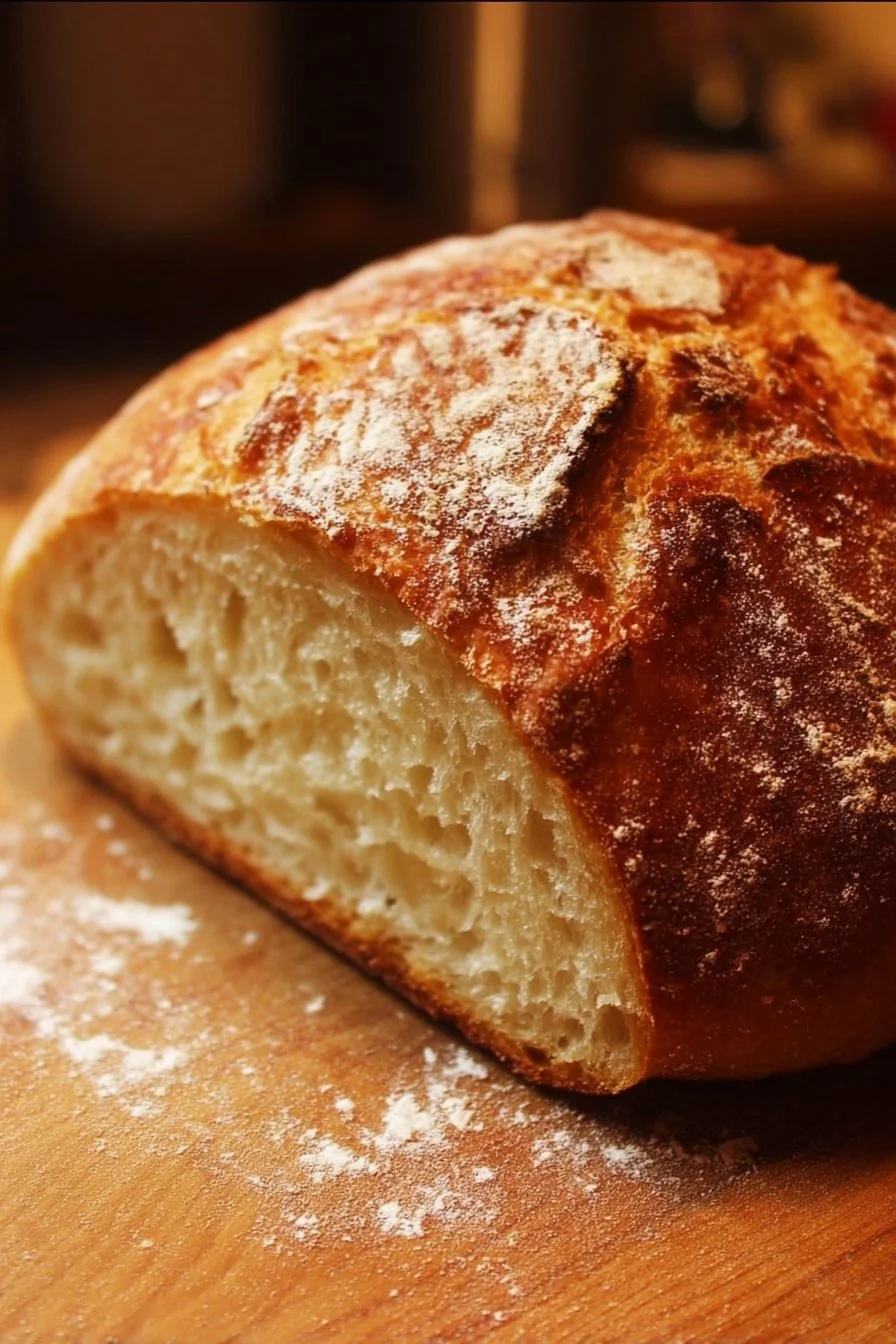
This no-fuss, rustic loaf delivers a crisp crust and open, chewy crumb with almost no hands-on work. This no-knead bread uses just flour, salt, instant yeast, and warm water — you mix, wait, and bake in a hot Dutch oven. It’s the kind of loaf that makes weeknight dinners feel special, or fills a weekend kitchen with that unmistakable, bakery-like aroma. If you enjoy one-pot Dutch oven baking, try this garlic-herb Dutch oven bread recipe for another great approach to crusty, home-baked bread.
Why you’ll love this loaf
This recipe is celebrated because it trades elbow grease for time: long, slow fermentation gives flavor and structure without kneading. It’s forgiving for beginners and reliable for experienced bakers who want fresh bread with minimal effort.
“I made this on a lazy Saturday — the crust was blistered and the inside had big, glossy holes. Best part: I barely touched the dough.” — a happy home baker
Reasons to make it:
- Extremely low hands-on time: the active work is under 15 minutes.
- Budget-friendly pantry ingredients.
- Great for sandwiches, soups, or simply with butter.
- Flexible timing: 12–18 hour rise window fits many schedules.
Step-by-step overview
Before you start, know what will happen: mix dry ingredients, add warm water, let the sticky dough ferment at room temperature for 12–18 hours, shape, then bake in a preheated Dutch oven to trap steam and produce a glossy, crisp crust. Expect total elapsed time of roughly 13–19 hours, but active time is short.
Key checkpoints:
- Dough should be very shaggy and sticky after mixing.
- After the long rise, it will be puffed and dotted with bubbles.
- Preheating the Dutch oven is essential for a good oven spring.
What you’ll need
- 2 cups (about 250 g) all-purpose flour — measure by weight for best consistency.
- 1/2 teaspoon fine salt.
- 1/2 teaspoon instant yeast.
- 1 cup (240 ml) warm water (about 100–110°F / 38–43°C).
Substitutions and notes:
- Whole-wheat: swap up to 25% of the flour for whole-wheat; expect a denser crumb and the need for a touch more water.
- Instant yeast: dissolves directly into the dry mix; if using active dry yeast, proof it in the warm water first.
- For stronger crust color, brush the loaf lightly with water before scoring.
Step-by-step instructions
- In a large bowl, whisk together the flour, salt, and instant yeast until evenly combined.
- Pour in the warm water and stir with a wooden spoon or spatula until you have a sticky, shaggy dough. It will look rough — that’s right.
- Cover the bowl tightly with plastic wrap or a reusable lid. Leave the dough at room temperature for 12 to 18 hours; it should rise and become bubbly.
- When you’re ready to bake, place a clean Dutch oven (with its lid) in the cold oven and preheat to 450°F (230°C). Let the pot heat for at least 30 minutes so it’s very hot when you add the dough.
- Turn the dough onto a lightly floured surface and gently shape it into a round by folding the edges under to build surface tension. Avoid deflating all the bubbles.
- Carefully transfer the dough seam-side down into the hot Dutch oven. Use parchment to help lift it in if you prefer. Score the top with a sharp knife or lame to control where the loaf expands. If you want inspiration for scoring and toppings, this garlic-herb Dutch oven bread post shows a few decorative and flavor options.
- Bake with the lid on for 30 minutes to trap steam, then remove the lid and bake another 15 minutes to brown and crisp the crust. The internal temperature should read about 200–210°F (93–99°C) when done.
- Remove the loaf from the pot and cool on a rack for at least 30 minutes before slicing so the crumb sets.
Safety tip: Use heavy oven mitts and long tongs or parchment—hot Dutch ovens are extremely hot.
Best ways to enjoy it
- Split and rub with a cut clove of garlic, drizzle with good olive oil, and sprinkle sea salt for a simple snack.
- Serve with soup, stew, or a cheese board; the loaf’s sturdy texture holds up to spreads and dips.
- Make thick, toasted slices for breakfast topped with avocado or jam.
- For a dinner centerpiece, offer it warm alongside roasted vegetables and a salad.
Storage and reheating tips
- Room temperature: store the cooled loaf in a paper bag or wrapped in a clean kitchen towel for 1–2 days to preserve crust texture. Avoid airtight containers at room temp — they soften the crust.
- Freezing: slice the loaf, wrap portions tightly in plastic wrap and foil, and freeze up to 3 months. Toast or thaw at room temperature before reheating.
- Reheating: heat slices in a 350°F (175°C) oven for 5–10 minutes to refresh the crust, or use a toaster for individual slices. If the crumb seems gummy, return the whole loaf to a 350°F oven for 10 minutes.
Food safety: because this is a simple yeast-leavened bread, room-temperature fermentation for 12–18 hours is safe when using clean utensils and a reasonably cool kitchen (not higher than about 80°F/27°C).
Pro chef tips
- Measure flour by weight (250 g) for consistent results; cups vary by scooping method.
- Use a sharp blade for scoring to get a clean cut and predictable oven spring.
- If you want a shinier crust, spritz the loaf with water right after removing the lid.
- Keep your oven door closed during the initial steam phase to maintain temperature.
- If your kitchen is warm and the dough ferments very quickly, shorten the rise to avoid over-proofing.
Creative twists
- Add-ins: fold in 1/4 cup chopped olives, roasted garlic, or 2 tablespoons of herbs after the first rise for savory versions.
- Seeds and grains: top with sesame, poppy, or oats before baking for texture.
- Sweet version: swap 1 tablespoon of water for honey and add 1/3 cup raisins and 1/2 teaspoon cinnamon for a breakfast loaf.
- Gluten-free: this method doesn’t translate directly; consider a specialized gluten-free Dutch oven recipe that uses xanthan gum and tailored flour blends.
Common questions
Q: Can I shorten the rise time?
A: You can shorten it, but flavor and texture will be reduced. A minimum of 6–8 hours at room temperature gives some fermentation, but the 12–18 hour window yields the best depth of flavor.
Q: Do I have to use a Dutch oven?
A: A Dutch oven gives the best steam and crust. If you don’t have one, use a heavy oven-safe pot with a lid, or create steam in the oven with a tray of hot water, though results may vary.
Q: Why is my loaf dense?
A: Common causes are under-proofing, too much flour, or heavy handling that deflates the dough. Measure flour by weight, be gentle when shaping, and ensure the dough is bubbly before shaping.
Q: Can I make smaller loaves or rolls with this dough?
A: Yes. For smaller loaves or rolls, shorten the baking time and watch for internal temperature (~200°F / 93°C). Smaller pieces will also rise slightly faster, so adjust proofing accordingly.
Q: Is the warm water temperature important?
A: Yes. Water too hot can kill the yeast; aim for about 100–110°F (38–43°C). If you don’t have a thermometer, the water should feel warm but not hot to the touch.
If you want more crusty, no-fuss baking ideas or variations, explore other Dutch oven recipes to expand your repertoire.
Print
No-Knead Dutch Oven Bread
- Total Time: 780 minutes
- Yield: 8 servings
- Diet: Vegetarian
Description
A no-fuss, rustic loaf with a crisp crust and chewy crumb, made with minimal hands-on work. Perfect for weeknight dinners or weekend baking.
Ingredients
- 2 cups (about 250 g) all-purpose flour
- 1/2 teaspoon fine salt
- 1/2 teaspoon instant yeast
- 1 cup (240 ml) warm water (about 100–110°F / 38–43°C)
Instructions
- In a large bowl, whisk together the flour, salt, and instant yeast until evenly combined.
- Pour in the warm water and stir until you have a sticky, shaggy dough.
- Cover the bowl tightly and let the dough ferment at room temperature for 12 to 18 hours.
- Preheat a Dutch oven in a cold oven to 450°F (230°C) for at least 30 minutes.
- Turn the dough onto a lightly floured surface and shape it into a round, being careful not to deflate it.
- Transfer the dough seam-side down into the hot Dutch oven, score the top, and cover.
- Bake with the lid on for 30 minutes, then remove the lid and bake for another 15 minutes until browned.
- Cool on a rack for at least 30 minutes before slicing.
Notes
For a stronger crust color, brush the loaf with water before scoring. Store the loaf in a paper bag or towel at room temperature for 1-2 days.
- Prep Time: 15 minutes
- Cook Time: 45 minutes
- Category: Bread
- Method: Baking
- Cuisine: American