
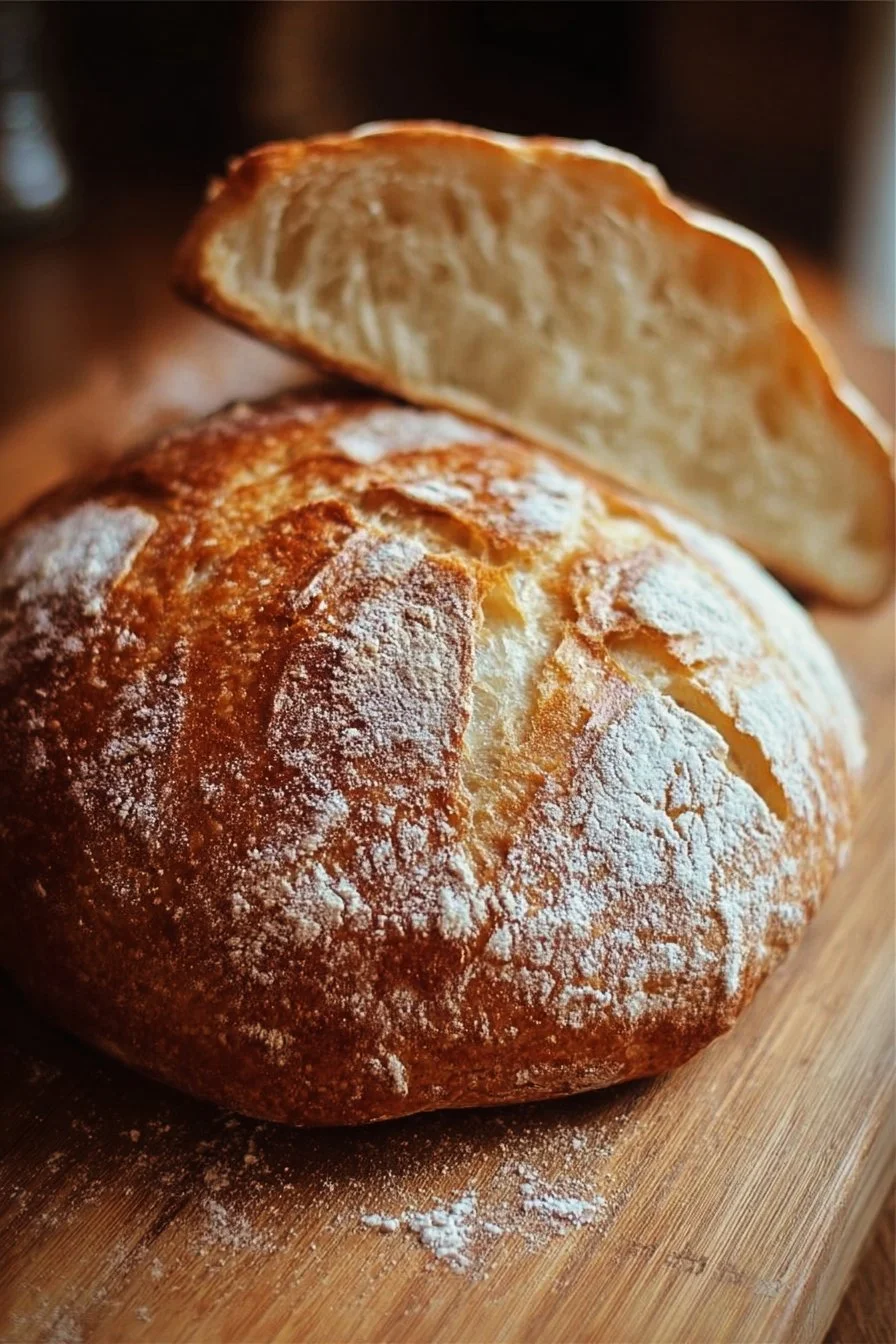
This is a simple, satisfying sourdough boule that balances a soft open crumb with a crisp, deeply caramelized crust. It works for weekend bakers and people who want to turn active starter into a reliable loaf—no fancy equipment beyond a Dutch oven required. If you like dependable, beginner-friendly sourdough approaches, you might also compare techniques with Nina’s no-fail sourdough method to see how small timing or handling changes affect the final loaf.
Why you’ll love this bread
This recipe hits a sweet spot: approachable timing, a forgiving high-hydration dough, and an overnight cold proof that means you can bake fresh bread in the morning without rushing the bulk fermentation. The result is tangy but not overpowering sourness, with plenty of oven spring and a crackly crust.
“The first time I tried this, the crust was so deep and glassy I thought I’d burned it — then I sliced it and found a pillowy, open crumb. It’s my go-to when I want a show-off loaf without a long, complicated process.”
Perfect occasions: Sunday brunch, sandwich bread for the week (slice and freeze), or a centerpiece for holiday spreads. It’s also great when you want to teach someone basic sourdough techniques—stretch-and-folds, shaping, and scoring are all included.
Step-by-step overview
This recipe follows a straightforward timeline so you can plan the day:
- Autolyse: 30 minutes to hydrate flour and develop gluten passively.
- Mix and strengthen: add starter and salt, then use stretch-and-folds over 2 hours.
- Bulk ferment: 6–8 hours at room temperature until about doubled.
- Bench rest and final shape: quick pre-shape, bench rest, then tight boule into a floured basket.
- Cold proof: overnight in the refrigerator (easier scheduling, better flavor).
- Bake: 450°F (232°C) in a preheated Dutch oven — 20 minutes covered, 25 minutes uncovered.
This gives you a sense of timing and the hands-on windows, so you won’t be surprised by the sticky dough or the waiting periods.
Key ingredients
- 4 cups (500 g) bread flour or all-purpose flour — bread flour gives more structure; AP works fine.
- 1 2/3 cups (375 g) warm water — this makes a high-hydration dough that yields an open crumb.
- 1 cup (200 g) active sourdough starter — ideally 100% hydration and recently fed (active, bubbly).
- 2 teaspoons (10 g) fine salt.
Notes and substitutions:
- If your starter is not 100% hydration, the final dough hydration changes; with a 100% starter this recipe’s total dough hydration is roughly 79% (475 g water / 600 g total flour when starter is 100% hydration).
- For a heartier loaf, replace up to 20% of the white flour with whole wheat or rye (expect slightly less oven spring).
- If you want a lower-hydration loaf, reduce the water by 25–50 g; handle will be much easier but crumb will be tighter.
You can compare handling tips and alternate methods in the detailed No-Fail Sourdough method to adapt hydration and timing.
Step-by-step instructions
- In a large bowl, combine the flour and warm water. Stir until there are no dry pockets and you have a shaggy mass. Cover and autolyse for 30 minutes—this hydrates the flour and kickstarts gluten development.
- Add the active starter and the salt. Mix by folding and pressing the dough until starter and salt are incorporated. The dough will be sticky but should hold together.
- Cover and begin bulk fermentation at room temperature.
- During the first 2 hours of bulk fermentation, perform a stretch-and-fold every 30 minutes (four sets total): wet your hand, pull one side up and fold it over the dough, rotate the bowl 90°, repeat until you’ve folded from all four sides. This strengthens the dough.
- After the last fold, cover and let the dough rise undisturbed for another 6 to 8 hours at room temperature, until it has roughly doubled in size. Exact time depends on room temp and starter strength.
- Turn the dough onto a lightly floured surface. Gently pre-shape into a loose round and rest uncovered for 15–20 minutes.
- Final shape the dough into a tight boule. Place seam-side up in a well-floured proofing basket (banneton). Cover and refrigerate overnight (8–14 hours) for a slow cold proof; this develops flavor and improves handling.
- Preheat your oven to 450°F (232°C) with a Dutch oven inside for at least 30 minutes so the vessel is thoroughly hot.
- When ready to bake, remove the dough from the fridge, turn it out onto a sheet of parchment, score the top with a lame or sharp knife, and carefully lower it into the hot Dutch oven using the parchment as a sling.
- Cover and bake for 20 minutes to trap steam. Remove the lid and bake another 25 minutes until the crust is deep golden-brown and crisp. An internal temperature of about 205–210°F (96–99°C) indicates doneness.
- Remove the loaf and cool completely on a wire rack before slicing. Cutting too early gives a gummy crumb.
Best ways to enjoy it
- Warm with just butter — the classic.
- Thick slices for open-faced sandwiches with ripe tomatoes and olive oil.
- Toasted and topped with avocado, smoked salmon, or nut butter.
- Serve alongside soups, stews, or a cheese board; the crisp crust and chewy crumb are perfect for dipping.
For entertaining, slice the loaf and arrange on a wooden board with flavored butters, compound oils, and cured meats.
Storage and reheating tips
- Room temperature: keep the loaf loosely wrapped in a linen bag or paper bag for up to 3 days to preserve crust. Avoid plastic at room temp — it softens the crust quickly.
- Refrigerator: finished sourdough is best not refrigerated long-term; refrigeration accelerates staling. Use only if you must (1–3 days).
- Freezing: slice the cooled loaf, place sheets of parchment between slices, and freeze up to 3 months. Toast or oven-reheat from frozen.
- Reheating: refresh slices in a 350°F (175°C) oven for 8–12 minutes, or use a skillet for quick toasting. For a whole frozen loaf, thaw fully then warm at 350°F for 10–15 minutes.
Safety note: always cool the baked loaf completely before packaging or freezing to avoid condensation and sogginess.
Pro chef tips
- Use a digital scale — grams are precise and avoid inconsistent hydration.
- Keep your starter lively: feed it 4–8 hours before mixing so it’s at peak activity. A sluggish starter lengthens bulk ferment.
- Wet hands or a lightly oiled bench when handling high-hydration dough to reduce sticking.
- Stretch-and-folds should feel like gentle resistance; if the dough tears, give it a longer rest.
- Score confidently: a quick, decisive cut gives better oven spring than hesitant nicking. A 1/4–1/2 inch (6–12 mm) lauder cut is a good starting point.
- Thermometer check: aim for 205–210°F internal for a reliably baked crumb.
- If you don’t have a banneton, use a well-floured bowl lined with a clean towel.
Creative twists
- Seeded boule: mix 2–4 tablespoons toasted sesame, sunflower, or flax seeds into the dough or press on the outside before baking.
- Olive and herb: fold in chopped olives and fresh rosemary during the last fold.
- Whole-grain version: replace up to 20–30% of the white flour with whole wheat; increase water slightly (10–20 g) to maintain hydration.
- Cheesy loaf: fold in 60–100 g grated sharp cheddar for a savory crumb.
- No-Dutch-oven method: bake on a preheated baking stone and introduce steam by placing a tray of boiling water in the oven or spritzing water twice in the first five minutes.
Common questions
Q: Can I use all-purpose flour instead of bread flour?
A: Yes. Bread flour gives slightly better structure and oven spring, but AP flour yields an excellent loaf too.
Q: What if my starter isn’t very active?
A: Feed it twice (discarding after the first feed or using discard recipes) so it’s bubbly and doubled before mixing. A weak starter means longer bulk fermentation.
Q: Can I bake this without a Dutch oven?
A: Yes. Use a baking stone or heavy baking sheet, add steam (a tray of boiling water or spritz the oven), and watch crust color. You may lose a little oven spring.
Q: How do I know when bulk fermentation is done?
A: Look for a ~50–100% increase in volume, a slightly domed surface, and bubbles under the surface. Poke test: a gentle indent should slowly spring back.
Q: Can I shorten this to a same-day loaf?
A: You can speed things up by using a warmer room for bulk ferment and shortening the cold proof, but flavor and texture benefit from the overnight fridge rest.
Q: Why did my crumb come out dense?
A: Possible causes: underproofed dough, not enough strength from folds, weak starter, or over-handling after final shape. Check your timings and starter activity.
If you have questions about a specific step—like shaping or scoring—ask and I’ll walk through photos and troubleshooting tips.
Print
Sourdough Boule
- Total Time: 1070 minutes
- Yield: 1 loaf
- Diet: Vegetarian
Description
A simple, satisfying sourdough boule with a soft open crumb and a crisp, caramelized crust, perfect for beginner bakers.
Ingredients
- 4 cups (500 g) bread flour or all-purpose flour
- 1 2/3 cups (375 g) warm water
- 1 cup (200 g) active sourdough starter
- 2 teaspoons (10 g) fine salt
Instructions
- In a large bowl, combine the flour and warm water. Stir until no dry pockets remain. Cover and autolyse for 30 minutes.
- Add the active starter and salt. Mix until well incorporated.
- Cover and begin bulk fermentation at room temperature, performing stretch-and-folds every 30 minutes for the first 2 hours.
- Let the dough rise undisturbed for another 6 to 8 hours until it has roughly doubled in size.
- Pre-shape the dough into a loose round and rest uncovered for 15–20 minutes.
- Final shape the dough into a tight boule and place seam-side up in a floured proofing basket. Cover and refrigerate overnight.
- Preheat your oven to 450°F (232°C) with a Dutch oven inside for at least 30 minutes.
- Turn the dough out onto parchment, score the top, and carefully lower it into the hot Dutch oven.
- Cover and bake for 20 minutes, then uncover and bake for another 25 minutes until deep golden-brown.
- Cool completely on a wire rack before slicing.
Notes
For a heartier loaf, replace up to 20% of the white flour with whole wheat or rye. To reduce hydration, cut water by 25–50 g.
- Prep Time: 30 minutes
- Cook Time: 45 minutes
- Category: Bread
- Method: Baking
- Cuisine: Artisan