
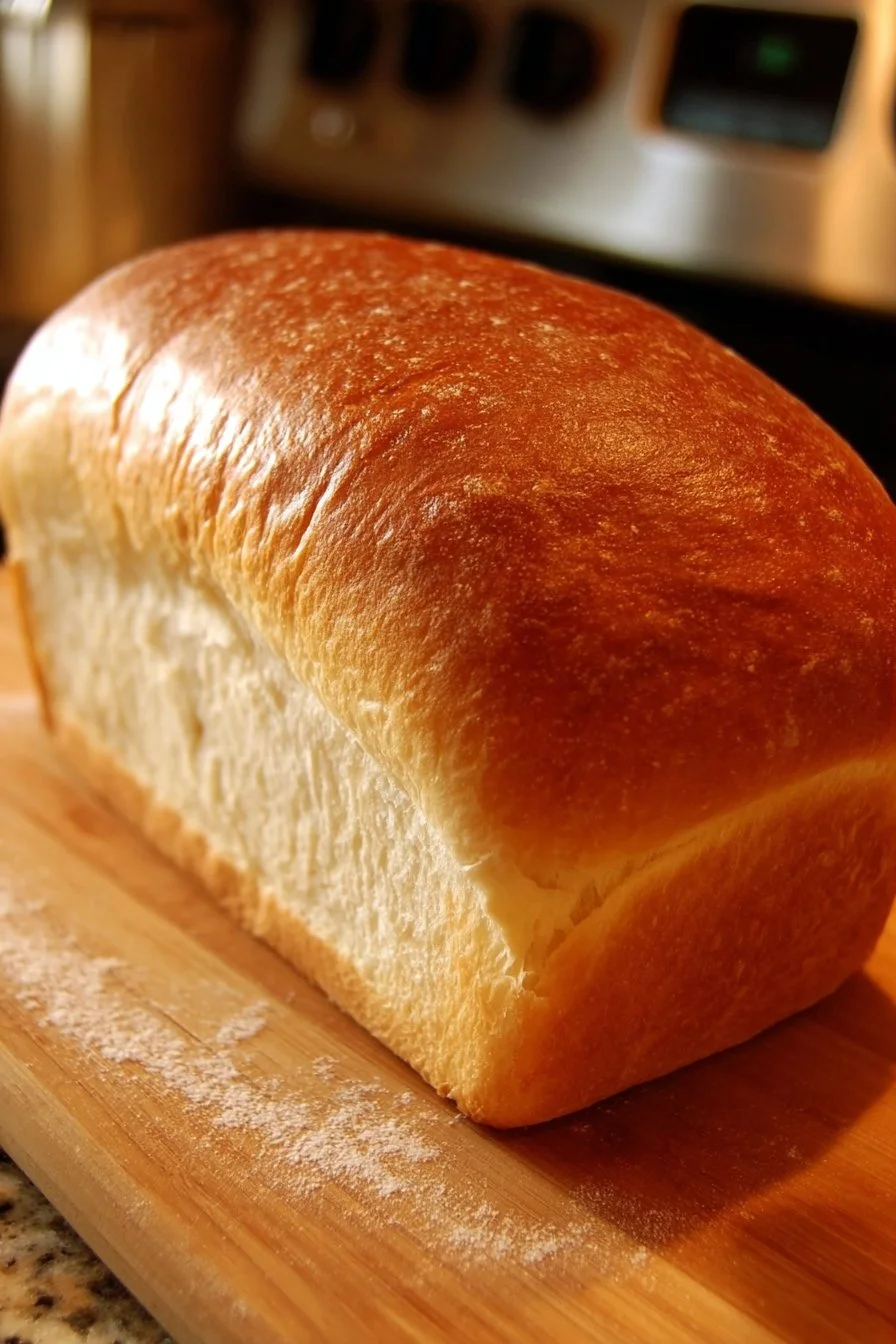
Soft, golden, and wallet-friendly—this homemade sandwich loaf is one of those pantry-saver recipes that turns a few simple ingredients into daily sandwich bread. It’s quick enough for a weeknight plan, mild enough for kids, and forgiving if you’re still learning to work with yeast. If you want a straightforward loaf you can slice for school lunches or toast for breakfast, this is the one to keep handy; many home bakers even call it their go-to when flour or time are limited, and you can read more about this exact thrifty homemade sandwich bread recipe for reference.
Why you’ll love this dish
This loaf is all about reliability and thrift. With only a few staples—water, sugar, yeast, flour, oil, and salt—you get soft crumb, good rise, and neutral flavor that makes it perfect for anything from grilled cheese to deli-style sandwiches. It’s forgiving: the dough tolerates a little over- or under-kneading better than delicate artisan doughs, and the single-pan bake means minimal cleanup.
“I’ve made this loaf every week for months—soft crust, dependable rise, and it stretches the grocery budget without sacrificing texture.” — home baker review
Best occasions: packed lunches, quick weeknight dinners, family brunches, or any time you need a basic sandwich loaf that won’t steal the show.
How this recipe comes together
Step-by-step overview before you dive in: bloom the yeast, mix the dough, knead until elastic, let it double in a warm spot, shape into a loaf, give it a second rise in the pan, and bake until the crumb reaches about 190°F. You’ll work in one bowl (plus a loaf pan) and spend most of the time waiting for rises, so active hands-on time is short—about 20–30 minutes.
Quick timeline:
- Bloom yeast: ~10 minutes
- Mix & knead: 15–20 minutes (including machine time)
- First rise: ~1.5 hours
- Shape + second rise: ~1 hour
- Bake: ~25 minutes
What you’ll need
- 1 cup hot water (not scalding—warm to the touch)
- 2 tablespoons sugar
- 2–3/4 teaspoons active dry yeast (or 1 packet + 1/2 teaspoon)
- 3 cups all-purpose flour or bread flour
- 1/4 cup vegetable oil
- 1 1/2 teaspoons salt
Substitutions and notes:
- Flour: bread flour gives a slightly chewier, higher-rising loaf; all-purpose yields a softer, more tender crumb. If you want to experiment with texture or technique, consider tips from a tried-and-true homemade artisan bread resource to adapt hydration and kneading approaches.
- Oil: vegetable oil is neutral; swap mild olive oil for subtle flavor, but avoid strong extra-virgin olive oil in large amounts or it can taste bitter in baked bread.
- Yeast: active dry yeast works fine; instant yeast can be used but reduce by about 1/4 teaspoon and add directly to flour if you prefer.
Step-by-step instructions
- Bloom the yeast: In a mixing bowl combine 1 cup warm water (comfortably warm, around 105–115°F) with 2 tablespoons sugar. Sprinkle 2–3/4 teaspoons yeast over the surface. Let sit about 10 minutes until foamy.
- Mix the dough: Transfer the foamed yeast to a stand mixer bowl fitted with a dough hook. Add 1/4 cup vegetable oil and 1 1/2 teaspoons salt. Add the 3 cups flour gradually—about one cup at a time—mixing between additions until the dough comes together.
- By hand: stir to combine, then turn onto a floured surface and knead until smooth.
- Knead: With the dough hook, knead until the dough clings to the hook and clears the bowl sides. Continue mixing 3–4 more minutes to develop gluten; by hand, knead roughly 8–10 minutes total until elastic and slightly tacky.
- First rise: Remove dough, shape into a ball, place in a lightly greased bowl, and cover with a clean towel. Let rise in a draft-free, warm spot about 1.5 hours, until doubled.
- Shape: Punch down the dough, shape it into an oval, then place it seam-side down in a greased 9×5-inch loaf pan. Cover loosely with plastic wrap.
- Second rise: Let the dough rise again until nearly doubled—about 1 hour.
- Bake: Preheat oven to 350°F and bake the loaf for about 25 minutes, or until the internal temperature reaches 190°F. Remove from pan and cool on a wire rack before slicing.
Safety note: using an instant-read thermometer is the most reliable way to check doneness—190°F yields a fully baked crumb without a gummy center.
Best ways to enjoy it
This loaf is a versatile blank canvas:
- Classic sandwich: ham, cheese, lettuce, mayo—keeps well without sogginess if you toast slices lightly.
- Toast and spreads: creamy peanut butter and jam, avocado smash, or ricotta with honey.
- French toast: thick slices soak up custard beautifully for a tender interior.
- Croutons or breadcrumbs: stale slices can be cubed and toasted for salads or frozen for later use.
Pairing suggestions: pair with crisp pickles or a bowl of soup for lunch; serve toasted with eggs for brunch.
Storage and reheating tips
Short-term: keep the cooled loaf in a bread bag or tightly sealed container at room temperature for up to 3 days. Avoid refrigeration—it speeds staling.
Freezing: slice the loaf and freeze in airtight bags for up to 3 months. Thaw slices on the counter or toast directly from frozen.
Reheating: toast slices for immediate use, or warm a whole or half loaf wrapped in foil at 325°F for 10–15 minutes for soft crumbs and revived crust.
Food safety: any signs of mold mean discard immediately. If the loaf smells sour or off, don’t taste—throw it out.
Pro chef tips
- Water temperature matters: too hot will kill yeast; too cold slows rise. Aim for 105–115°F when possible.
- Flour absorption varies by brand and climate. If dough feels too wet after all flour is added, sprinkle small pinches of flour until it’s tacky but manageable.
- Shorter second rise: if your kitchen is warm, check the dough earlier—over-proofing can collapse the crumb.
- Crust control: brush the top with a little melted butter right after baking for a soft crust. For a slightly firmer, shiny crust, brush with an egg wash before baking.
- Use the “windowpane test” by stretching a small piece of dough: when it becomes translucent without tearing, gluten is well-developed.
Creative twists
- Seeded top: brush with water and press sesame, poppy, or mixed seeds onto the loaf before the second rise.
- Whole-wheat swap: replace up to 1 cup of the all-purpose flour with whole wheat flour; add 1–2 tablespoons more water if the dough feels tight.
- Honey instead of sugar: use honey for a slightly different sweetness and browning—reduce liquid by about 1 tablespoon to compensate.
- Milk-enriched version: replace half the water with warm milk for a richer crumb and softer crust.
Common questions
Q: How long does this take from start to finish?
A: Active time is about 20–30 minutes. Including rises and bake, expect roughly 3.5–4 hours from bloom to cool loaf.
Q: Can I make this without a stand mixer?
A: Yes. Mix in a bowl, then knead by hand on a floured surface for 8–10 minutes until elastic. The dough will look and feel slightly different but bake the same.
Q: Can I use instant yeast instead of active dry?
A: You can. Use about 2 1/2 teaspoons instant yeast; add it directly to the flour and skip the blooming step, though you can still proof in water if you prefer to check activity.
Q: What if my loaf has a dense center or gummy crumb?
A: That usually means underbaked or under-kneaded dough. Check internal temperature (should be ~190°F). Make sure you knead enough to develop gluten, and that the loaf had time to finish its second rise.
Q: Can I double the recipe?
A: Yes. Use a larger mixing bowl, and divide dough into two pans or bake two loaves. Rising times may be slightly longer for larger batches.
If you’d like recipe variants, detailed shaping techniques, or a visual step-by-step, tell me which part you want to see next and I’ll expand it.
Print
Homemade Sandwich Loaf
- Total Time: 120 minutes
- Yield: 1 loaf
- Diet: Vegetarian
Description
Soft, golden, and wallet-friendly, this homemade sandwich loaf turns simple ingredients into daily sandwich bread.
Ingredients
- 1 cup hot water
- 2 tablespoons sugar
- 2¾ teaspoons active dry yeast
- 3 cups all-purpose flour
- ¼ cup vegetable oil
- 1½ teaspoons salt
Instructions
- Bloom the yeast: In a mixing bowl combine 1 cup warm water with 2 tablespoons sugar. Sprinkle yeast over the surface. Let sit about 10 minutes until foamy.
- Mix the dough: Transfer foamed yeast to a stand mixer bowl fitted with a dough hook. Add vegetable oil and salt, then gradually add the flour until the dough come together.
- Knead: Knead with the dough hook until it clings to the hook and clears the bowl sides, about 3–4 more minutes.
- First rise: Remove dough, shape into a ball, place in a greased bowl, and cover. Let rise about 1.5 hours until doubled.
- Shape: Punch down the dough, shape into an oval, and place seam-side down in a greased loaf pan. Cover loosely with plastic wrap.
- Second rise: Let dough rise again until nearly doubled, about 1 hour.
- Bake: Preheat oven to 350°F and bake for about 25 minutes, until internal temperature reaches 190°F. Cool on a wire rack before slicing.
Notes
Keep the cooled loaf in a bread bag for up to 3 days or freeze for up to 3 months.
- Prep Time: 30 minutes
- Cook Time: 25 minutes
- Category: Baking
- Method: Baking
- Cuisine: American