
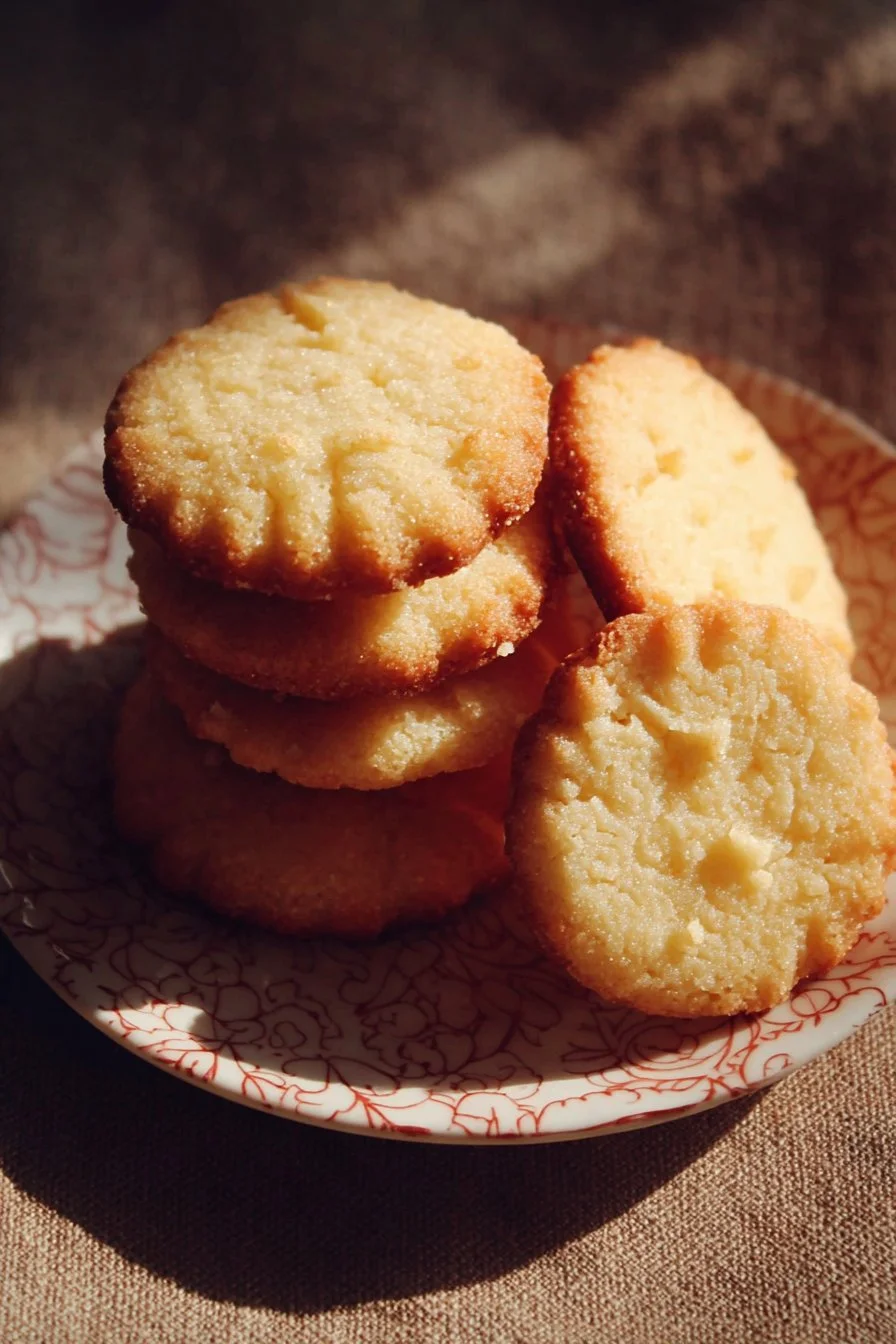
These crisp, buttery cookies are the kind of simple comfort-bake everyone remembers from childhood — just butter, sugar, and flour, baked until the edges whisper golden. They’re quick to make, kid-friendly for rolling and shaping, and perfect when you want a classic cookie without fuss. If you enjoy rich, buttery flavors in both sweet and savory dishes, you might also like this melt-in-mouth honey garlic butter salmon for a dinner that echoes the same buttery note.
Why you’ll love this dish
This butter cookie recipe is a small-ingredient champion: three pantry staples, minimal technique, and reliably delicious results. It’s ideal for last-minute cookie cravings, school bake sales, or when you want a neutral, buttery base to dress up with chocolate, nuts, or citrus zest.
"The texture is pure nostalgia—tender centers with a slightly crisp edge. They disappear fast at family gatherings." — a regular home baker’s note
Perfect occasions: afternoon tea, cookie tins at holidays, or a plain treat for lunchboxes. Budget-wise, these cookies are inexpensive and scale up easily when you need a larger batch.
Step-by-step overview
You’ll soften butter to room temperature, cream it with sugar until pale and airy, fold in the flour until the dough just comes together, form small balls, flatten slightly, and bake briefly at 350°F (175°C). The whole process from start to oven is about 15 minutes active work; baking is 10–12 minutes. Quick chill time isn’t required, which keeps the method speedy.
What you’ll need
- 1 cup (2 sticks) unsalted butter, softened to room temperature (about 65–70°F / 18–21°C)
- 1/2 cup granulated sugar
- 2 cups all-purpose flour
Notes and substitutions:
- If you only have salted butter, reduce or omit added salt (this recipe has no extra salt).
- For a gluten-free option, try a high-quality 1:1 gluten-free flour blend and expect slightly different bite.
- Softened butter should yield easily when pressed but not be greasy or melted. Softening on the counter for 30–60 minutes usually works.
Step-by-step instructions
- Preheat the oven to 350°F (175°C). Line a baking sheet with parchment paper.
- In a large mixing bowl, cream the softened butter and granulated sugar until fluffy and pale. Use an electric mixer for 2–3 minutes, or beat by hand for 4–5 minutes. Scrape the bowl sides occasionally.
- Add the flour gradually. Mix on low speed (or fold with a spatula) just until a soft dough forms. Stop as soon as the dough comes together; overmixing develops gluten and makes cookies tough.
- Lightly flour your hands. Scoop about 1 tablespoon of dough per cookie and roll into a smooth ball. Place the balls on the prepared sheet about 2 inches apart.
- Flatten each ball gently with the back of a fork or your fingers so they’re slightly squashed — this helps even baking and gives a rustic look.
- Bake 10–12 minutes. Look for edges that are just beginning to turn light golden; centers should be set but not browned. Ovens vary, so start checking at 9 minutes.
- Cool on the baking sheet 2–3 minutes, then transfer to a wire rack to cool completely. Cooling on the rack keeps bottoms crisp and prevents steaming.
Best ways to enjoy it
These cookies are wonderful with a simple dusting of powdered sugar, a dip in melted chocolate, or a smear of jam for a thumbprint-style treat. Serve warm with a cup of tea or cold milk. For a contrasting savory pairing, consider serving them alongside a rich main like melt-in-mouth honey garlic butter salmon at a casual weekend brunch or buffet.
Storage and reheating tips
- Room temperature: Store fully cooled cookies in an airtight container at room temperature for 3–5 days. Use parchment between layers to prevent sticking.
- Freezing: Freeze baked cookies in a single layer on a tray until firm, then transfer to a freezer bag or container for up to 3 months. Thaw at room temperature.
- Freezing dough: Shape into balls and freeze on a tray. Once firm, store in a bag for up to 3 months. Bake from frozen adding 1–2 minutes to the baking time.
- Reheating: Warm cookies in a 300°F (150°C) oven for 3–5 minutes to refresh crispness. Avoid microwaving for long periods — short 5–8 second bursts can soften if needed but may make them greasy.
Food safety note: Because this recipe uses no eggs, there’s no raw-egg concern, but always use fresh ingredients and keep butter refrigerated until softened for handling.
Helpful cooking tips
- Measure flour correctly: Spoon flour into the measuring cup and level with a knife. Too much flour makes dry, crumbly cookies.
- Proper butter temperature: If butter is too warm, dough will be greasy and spread; if too cold, it won’t cream properly. Aim for a soft-but-not-melted texture.
- Don’t overmix: Mix only until the dough holds together. Overworking develops gluten and yields denser cookies.
- Uniform size: Use a tablespoon scoop for even baking. Smaller cookies may need less time; larger ones need more.
- Watch the first batch closely: Oven temperatures differ; the first tray gives you the exact timing for your oven.
Creative twists
- Vanilla or citrus: Add 1 tsp vanilla extract or 1 tsp lemon zest to the creamed butter for subtle flavor.
- Almond or orange: Swap with 1/2 tsp almond extract or 1 tsp orange zest.
- Chocolate-dipped: Dip cooled cookies halfway in tempered chocolate; allow to set on parchment.
- Sprinkle or sanding sugar: Roll balls in sanding sugar before flattening for sparkle and a slight crunch.
- Nutty or spiced: Fold in 1/4 cup finely chopped toasted nuts or 1/2 tsp ground cinnamon for variation.
- Vegan swap: Use vegan butter and a flax “egg” binder is unnecessary here; expect a slightly different texture.
Common questions
Q: Can I use salted butter instead of unsalted?
A: Yes. If using salted butter, omit any added salt (this recipe doesn’t call for extra). Taste the dough if cautious; salted butter gives a slightly more savory edge.
Q: How do I make these cookies crispier or more tender?
A: For crisper cookies, press them thinner before baking and bake an extra 1–2 minutes (watch closely). For softer, more tender cookies, make balls slightly larger and avoid overbaking — remove when centers are set but not browned.
Q: Can I freeze the dough and bake later?
A: Absolutely. Shape the dough into balls, freeze on a tray until firm, then store in an airtight bag for up to 3 months. Bake from frozen, adding 1–2 minutes to the bake time.
Q: My cookies spread too much — what went wrong?
A: Likely butter was too warm or too much sugar was creamed. Chill the shaped dough for 10–15 minutes before baking, or check your butter temperature next time.
Q: Can I make these with whole wheat flour?
A: You can try substituting up to half the flour with white whole wheat for a nuttier flavor. Expect a slightly denser texture and consider adding a tablespoon of milk if the dough seems dry.

Buttery Cookies
- Total Time: 27 minutes
- Yield: 24 cookies
- Diet: Vegetarian
Description
Deliciously simple buttery cookies that are crispy on the edges and tender in the center, perfect for any occasion.
Ingredients
- 1 cup (2 sticks) unsalted butter, softened
- 1/2 cup granulated sugar
- 2 cups all-purpose flour
Instructions
- Preheat the oven to 350°F (175°C). Line a baking sheet with parchment paper.
- Cream the softened butter and granulated sugar until fluffy and pale, about 2–3 minutes with an electric mixer.
- Add the flour gradually and mix until a soft dough forms, being careful not to overmix.
- Scoop about 1 tablespoon of dough for each cookie, roll into balls, and place on the prepared sheet about 2 inches apart.
- Flatten each ball slightly with a fork or fingers.
- Bake for 10–12 minutes until edges are just light golden and centers are set.
- Cool on the baking sheet for 2–3 minutes, then transfer to a wire rack to cool completely.
Notes
For gluten-free options, use a quality gluten-free flour blend. Avoid overmixing the dough to keep cookies tender.
- Prep Time: 15 minutes
- Cook Time: 12 minutes
- Category: Dessert
- Method: Baking
- Cuisine: American